
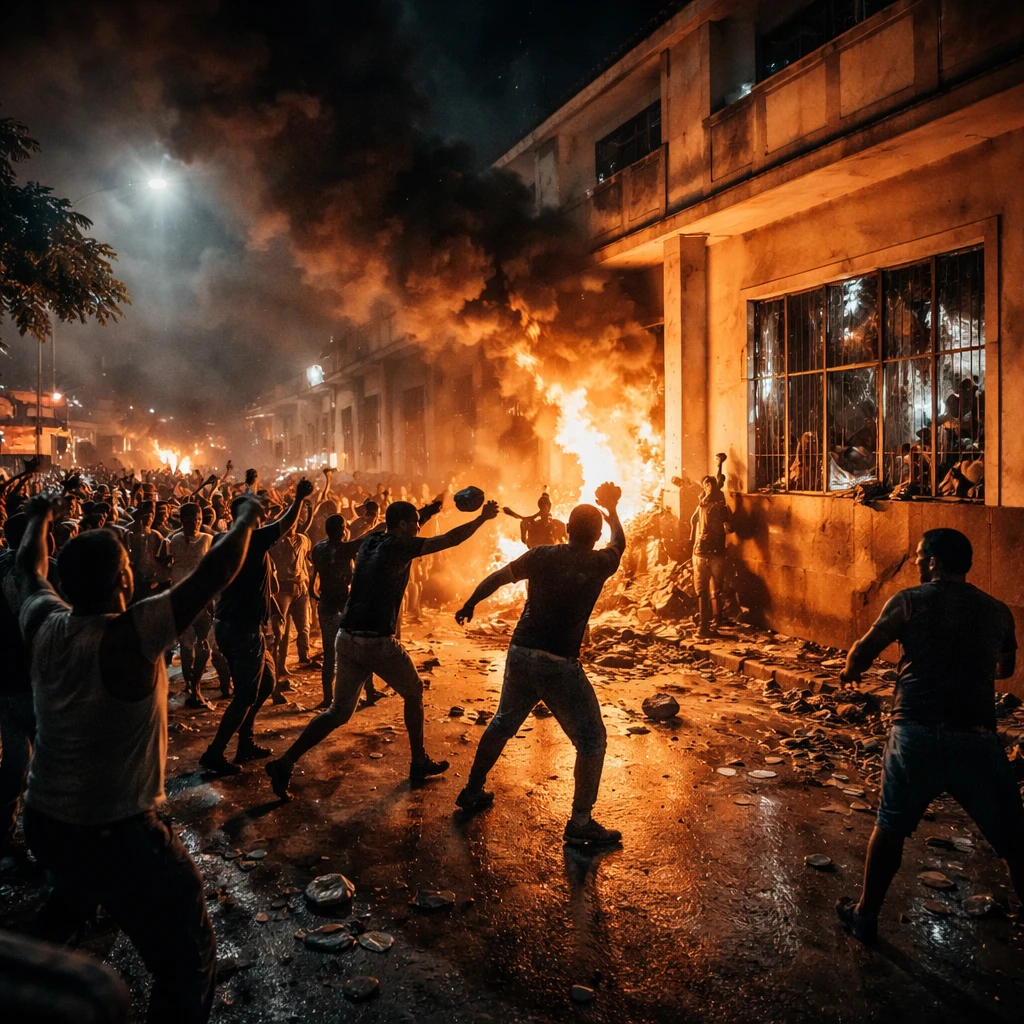
Residents of Moron staged a rally against prolonged power outages and shortages of essential goods late on Friday that turned destructive in the early hours of Saturday, according to a state-run newspaper report. The demonstration escalated near the headquarters of the Municipal Communist Party Committee, with a subset of participants throwing rocks through windows and setting a street fire using furniture taken from the building's reception area.
Videos shared on social media showed a large blaze and people hurling objects at the structure as voices chanted 'liberty' in the background. The authenticity of clips posted online that purported to show events in Moron - a city on Cuba's northern coast approximately 250 miles (400 km) east of Havana, near the resort of Cayo Coco - could not be independently verified.
The unrest followed mounting strains on the Cuban economy that officials have linked to a tightening of U.S. measures this year. The United States has tightened the screws on Cuba this year since capturing Venezuelan President Nicolas Maduro in January, Cuba's most important foreign benefactor, according to the account provided in reports from state outlets. U.S. President Trump has cut off Venezuelan oil shipments to Cuba and threatened tariffs on any country that sells oil to the island, moves the reports say have heightened difficulties for an economy already facing shortages of food, fuel, electricity and medicine.
In response to the recent worsening of the supply situation, the Cuban government said on Friday that it had opened talks with Washington in an effort to defuse the crisis. Government statements also blamed a U.S. oil blockade for disruptions to fuel deliveries.
Local coverage described an initial peaceful exchange between demonstrators and authorities that later deteriorated. 'What initially began peacefully, and after an exchange with local authorities, turned into acts of vandalism against the headquarters of the Municipal Party Committee,' the state-run newspaper reported. It added that a smaller group stoned the building entrance and set a fire in the street using furniture from the reception area.
Other state-run establishments in the vicinity were targeted during the episode, including a pharmacy and a government-operated market, the report said. In one unverified social media clip a gunshot can be heard and the camera pans to a person lying on the ground; a state media outlet later rejected claims that police had shot the person, saying no one had been injured by gunfire and warning against what it described as media manipulation aimed at creating fear.
Authorities detained five people, the coverage said, and one apparently intoxicated participant who fell during the disturbances was being treated for injuries in a local hospital. Over the past week, residents in several parts of Havana had demonstrated by banging pots and pans to protest extended blackouts.
Students staged a sit-in on the steps of the University of Havana after the government suspended in-person classes, the reports said. Officials attributed the suspension to the oil blockade from the United States. Widespread fuel shortages have sharply curtailed public transportation, making it difficult or impossible for teachers and students to assemble for classes.
Moron was also the scene of significant anti-government protests on July 11, 2021, which state coverage described as the largest unrest since the 1959 revolution. The latest disturbances underscore how energy shortages and constrained fuel supplies are intersecting with broader economic pressures to produce rare public displays of dissent on the island.
Summary
A protest in Moron over power outages and food shortages turned violent early Saturday, with demonstrators attacking the local Communist Party office, setting fires and vandalizing state-run establishments. Videos circulated online showing flames and broken windows, though their authenticity was not verified. Authorities detained five people and state media denied reports that police fired on demonstrators. Officials have linked the worsening shortages to tightened U.S. measures and loss of Venezuelan oil shipments; the government said it had opened talks with Washington.
Key points
- Protesters in Moron attacked the Municipal Communist Party Committee building, setting a fire and breaking windows.
- Worsening blackouts and shortages have been attributed in reports to a U.S. oil blockade and the cutoff of Venezuelan oil shipments to Cuba.
- Fuel shortages have reduced public transportation, disrupting education and complicating travel for teachers and students.
Sectors impacted
- Energy and power - due to recurring blackouts and oil supply disruptions.
- Transportation - curtailed public transit from fuel shortages affects mobility.
- Education and public services - suspended classes and reduced access for students and staff.
Risks and uncertainties
- Escalation of civil unrest - the incident in Moron could presage further public disorder in areas experiencing shortages.
- Continued fuel and electricity shortages - ongoing constraints on oil supplies may prolong disruptions to transport, education and essential services.
- Legal ambiguity for demonstrators - although the constitution grants a right to protest, the absence of a specific law defining that right leaves participants in a state of legal uncertainty.