
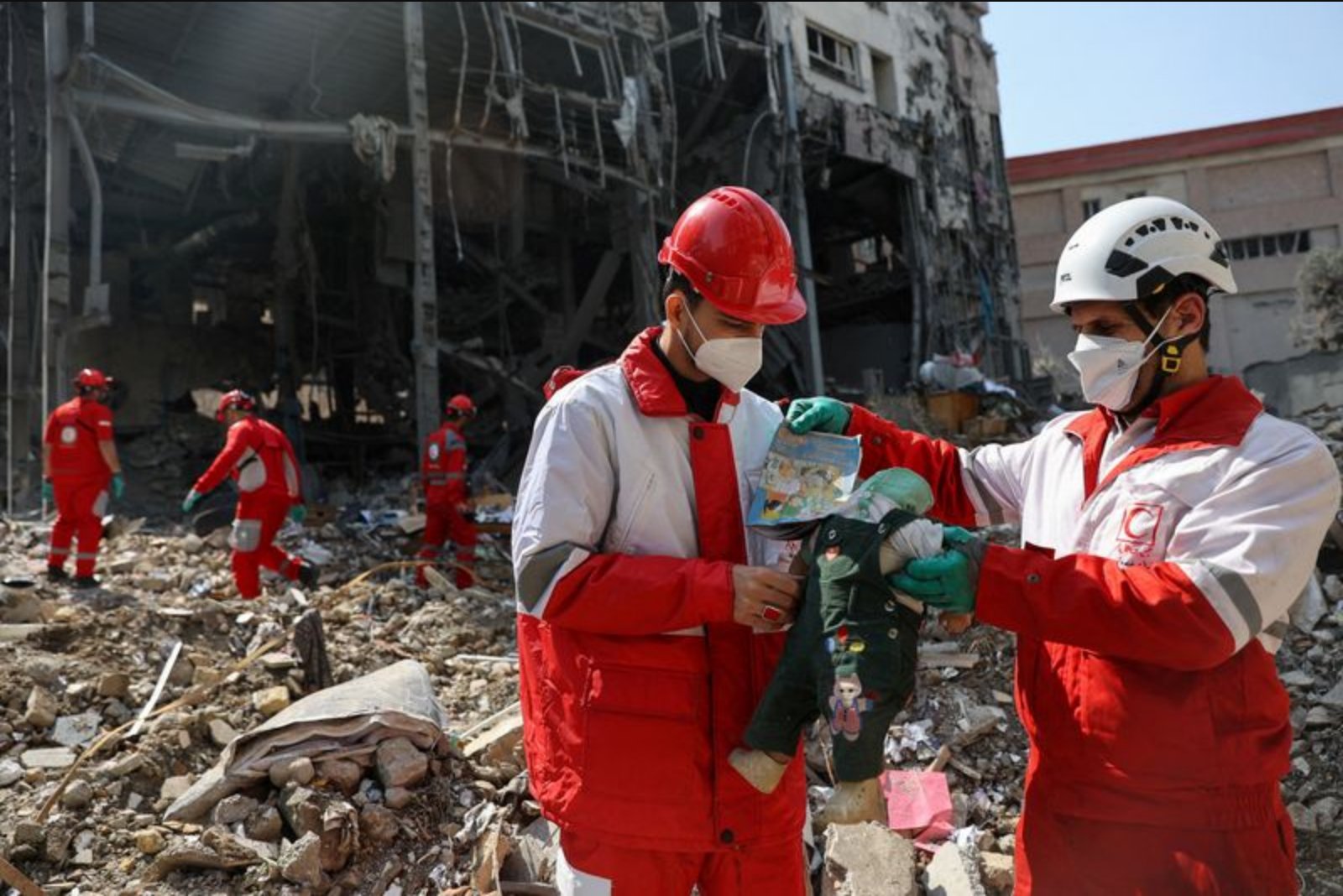
Rescue personnel in Tehran are enduring relentless pressure as air strikes by U.S. and Israeli forces continue to strike across the city, leaving rescue teams to confront both the physical dangers of secondary attacks and the emotional toll of repeated recovery operations.
Volunteers with the Iranian Red Crescent Society report an exhausting rhythm of missions. One rescue worker said that during each of the 10 days he had served since the conflict began, he was called out between two and 10 times. Local authorities report that more than 1,300 people have been killed in the strikes on Iran, and the steady tempo of blasts shows no sign of abating for the teams that must handle the aftermath.
The Iranian Red Crescent - the local affiliate of the International Federation of Red Cross and Red Crescent Societies - has accumulated extensive experience responding to disasters, in large part because of Iran’s recurring earthquakes. Even so, the current campaign of strikes has inflicted severe psychological and physical strain on rescuers.
Reza Mohammad Doost, a Red Crescent volunteer for 13 years, described the impact on his colleagues. He said rescuers’ hands often shook. "They have problems sleeping, eating and they feel so much stress," he said, stressing the deep personal effects of repeated exposure to lethal scenes and the recovery of bodies.
The confrontation traces back to a wider conflict that began with a coordinated U.S. and Israeli offensive on February 28. The United States and Israel framed the strikes as a response to what they called a threat from Iran’s nuclear and ballistic missile programmes, and cited Iran’s support for militant groups in the Middle East and its suppression of domestic protests. Iran rejects the characterization of its nuclear programme as a threat. It has answered the offensive by launching missiles and drones at Israel and at countries that host U.S. bases, and by closing the Strait of Hormuz.
Despite precautions, Red Crescent teams acknowledge the danger of follow-up strikes on the same location. Navvab Shamspour, a senior Red Crescent official, said rescue teams would break off their work and withdraw as soon as they heard warplanes overhead to avoid being struck again. "We take precautions but we are not fearful," he said, adding that the most difficult part of his role was balancing rescue duties with protecting his own team. He noted missions where a strike occurred just 10 minutes after an initial attack.
Scenes in east Tehran illustrate the destruction facing responders. In the Resalat district a once-occupied residential building had been reduced to a massive concrete skeleton, surrounded by wrecked cars, rubble, torn cloth, twisted metal and shattered ceramics. At one rubble pile a rescuer picked through debris and retrieved a teddy bear missing its head and a photograph of a woman wearing a silver bracelet before jets overhead forced the team to seek cover.
Working in full view of grieving families compounds the strain. When rescue teams arrive at strike sites they are immediately surrounded by relatives looking for loved ones feared trapped or killed. "This is very hard on us," Shamspour said, describing the challenge of recovering bodies under the watchful and desperate eyes of family members. Doost captured the grim calculus relatives sometimes confront at such scenes: "Imagine - they can be just satisfied if they find just the dead body. Even the dead body," he said.
Iranian officials have said that a strike on the first day of the war struck a school and killed scores of schoolgirls. Israel and the United States maintain that they do not target civilians and say they are investigating the incident.
Between call-outs, staff and volunteers at the Red Crescent office try to relieve tension with ordinary activities. Rescue workers and office staff talked, watched television and played table tennis and table football as brief respites from the steady stream of emergency missions.
Volunteers include people from varied backgrounds. Mohammad Jannat Ammani, a cleric in a white turban, began volunteering months earlier while visiting his sick grandfather in Tehran from his home in Qom. He said he joined on impulse after seeing Red Crescent members working at the hospital where his grandfather was being treated. "It was just an accident... I felt I had to do something," he said.
The combination of sustained bombardment, the risk of immediate secondary strikes, intense scenes at blast sites and the presence of anguished relatives creates an ongoing and multifaceted challenge for Iran’s emergency responders. With more than 1,300 fatalities reported from strikes on Iran so far and no sign of the bombardment abating, Red Crescent personnel face continued heavy demands both in terms of operational tempo and mental health impacts.