
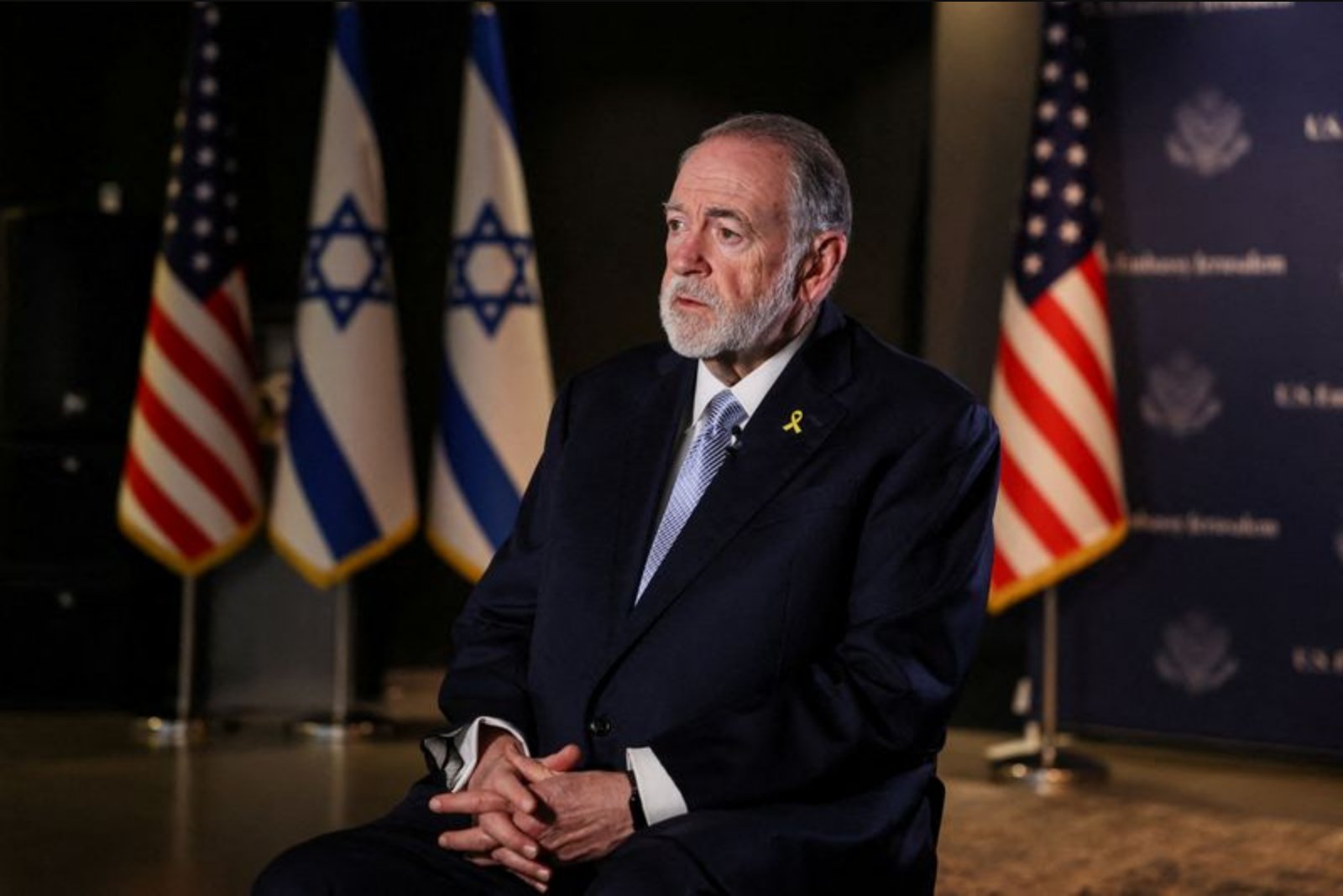
U.S. Ambassador to Israel Mike Huckabee’s remarks suggesting a biblical entitlement to large swaths of the Middle East have prompted a strong rebuke from a group of countries across the region.
Huckabee, an evangelical Christian with a long record of political support for Israel and defense of Jewish settlements in the Israeli-occupied West Bank, was interviewed in Israel on Wednesday by conservative U.S. talk show host Tucker Carlson. The interview aired on Friday. During the exchange, Carlson asked if the modern state of Israel had a right to territory described in the book of Genesis as promised by God to Abraham - a description that, if read literally, spans territory from the Euphrates River to the Nile and would cover a large part of the Middle East.
Responding to that line of questioning, Huckabee said: "It would be fine if they took it all. But I don’t think that’s what we’re talking about here today." He went on to frame the matter in terms of Israel’s current posture, stating: "We’re talking about this land that the state of Israel now lives in and wants to have peace in, they’re not trying to take over Jordan, they’re not trying to take over Syria, they’re not trying to take over Iraq or anywhere else. They want to protect their people."
Within days of the interview’s broadcast, a collective of governments and the Palestinian leadership issued a joint statement condemning the ambassador’s comments. The signatories included Jordan, the United Arab Emirates, Saudi Arabia, Egypt, Turkey, Indonesia and Pakistan, alongside the Palestinians. The statement described the remarks as "dangerous and inflammatory," and said they constituted "a flagrant violation of the principles of international law and the Charter of the United Nations, and pose a grave threat to the security and stability of the region."
Most countries regard Israeli settlements in territory occupied after the 1967 conflict as illegal under international law; Israel disputes that interpretation and points to biblical and historical connections to the land. Huckabee has been a long-standing defender of Jewish settlements in the West Bank, territory that the Palestinians seek for a future state.
Following the outcry, a U.S. Embassy spokesperson emphasized that Huckabee’s comments do not indicate any change in official U.S. policy. The spokesperson added that the ambassador’s full remarks made clear that Israel has no desire to alter its current boundaries.
Israeli officials did not immediately provide a response to either the interview or the regional statement condemning the ambassador’s remarks.
Contextual note: The controversy centers on language about territorial entitlement rooted in a biblical citation used in the interview and the diplomatic repercussions that followed when multiple governments publicly denounced the statements.