
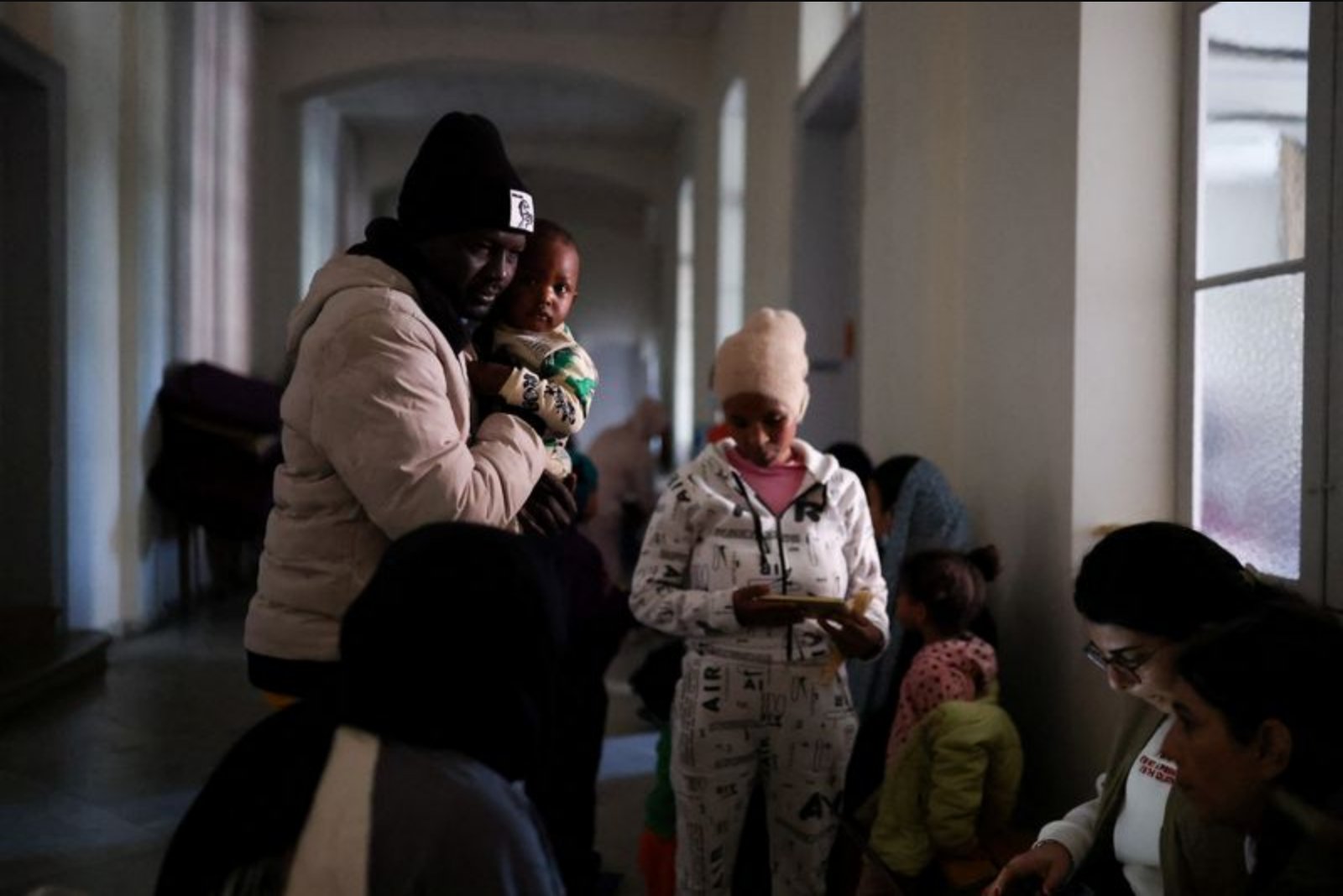
When early-morning Israeli strikes began pounding the southern suburbs of Beirut, Sudanese refugee Ridina Muhammad and her family had no alternative but to flee on foot and search for refuge where they would be accepted - a church.
Eight months pregnant and 32 years old, Muhammad walked for hours with her husband and three children through darkened streets until a car could take them to St. Joseph Tabaris Parish. The parish has opened its doors to refugees and migrants amid a wave of heavy strikes that have displaced large numbers of people across Lebanon.
Authorities and aid agencies say roughly 300,000 people were forced from their homes this week as Israeli bombardments followed a rocket and drone attack into Israel attributed to the Lebanese armed group Hezbollah. Of those displaced, about 100,000 are reported to be in government-run shelters; the remainder are staying with relatives, sleeping in public spaces, or seeking assistance from religious and non-governmental organizations.
Many migrants and refugees say government shelters are effectively inaccessible to them. They report being turned away during the previous conflict between Hezbollah and Israel, and say they feared a repeat when displacement escalated this week.
Muhammad said her family’s vulnerability is acute: their home was destroyed in this week’s strikes and she is due to give birth at the end of the month. Her oldest daughter, now seven, stopped speaking after the 2024 war. “I don’t know if there’s a doctor or not, but I’m really scared about it because I haven’t prepared any clothes for the baby, nor arranged a hospital, and I don’t know where to go,” Muhammad said, as her younger daughter rested her head against Muhammad’s pregnant belly.
Dwindling resources and constrained aid
Those seeking shelter say they have received little formal support. Muhammad said she had registered with the United Nations refugee agency but had not received aid. “Us, as refugees, why did we register with the U.N., if they are not helping us in the most difficult times?” she asked.
A UNHCR Lebanon spokesperson, Dalal Harb, told Reuters that the agency had mobilized in response to displacement but that reaching everyone immediately was extremely challenging because of the rapid scale of needs. Harb added that the UNHCR operation in Lebanon was currently only around 14% funded.
The Jesuit Refugee Service (JRS), which assisted the church in hosting displaced people during 2024, has returned to help again. Michael Petro, JRS’ Emergency Shelter Director, said St. Joseph Tabaris Parish was filled on the first day after strikes began, hosting 140 people from South Sudan, Ethiopia, Bangladesh and other countries.
“There are many, many more people coming than there were in 2024, and we have fewer and fewer places to put them,” Petro said.
Petro said he had been told in recent weeks that government shelters would accept migrants if a new round of fighting erupted. Yet when the strikes started and even Lebanese residents struggled to find safe housing, the expected openness appeared to change. “We’re hearing from hotlines up to government officials and ministries that migrants are not welcome,” he said.
Requests for comment to Lebanon’s Minister for Social Affairs, Haneen Sayyed, went unanswered. Sayyed had said on Thursday that Beirut shelters were full.
Displacement routes and decisions
For many migrants, travel to perceived safe zones has meant long, uncertain journeys. When the strikes began, 41-year-old Sudanese man Othman Yahyeh Dawood loaded his two young sons onto his motorcycle and rode 75 kilometres (46 miles) from Nabatieh in southern Lebanon to St. Joseph’s - a place where they had found shelter in 2024.
“I know the area is safe and there are people who will welcome us,” Dawood said, describing his reasons for returning to the parish. “We don’t know where to go; there’s war there (in the south), war here (in Beirut), war in Sudan, and nowhere else to go,” he added.
Aid options and public information
Humanitarian groups and faith-based organizations are filling gaps left by limited official capacity, but shelter space, medical access, and funding remain constraints. UN funding shortfalls and full government-run shelters have contributed to an environment in which churches and NGOs have become de facto refuge sites for many non-citizens and migrants.
Commercial note in the initial reporting
The original dispatch also included a promotional section discussing investment tools for 2026. That material asked about investment opportunities and described a subscription product that combines institutional-grade data with AI-powered insights, noting it would not guarantee winners but could aid in decision-making. Readers seeking more information about investment options are referred to the providers mentioned in the initial report.