
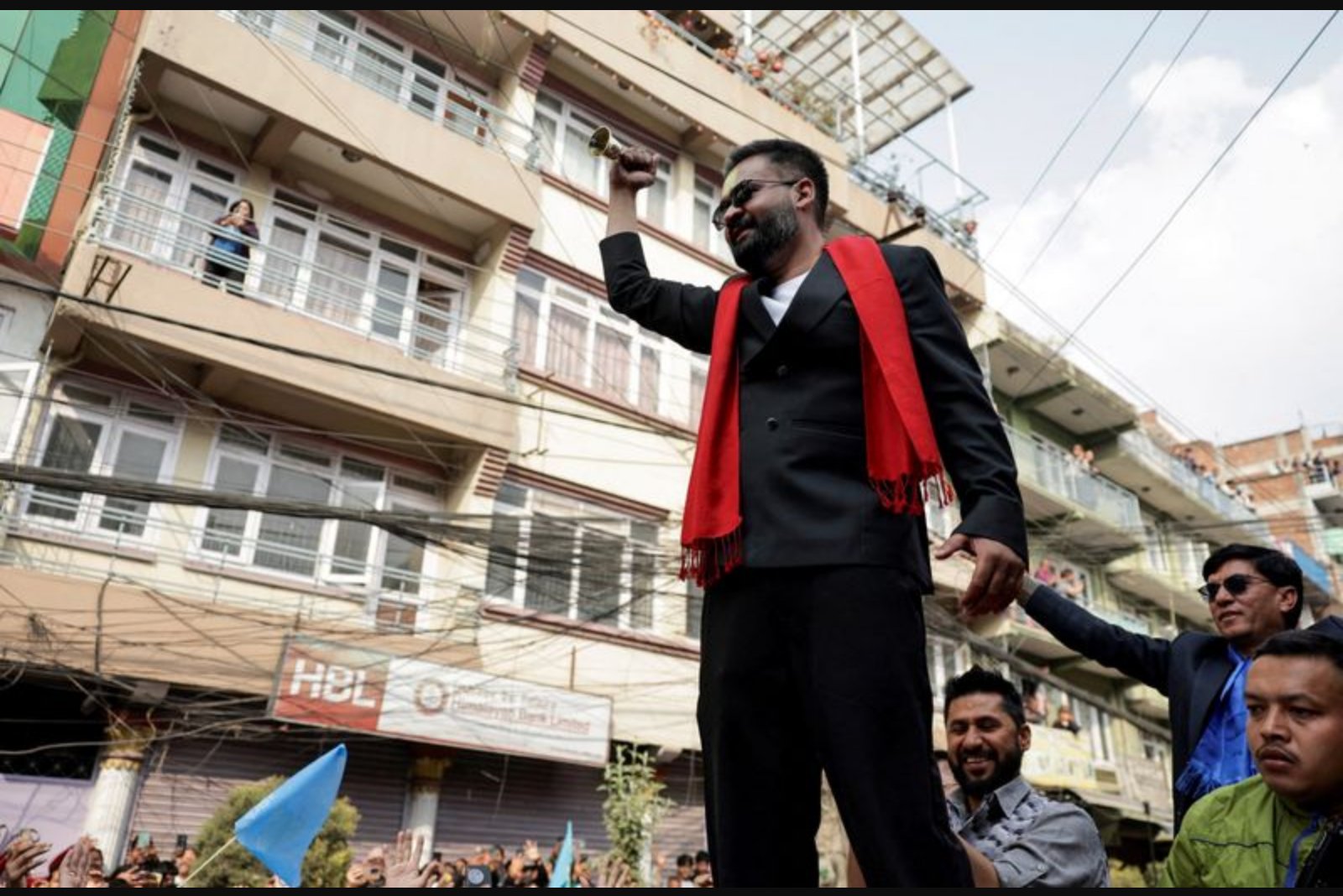
After a youth-driven uprising last September that left 77 people dead and led to the resignation of then-Prime Minister K.P. Sharma Oli, Balendra Shah - widely known as Balen - addressed young Nepalis on social media with a succinct message: "Dear Gen Z, the resignation of your killer has come. Now your generation will have to lead the country. Be prepared."
Five months after that uprising, the 35-year-old musician-turned-politician who first entered electoral politics in 2022 as mayor of Kathmandu now stands poised to assume the national premiership. Early tallies from the election commission showed his Rastriya Swatantra Party (RSP) leading in around 100 constituencies, putting it ahead of principal rivals in a vote that marks the first nationwide ballot since the unrest.
Final results are pending and will cover 165 seats decided by direct vote and 110 seats allocated through proportional representation. With the Nepali Congress conceding defeat in early returns, analysts say the RSP’s strong showing makes it likely the party will lead the next government.
Shah’s rapid ascent follows a high-profile pivot from music to municipal leadership. Elected mayor of the capital in 2022, he focused on urban improvements - from waste management to streamlining delivery of health services - projects that critics and supporters alike cite as central to his nationwide appeal. At the same time, rights groups and critics have faulted his tactics; Human Rights Watch has alleged he used police to seize properties belonging to street vendors and landless people.
Shah resigned as Kathmandu’s mayor in January to stand in the general election. He did not respond to emailed questions seeking comment.
Unlike many senior figures in Nepali politics, Shah has kept a distance from the conventional press and instead reaches millions of followers directly via social media. With over 3.5 million followers on platforms such as Facebook, his short messages and online presence have become a key channel to engage young voters.
"Balen Shah is so popular that now buses coming to Kathmandu have stickers on them saying, 'Headed to Balen's city'," said Bipin Adhikari, a constitutional law expert who teaches at Kathmandu University.
Independent analyst Puranjan Acharya cautions that online popularity will not automatically translate to success in national governance. "What makes Balen special is that he stays connected with the youth through his short messages on social media, but it would not be a cakewalk for him after becoming prime minister," Acharya said.
Shah’s early life and artistic career help explain his appeal. Born to a father who practiced traditional Ayurvedic medicine and a homemaker mother, he gravitated toward poetry and later rap. An aide said he drew inspiration from American artists including Tupac Shakur and Curtis "50 Cent" Jackson. After completing an undergraduate degree in civil engineering in Nepal, Shah pursued a master’s in structural engineering in southern India while already establishing a reputation as a rap artist.
His music frequently targeted Nepal’s ruling class and found resonance in a country where about 20% of the roughly 30 million population live in severe poverty. A widely viewed track released in 2019, "Balidan" - which means sacrifice in Nepali - has accumulated over 12 million views on YouTube. Its lyrics include the lines: "Let me speak, sir, it is not a crime, Let me open the mind, I am not a curse to the palace, My mind is not bad, it is not afraid to speak the truth."
Last December, Shah joined the RSP, which is led by former television host-turned-politician Rabi Lamichhane, and was named the party’s candidate for prime minister. The RSP manifesto sets ambitious targets: creating 1.2 million jobs and reducing forced migration, measures aimed at addressing frustration over unemployment and low wages that have driven millions to seek work abroad.
The party also committed to raising Nepal’s per capita income from $1,447 to $3,000, more than doubling the country’s economy to $100 billion GDP, and instituting nationwide safety nets including healthcare insurance - all within a five-year timeframe.
Analysts note that translating campaign pledges into effective policy will hinge on the administrative team Shah assembles and the expertise he can attract to tackle entrenched problems such as corruption and bureaucratic inertia. "It needs a team, experts and support," Acharya said. "Under the existing state apparatus, he can't perform and he will be finished like wood attacked by termites."
Shah’s record as mayor is likely to be a focal point for both supporters and opponents as the transition to national leadership is discussed. His municipal initiatives and their visibility seem to have helped him cultivate a base of support that extends beyond Kathmandu, while allegations about property seizures and the use of police against vulnerable groups underscore governance and human rights questions that will follow him into national politics.
As final tallies are completed for both directly elected and proportionally allocated seats, the political landscape in Kathmandu and beyond may shift substantially. The RSP’s current lead in early counts positions the party at the center of coalition discussions and the task of forming the next government.
Whether Shah can convert online appeal and municipal achievements into durable national reform remains an open question grounded in the constraints of Nepal’s existing state structures and the practical realities of governing a nation wedged between major regional powers. For now, his ascent marks an unusual trajectory from rap music to capital mayor to potential prime minister, reflecting both the depth of youth frustration and the potency of direct digital communication in mobilizing political support.
Summary
Balendra Shah, known as Balen and formerly the mayor of Kathmandu, is positioned to become Nepal’s next prime minister after his Rastriya Swatantra Party led early election counts following a youth-led uprising that forced the previous prime minister to resign. Shah has leveraged a strong social media presence and municipal achievements to attract widespread support, while facing criticism over alleged heavy-handed tactics toward street vendors and landless people. Final results, encompassing 165 directly elected seats and 110 proportional seats, are expected in the coming days.
Key points
- Rastriya Swatantra Party was leading in around 100 seats in early counts and is likely to form the next government given the Nepali Congress conceded defeat - impacts: national politics, governance.
- Shah’s popularity stems from municipal work in Kathmandu and a large social media following of over 3.5 million, which has helped him connect with younger voters - impacts: digital engagement, urban services, public sector delivery.
- The RSP’s manifesto includes economic goals such as creating 1.2 million jobs, raising per capita income from $1,447 to $3,000, and doubling GDP to $100 billion within five years - impacts: labor markets, public finances, healthcare sector.
Risks and uncertainties
- Governance capacity - Shah’s ability to deliver on pledges depends on assembling a capable team and overcoming bureaucratic inertia and corruption - sectors affected: public administration, anti-corruption oversight.
- Human rights and social tensions - Allegations of property seizures and use of police against street vendors and landless people present reputational and legal risks that could affect social stability - sectors affected: informal economy, urban planning.
- Implementation feasibility - Ambitious economic targets within a five-year window may face practical constraints under the current state apparatus - sectors affected: labor markets, healthcare, fiscal management.