
The United Nations will appoint its 10th secretary-general in an election scheduled for later this year, choosing an individual to serve a five-year term beginning on January 1, 2027. Member states have begun the formal nomination process and several candidates have already been put forward. The selection combines regional customs, Security Council bargaining and procedural steps that together determine who will occupy the U.N.'s top administrative and diplomatic post.
How the process began and the timetable
The selection formally opened after the president of the U.N. General Assembly and the then-president of the Security Council issued a joint request for nominations on November 25. Under U.N. practice, any candidate must be put forward by a U.N. member state. The General Assembly president has invited member states to submit nominations by April 1 so nominees can participate in interactive dialogues during the week of April 20. Those online sessions will allow each candidate to present a vision statement and to answer questions from other U.N. member states.
Tradition holds that the secretary-generalship rotates among regional groups. When the current secretary-general was chosen in 2016, Eastern Europe was the region expected to put forward a candidate. By rotation, Latin America is next in line, although diplomats have signaled that contenders could emerge from other regions as well.
Declared and formally nominated candidates
Several individuals have been identified by member states as candidates, either through formal nomination or public statements indicating their intention to run.
- Rafael Grossi - Argentina: A longtime Argentine diplomat who has served since 2019 as director-general of the International Atomic Energy Agency. When asked on September 3 whether he would run, Grossi replied, "Yes, I am going to do that, yes." Argentina formally nominated him on November 26, 2025.
- Michelle Bachelet - Chile: Chile nominated its former president, who twice led the country and served as U.N. high commissioner for human rights from 2018 to 2022 and as executive director of U.N. Women from 2010 to 2013. Chile, Brazil and Mexico formally nominated her for the post on February 2. In her statement accompanying the nomination, she said her experience had prepared her to face an international system with challenges "unprecedented in scale, urgency, and complexity" and she pledged to concentrate on "rebuilding trust in the United Nations."
- Rebeca Grynspan - Costa Rica: Costa Rica has nominated its former vice president and current U.N. official. President Rodrigo Chaves announced plans for the nomination on October 8. Grynspan, an economist and politician, serves as Secretary-General of the U.N. Conference on Trade and Development.
- Macky Sall - Senegal: The former president of Senegal has been nominated by Burundi, according to a U.N. spokesperson. In his published vision statement, Sall described a world in deep crisis and said the U.N. faces growing mistrust and the risk of weakening; he recommended reform, streamlining and modernization to meet 21st-century challenges.
How the Security Council and General Assembly decide
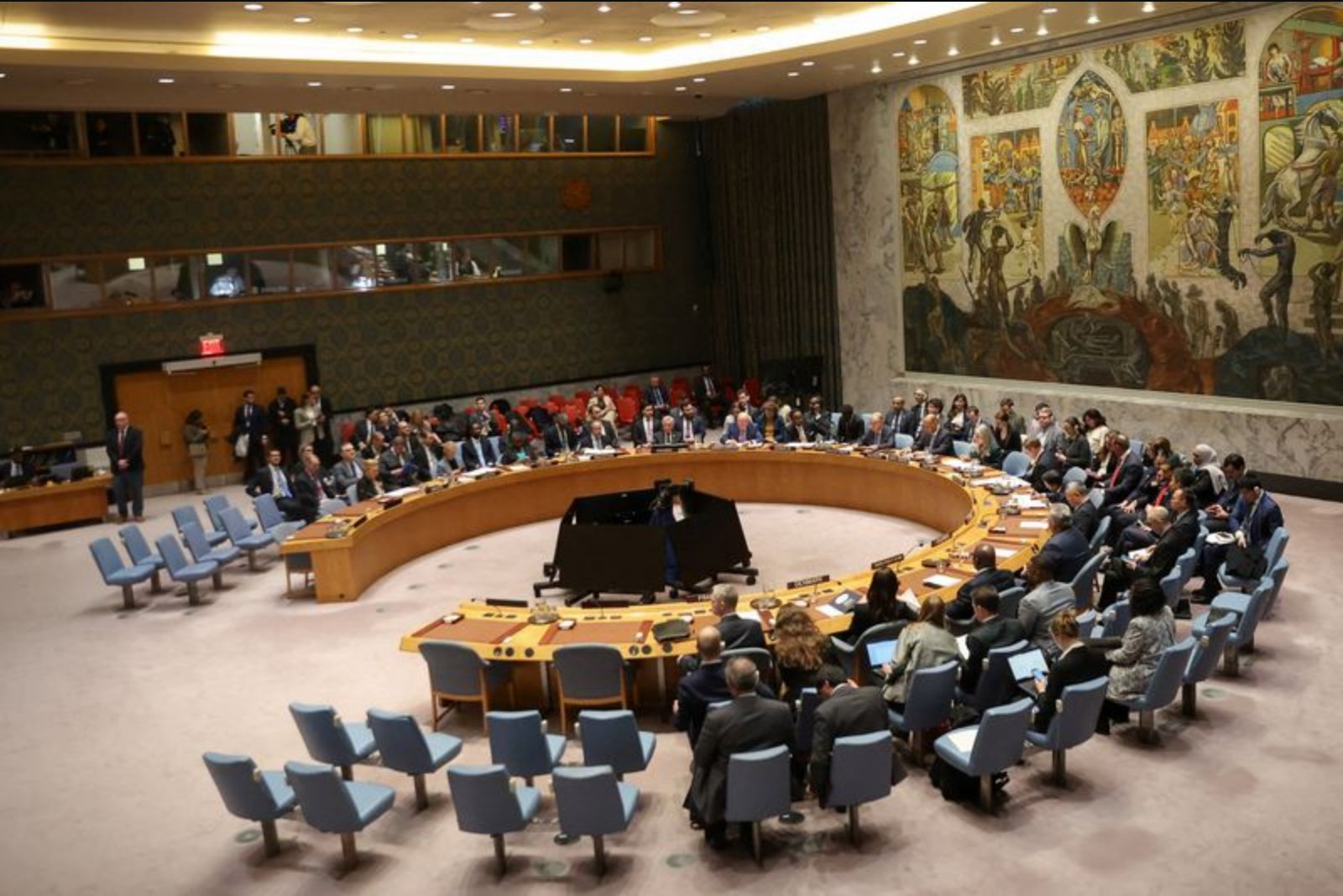
The Security Council will play the central gatekeeping role in selecting the next secretary-general. The council conducts a series of secret ballots, known as straw polls, with members indicating whether they would "encourage," "discourage" or have "no opinion" on each candidate. These informal polls continue until a consensus candidate emerges.
Critically, the five permanent members of the Security Council - the United States, Russia, China, Britain and France - each retain a veto and must ultimately agree on the candidate the council recommends. Straw poll ballots cast by permanent members are customarily distinguished by a different color from those of the 10 elected council members, signaling the potential for a veto.
When the current secretary-general was selected in 2016, the process required six such straw polls before the council reached agreement. Following that internal consensus, the Security Council adopts a resolution, usually in closed session, recommending a single candidate to the General Assembly. That resolution must obtain at least nine votes in favor and no vetoes to pass.
Once recommended by the Security Council, the candidate goes to the General Assembly for election. The Assembly includes 193 member states and historically has treated the Security Council's recommendation as decisive, providing approval in a process often described as a rubber stamp.
Moves toward greater transparency
The U.N. has taken steps to open up what has traditionally been a rather opaque selection process. A General Assembly resolution adopted in September 2025 specified that each formally nominated candidate should provide a vision statement that will be published on a dedicated U.N. web page, and that nominees should have the opportunity to present that statement publicly. The resolution also called for candidates to disclose their sources of campaign funding and suggested that anyone holding a U.N. position consider suspending their duties during the campaign to avoid potential conflicts of interest or advantages linked to their incumbent roles.
As part of the updated rules, the April interactive dialogues are intended to give member states and the public more direct access to candidates' proposals and allow for a more open vetting of contenders than in prior selection cycles.
The role and limits of the secretary-general
The U.N. Charter identifies the secretary-general as the organization’s "chief administrative officer." The United Nations describes the post as a hybrid role - equal parts diplomat and advocate, civil servant and chief executive officer. The secretary-general oversees a large international civil service and, in the current term, supervises thousands of civilian staff and 11 peacekeeping operations.
Financially, the U.N. operates with a core annual budget and a separate peacekeeping budget. The core budget is $3.45 billion, while the peacekeeping budget stands at $5.4 billion. But the holder of the secretary-generalship has limited authority over the use of force or sanctions, which remain under the exclusive purview of the Security Council. As a result, many diplomats characterize the position as more of a high-profile diplomatic platform than a role with direct command over military or coercive instruments. Observers note that the five veto-holding Security Council members often prefer a secretary-general who is more 'secretary' than 'general' in terms of exercising independent power.
Women and the secretary-generalship
In the United Nations’ more than 80-year history, no woman has held the office of secretary-general. The September 2025 General Assembly resolution explicitly noted this fact "with regret" and encouraged member states to seriously consider nominating women candidates. That appeal is part of the broader push for gender balance at the highest levels of the U.N. system and is reflected in the presence of female candidates among those already nominated.
What happens next
Member states will continue to submit nominations through the April 1 deadline to be eligible for the April interactive dialogues. The Security Council will then move through straw polls and internal deliberations at an as-yet-unspecified schedule until it reaches a candidate it can recommend to the General Assembly. If the pattern from the last contested selection holds, several rounds of polling may be required before consensus is achieved. The General Assembly will then vote to appoint the recommended candidate to a five-year term starting January 1, 2027.
The selection will determine who leads the UN's diplomatic and administrative efforts through a period the candidates describe as one of intensified global challenges, with implications for peace operations, human rights, multilateral cooperation and the broader functioning of international institutions.