
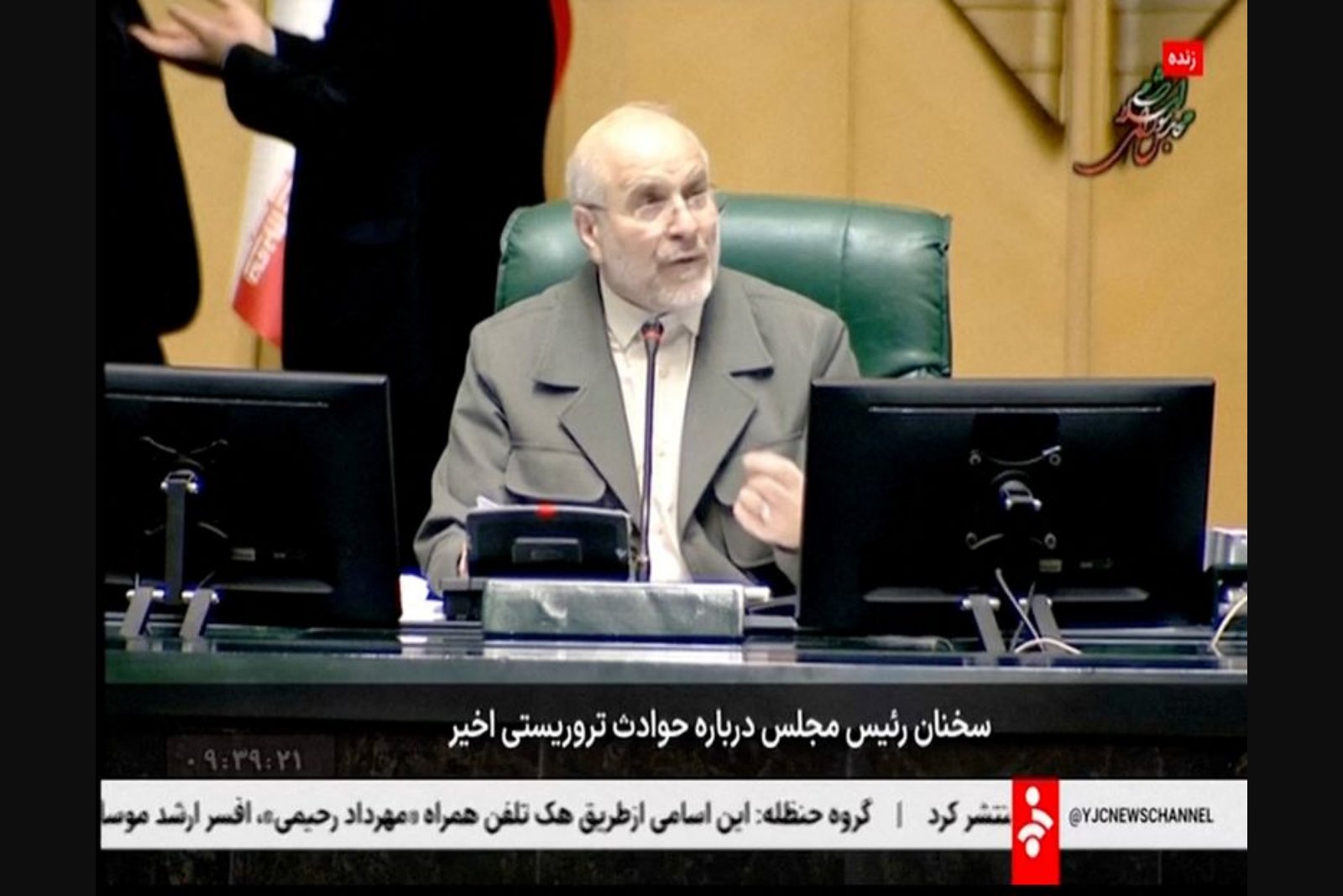
As Iran grapples with the fallout from a sudden campaign of strikes that has targeted its senior leadership, Mohammad Baqer Qalibaf has moved to the center of the country’s power structure. Now serving as parliament speaker, Qalibaf combines a background as a Revolutionary Guards commander, national police chief, long-time Tehran mayor and recurrent presidential candidate, making him an essential conduit among Iran’s political, security and clerical elites.
Nearly three weeks after the assault began with the killing of then Supreme Leader Ayatollah Ali Khamenei, Iran’s leadership in Tehran is engaged in an attritional struggle to outlast those behind the attacks. With a reduced roster of prominent figures, Qalibaf’s role has become more consequential at a moment the article describes as decisive.
Qalibaf is widely regarded within the political establishment as a protégé of Khamenei and as a confidant of the supreme leader’s son, Mojtaba, who has succeeded to the position of supreme leader. In public statements since the killing, Qalibaf has taken a hardline tone toward Israel and the United States, promising retaliation. Speaking directly to U.S. President Donald Trump and Israeli Prime Minister Benjamin Netanyahu, he vowed "such devastating blows that you will be begging" and added:
"I say to these two dirty criminals and their agents: you have stepped on our red line and you have to pay for it."
Those remarks underscore a long-standing positioning as a staunch defender of the Islamic Republic’s theocratic system. The same loyalty has been evident in actions taken to suppress internal dissent.
At the same time, Qalibaf has cultivated a parallel image as a modernizer and a pragmatic administrator. During his 2005 presidential campaign, he highlighted professional qualifications by posing in his uniform as a qualified pilot for campaign materials, an effort to present himself as a managerial figure capable of delivering governance and order.
Born in 1961 in the northeastern town of Torqabeh, Qalibaf’s early political formation coincided with the revolutionary fervor that accompanied the 1979 Islamic Revolution. He attended mosque lectures as a teenager, according to Iranian media accounts, and joined the Revolutionary Guards when the Iran-Iraq war began months after the shah was ousted. He advanced rapidly in the Guards, becoming a general within three years and continuing his military career after the end of wartime hostilities.
Within the Guards he qualified as a military pilot and rose to head the Guards’ air force component. His record includes involvement in a forceful response to a 1999 crackdown on university students and participation with other commanders in a letter that threatened to remove the reformist president Mohammad Khatami unless protests were curbed.
As Iran’s political landscape shifted and reformist momentum waned, Khamenei turned increasingly to security-minded figures such as Qalibaf. When he later served as national police chief, he combined a reputation for ruthlessness with efforts to project a more modern face for security forces, including introducing new uniforms and organizational changes. He has been accused of ordering police to fire on protesters in 2002.
Qalibaf’s electoral ambitions have been persistent. He ran for president in 2005, seeking support from middle- and lower-income voters, but was overtaken by the populist appeal of Mahmoud Ahmadinejad, who ultimately drew Khamenei’s backing. Qalibaf continued to pursue the presidency in subsequent cycles, running unsuccessfully in 2013 and 2024 and withdrawing in 2017 to avoid splitting the hardline vote.
He succeeded Ahmadinejad as Tehran mayor, a position he held for 12 years. During that tenure, he took credit for helping to suppress the months of unrest that erupted after Ahmadinejad was declared the winner of a disputed 2009 presidential election. In 2020 Qalibaf returned to national politics via election to parliament and was installed as speaker, a role that placed him among the top offices in Iranian governance.
In the current environment, with Iran’s senior leadership diminished by targeted strikes and the country’s response framed as an effort to outlast its attackers, Qalibaf’s accumulated experience across military, police, municipal and legislative domains positions him as a central actor. His combination of hardline rhetoric, demonstrated willingness to use force in response to dissent, and a cultivated image of administrative competence make him an influential operative in Tehran’s effort to navigate the crisis.
Observers inside Iran’s political milieu portray Qalibaf as both a defender of the theocratic order and a figure who can bridge various institutional spheres. As the leadership contends with the immediate consequences of the strikes, Qalibaf’s prominence is likely to shape how Tehran organizes its internal security response and how it aligns political authority across clerical and security networks.
Summary
Mohammad Baqer Qalibaf, serving as Iran’s parliament speaker and a veteran of the Revolutionary Guards, has grown more central to Iran’s leadership amid strikes that have removed senior figures. He has responded with aggressive rhetoric toward the United States and Israel while maintaining a record as a security hardliner and an administrator who has sought to modernize aspects of governance.