
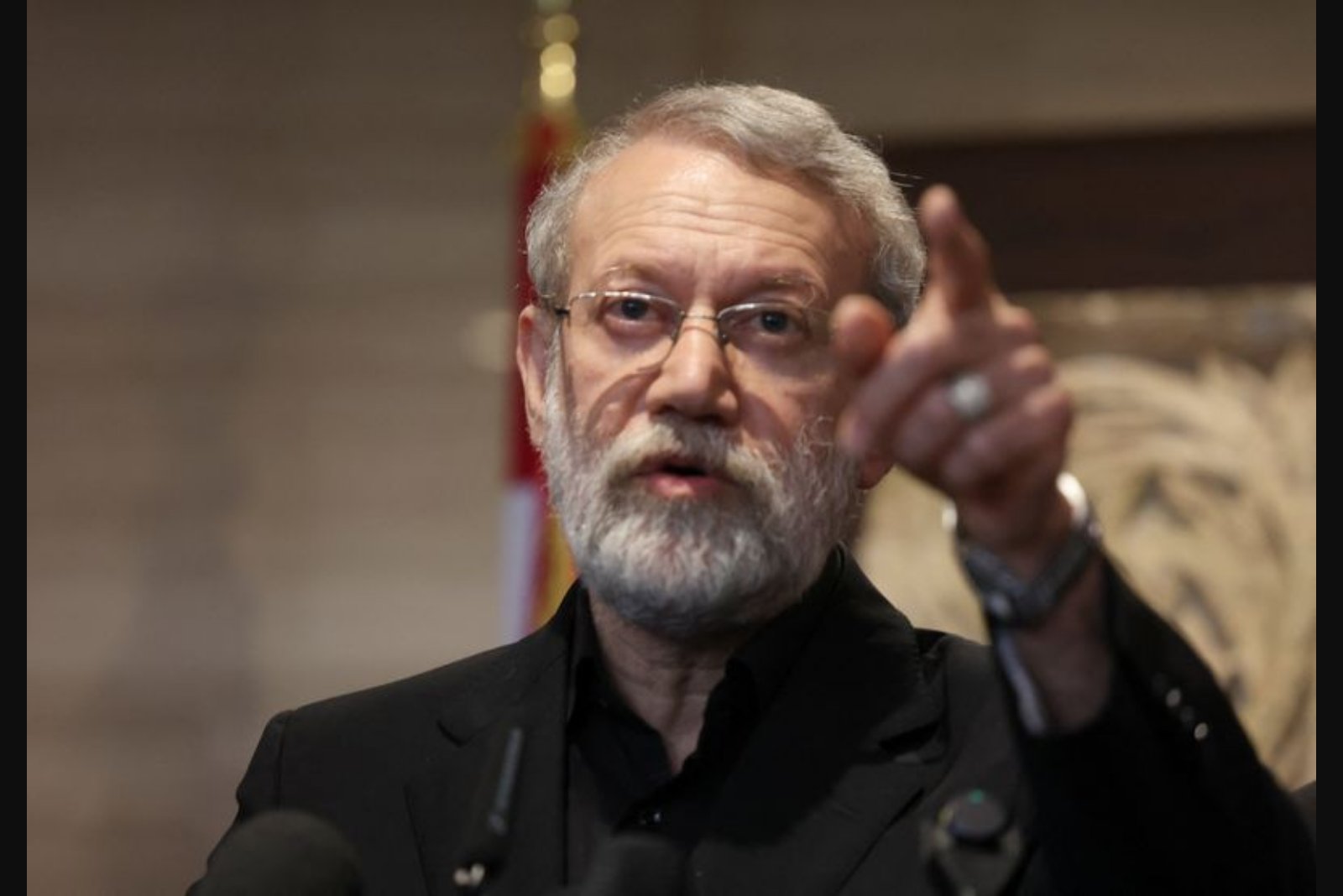
In the wake of an air strike that killed Iran’s Supreme Leader Ayatollah Ali Khamenei, and which state broadcaster Iran TV said also claimed the life of Armed Forces Chief of Staff Abdolrahim Mousavi, Ali Larijani has stepped forward as a central figure within the country’s security leadership. Larijani, a longstanding establishment insider from a prominent clerical family, announced that a temporary leadership council would be created, and has in recent months assumed responsibility for an unusually broad portfolio in Tehran’s strategic and security affairs.
Appointed in August as Secretary of the Supreme National Security Council (SNSC), Larijani returned to a role he previously held two decades ago. His reappearance in the centre of Iran’s security apparatus followed last year’s 12-day air war between Iran and Israel that drew in the United States, formally re-establishing him at the heart of decision-making on defence and foreign policy.
Over the course of his recent tenure, Larijani has overseen Iran’s efforts to re-engage in indirect nuclear talks with the United States, travelled to Oman as a mediator stopover ahead of negotiations, and maintained high-level discussions with Moscow on an array of security ties. Those diplomatic moves, including repeated visits to the Russian capital where he held talks with President Vladimir Putin, signalled that Larijani has been entrusted with managing relationships with major external partners who act as counters to Western pressure.
Larijani has also been active on the domestic front. State television reported that he accused the United States and Israel of seeking to "plunder and disintegrate Iran," and he warned "secessionist groups" that any attempt at action would be met with a harsh response. Those comments came on Sunday, state television said, roughly 24 hours after what the broadcaster described as a wave of attacks on Iran began.
His public posture on nuclear diplomacy has at times taken a pragmatic vein. Speaking to Oman state television last month about the indirect negotiations with Washington, Larijani said: "In my view, this issue is resolvable." He added that if Washington's concern is that Iran should not move toward acquiring a nuclear weapon, "that can be addressed." Such language reflects a continuity with his earlier career roles in which he sought negotiated outcomes on the nuclear question.
Those earlier roles include serving as Iran’s chief nuclear negotiator from 2005 to 2007, when he defended Tehran’s asserted right to enrich uranium. On that campaign, he once compared incentives offered by European powers to abandon nuclear fuel production to "exchanging a pearl for a candy bar." Observers at the time described him as a pragmatist who preferred to seek Western acquiescence through diplomacy.
Larijani’s political résumé also includes a 12-year spell as parliament speaker from 2008 to 2020. During that period, Iran reached a nuclear deal with six world powers in 2015 after nearly two years of delicate negotiations. The United States later withdrew from that agreement in 2018.
Despite his establishment credentials and reputation for pragmatic dealings, Larijani drew condemnation from Washington earlier this year. In January, the U.S. imposed sanctions on him, asserting he was at the forefront of efforts to crush a wave of demonstrations that erupted across the country. A U.S. Treasury announcement accused him of being "one of the first Iranian leaders to call for violence in response to the legitimate demands of the Iranian people," alleging he acted at Khamenei’s behest. Rights groups say thousands of people were killed in the crackdown, which the article says was the worst domestic unrest in Iran since the 1979 Islamic Revolution.
Larijani has acknowledged economic grievances that fuelled the protests but drawn a sharp distinction between peaceful demonstrators and what he has described as armed actors allegedly supported by external foes. State media quoted him on January 10 as saying that "popular protests must be completely separated from these terrorist-similar groups," and on January 26 he was quoted calling certain rioters "an urban quasi-terrorist group."
His security responsibilities have been broad, extending from negotiating with external powers to directing responses to internal unrest. That remit included a trip last month to Oman to prepare for indirect talks with the United States at a time when U.S. forces were reportedly building up in the Middle East to press Tehran for concessions prior to the strikes.
At the same time, Larijani has been assigned to maintain and advance Tehran’s strategic relationships with key international partners beyond the West. He was involved in talks with Moscow to cement security ties, and earlier helped steer negotiations with China that culminated in a 25-year cooperation agreement announced in 2021. Those engagements indicate his role in managing the diplomatic plumbing that binds Tehran to partners considered essential to offsetting international pressure.
Larijani’s personal background and family connections are well established within Iran’s power structures. Born in Najaf, Iraq, in 1958 to a leading Iranian clerical family, he moved to Iran as a child and later earned a PhD in philosophy. Several of his brothers have held senior posts in the establishment, including positions in the judiciary and foreign ministry. He himself is a former member of the Islamic Revolutionary Guards.
Electoral politics have marked his career as well. He ran for president in 2005 and later attempted to stand in the 2021 and 2024 presidential contests, but the Guardian Council disqualified him on grounds that included lifestyle standards and family ties abroad.
The current political fallout from January’s unrest also touched Larijani’s family. One of his daughters was dismissed from a medical teaching position at Emory University in January following protests by Iranian-American activists who were angered by his alleged role in suppressing demonstrations.
Observers within Tehran’s establishment see Larijani as a dependable Khamenei loyalist with a track record of maintaining pragmatic lines of communication across the system’s often rival factions. His recent diplomatic activity and leadership of sensitive security portfolios have underscored his re-emergence as a power broker at a moment of acute crisis for Iran.
Analytical note - Larijani’s reappearance at the centre of Iran’s security decision-making coincides with a period of intense regional escalation and deep domestic unrest. His dual role in managing external negotiations while coordinating internal security responses places him at a pivotal intersection of diplomacy and coercion within the Iranian state.