
WARSAW, Feb 27 - Poland is deeply sceptical about France’s potential role in any proposed continent-wide nuclear-deterrence arrangement and currently regards the United States as its only credible nuclear partner, according to the president’s top security adviser.
Earlier this month, German Chancellor Friedrich Merz acknowledged that Berlin had opened talks with France - the European Union’s only remaining nuclear power since Britain left the bloc - about a possible Europe-wide deterrent. Polish Prime Minister Donald Tusk has said Warsaw has also begun discussions with Paris, but that any consideration of joining such a programme would require concrete details.
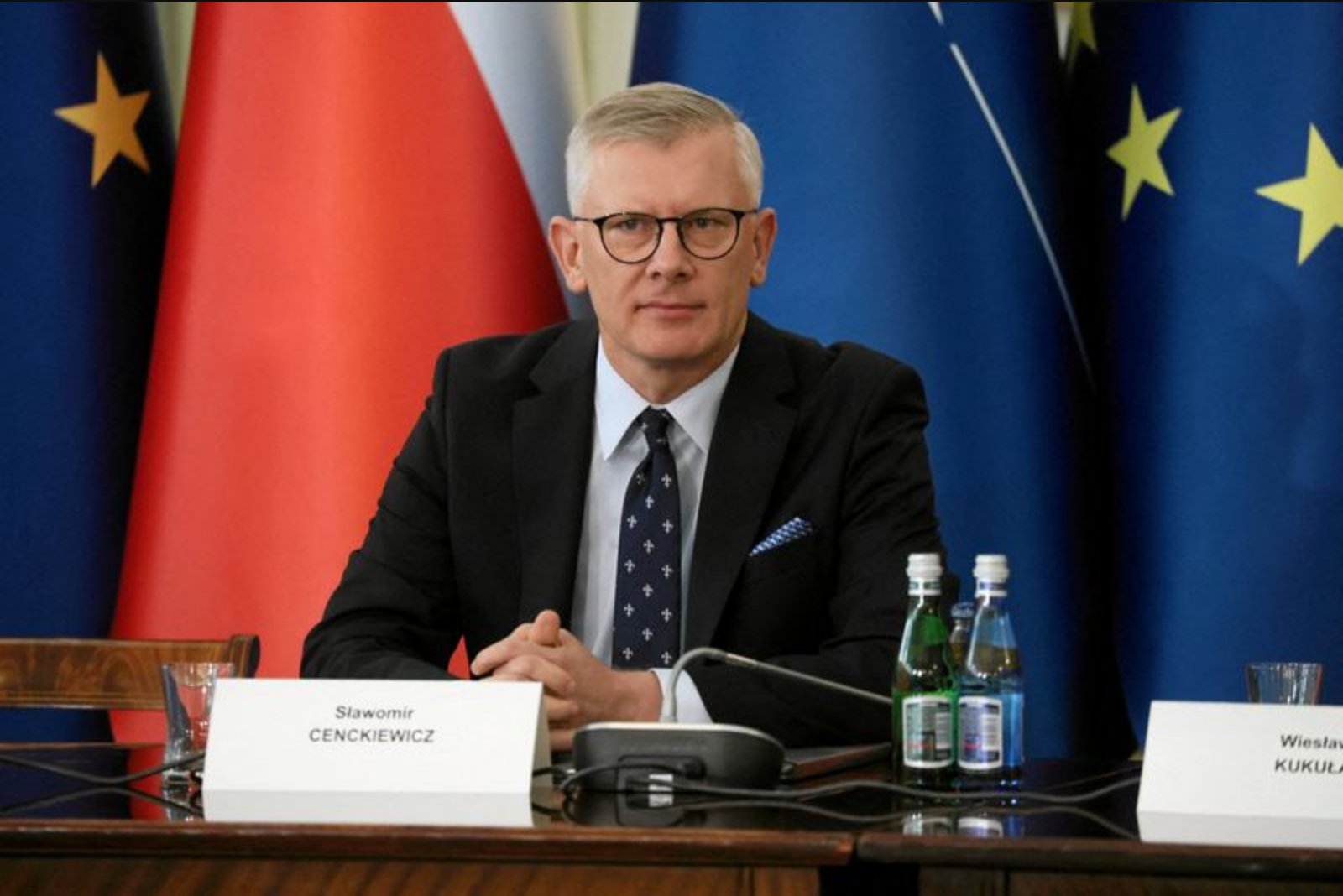
Slawomir Cenckiewicz, who leads Poland’s National Security Bureau, said Poland should keep a close watch on the Berlin-Paris dialogue but that its immediate priority should be NATO’s existing nuclear-sharing arrangement, which allows non-nuclear allies to host and deliver U.S. warheads as part of collective deterrence against potential Russian threats.
"The United States has not stopped in this military and intelligence area for a moment, but is simply constantly developing this potential and investing in it," Cenckiewicz told Reuters.
Cenckiewicz argued that France’s nuclear doctrine places exclusive control of weapons in the hands of the French president - a point French President Emmanuel Macron is expected to clarify on Monday - and he said the decision to use nuclear weapons under NATO’s collective-defence clause, Article 5, should be taken collectively by allies.
He said that, in Poland’s view, the United States held a clear advantage over European nuclear powers, including both France and Britain, when it came to nuclear partnership and deterrence. For Warsaw, the depth of U.S. military and intelligence capabilities, and the ongoing investment in them, made Washington the partner of choice.
Most European nations continue to rely primarily on the United States to deter potential adversaries. Yet recent shifts in U.S. posture under former President Donald Trump have unsettled some European governments. Cenckiewicz referenced Mr. Trump’s moves that have been perceived as conciliatory toward Russia in the context of the Ukraine war and cited behaviours that have raised concerns among allies as contributing to a climate of uncertainty.
French officials have publicly said Paris does not aim to supplant the U.S. security umbrella or to compete with NATO. Nevertheless, Cenckiewicz’s remarks highlight a broader friction within Polish politics between officials who favour deeper European integration and those who emphasise transatlantic ties.
That domestic split is visible in Warsaw. Prime Minister Donald Tusk’s pro-European government has signalled interest in closer EU defence cooperation, while President Karol Nawrocki - described as aligned with Mr. Trump’s transatlantic posture - places primacy on NATO and ties with the United States. The two often differ on defence matters, and constitutionally the president, as supreme commander of the armed forces, has the capacity to block government initiatives.
Cenckiewicz said Poland must concentrate on building armed forces commensurate with the threats it faces. "Russia must be treated as an existential threat to Poland," he said. "In this logic, whether participation, entry into nuclear sharing, or in the perspective of building one’s own sovereign nuclear capabilities is a consequence."
The unfolding Franco-German discussions, Warsaw’s cautious posture toward Paris, the emphasis on NATO mechanisms and Poland’s internal political divide together underpin a debate over Europe’s future nuclear posture. For now, Poland is urging allied unity under NATO frameworks and underscoring the centrality of the United States in the continent’s nuclear deterrent calculus.