
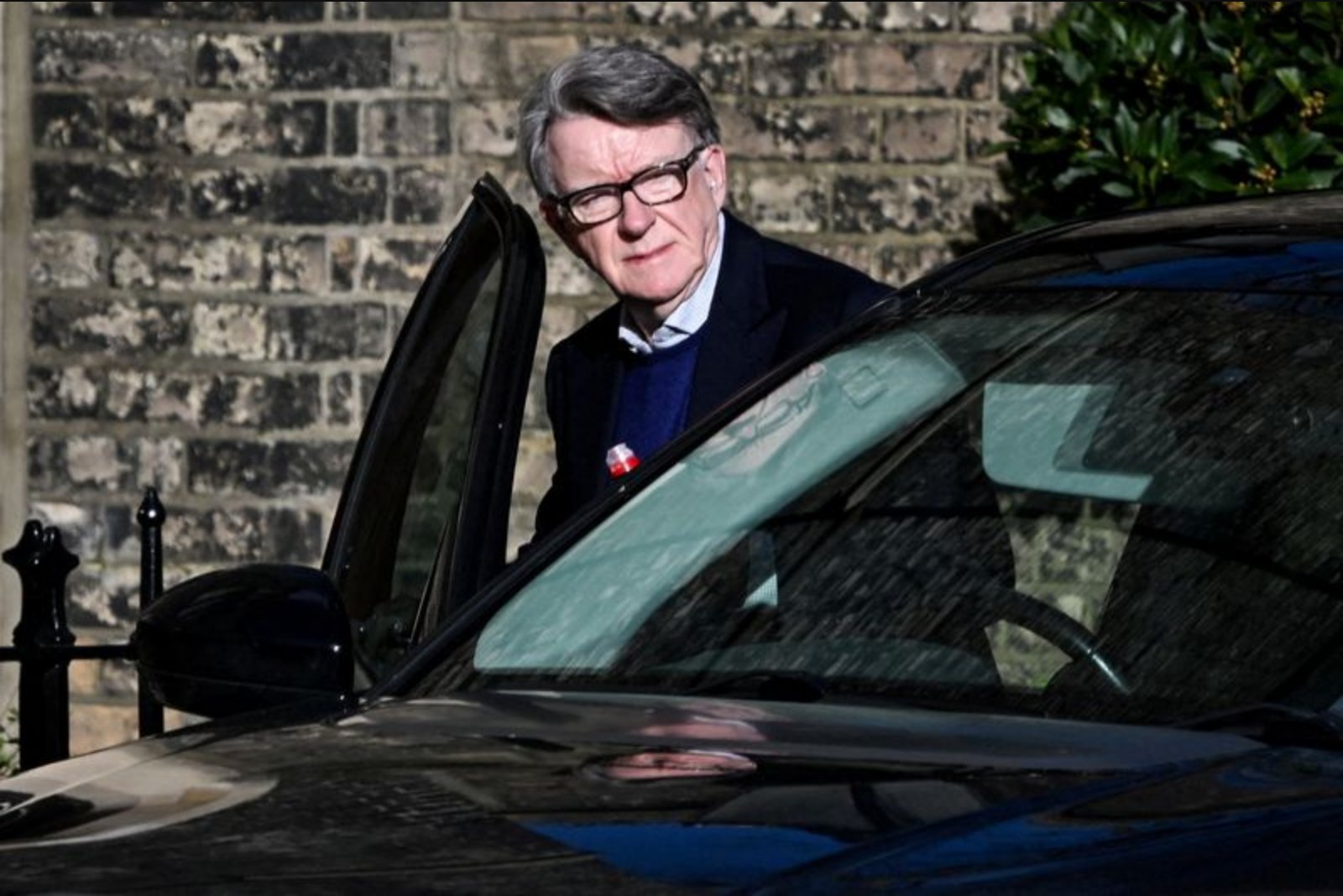
LONDON, Feb 23 - Peter Mandelson, the former British ambassador to the United States, was released on bail on Tuesday after being taken into custody in London on suspicion of misconduct in public office. The arrest came as investigators pursue a criminal inquiry prompted by communications between Mandelson and Jeffrey Epstein that were provided to the government.
London's Metropolitan Police said in a statement that "Officers have arrested a 72-year-old man on suspicion of misconduct in public office" in relation to an investigation into a former government minister. The arrest signals that police suspect a criminal offence has occurred but does not imply guilt.
Mandelson, 72, was filmed leaving his central London residence on Monday afternoon in the company of plainclothes officers wearing body cameras before being driven away in a vehicle. A subsequent police statement said he had been released on bail pending further inquiries. He was seen returning to his home at about 0200 GMT.
Legal representatives for Mandelson, through law firm Mishcon de Reya, said the arrest followed what they described as a "baseless suggestion" that he intended to leave the country and settle abroad. The firm said Mandelson had agreed to attend a voluntary interview with police next month but was nevertheless arrested, and that it had requested from authorities the evidence that justified the detention.
How the inquiry began
Police opened a criminal investigation earlier this month after communications between Mandelson and Epstein were passed to law enforcement by the government of Prime Minister Keir Starmer. Those communications included emails released by the U.S. Department of Justice in late January which, according to the materials, showed a closer relationship between Mandelson and Epstein than had previously been publicly acknowledged.
The released emails indicate that Mandelson, while serving as a minister in the government led by then-Prime Minister Gordon Brown in 2009, shared information with Epstein. Those revelations prompted intensified scrutiny of Mandelson's ties to Epstein and played a role in his dismissal from the ambassadorship.
Recent resignations and searches
This month Mandelson resigned from the Labour Party under Prime Minister Starmer and also gave up his position in the upper chamber of parliament. He has previously said he "very deeply regretted his association with Epstein." He has not issued a public comment in response to the most recent developments and has not answered messages seeking comment on the latest revelations.
Police searched Mandelson's residences in London and in the west of England earlier in the month as part of their inquiry.
Broader political fallout
The controversy surrounding Mandelson's relationship with Epstein has become the focal point of a political scandal that has already led to the resignations of two senior government officials. The episode has intensified pressure on Prime Minister Starmer over the vetting process that preceded Mandelson's appointment as ambassador.
Parliament has ordered the release of documents connected to Mandelson's vetting, and a minister indicated that the first tranche of those documents should be published in early March. Opposition and public scrutiny have included calls for Starmer to step down over the decision to appoint Mandelson.
Legal context
A conviction for misconduct in public office is a serious criminal outcome. The offence carries a maximum sentence of life imprisonment and must be tried in a Crown Court, the forum reserved for the most serious criminal matters.
Investigations into access and disclosure of government information are also active elsewhere. Last week a separate arrest was made in connection with allegations that confidential government documents were shared with Epstein - the younger brother of King Charles, Andrew Mountbatten-Windsor, was detained on suspicion of misconduct in public office over those separate allegations and has denied wrongdoing.
Mandelson's political record
Mandelson's career in British politics has been long and eventful. He rose to prominence in the 1990s as a central figure in the New Labour project and has faced controversy before. He was forced to resign twice from the cabinet - first in 1998 over the non-disclosure of a home loan from a colleague, and again in 2001 amid allegations he attempted to influence a passport application.
He served again as a minister in Gordon Brown's government from 2008 to 2010. More recently, in late 2024 he was appointed by Prime Minister Starmer to serve as ambassador to the United States. The appointment was initially regarded by some as politically astute; early in the posting Mandelson helped secure an agreement that made Britain the first country to reach a deal with the United States to reduce certain tariffs imposed under President Donald Trump.
However, documents that revealed the extent of his connection to Epstein led to his dismissal from the ambassadorial role a few months after his appointment. Prime Minister Starmer has said that Mandelson lied about the extent of his ties to Epstein during the vetting process.
Current status and next steps
At present Mandelson remains on bail while police continue their inquiries. The law firm representing him has formally requested evidence from authorities to explain the rationale for the arrest. The criminal investigation and the parliamentary review of vetting documents are likely to continue to shape political debate in the coming weeks.
Given the gravity of the allegations and the potential legal penalties involved, developments in this case will be watched closely by political actors, legal observers, and the public. For now, the arrest and release on bail mark the latest stage in an unfolding investigation tied to communications with Jeffrey Epstein and the wider implications for ministerial appointments and vetting procedures.