
World March 16, 2026

Peruvian left-wing contender narrows gap with leading candidates as election nears

New poll shows Alfonso Lopez Chau gaining ground while frontrunners remain within the survey margin of error

By Nina Shah
Peruvian left-wing contender narrows gap with leading candidates as election nears

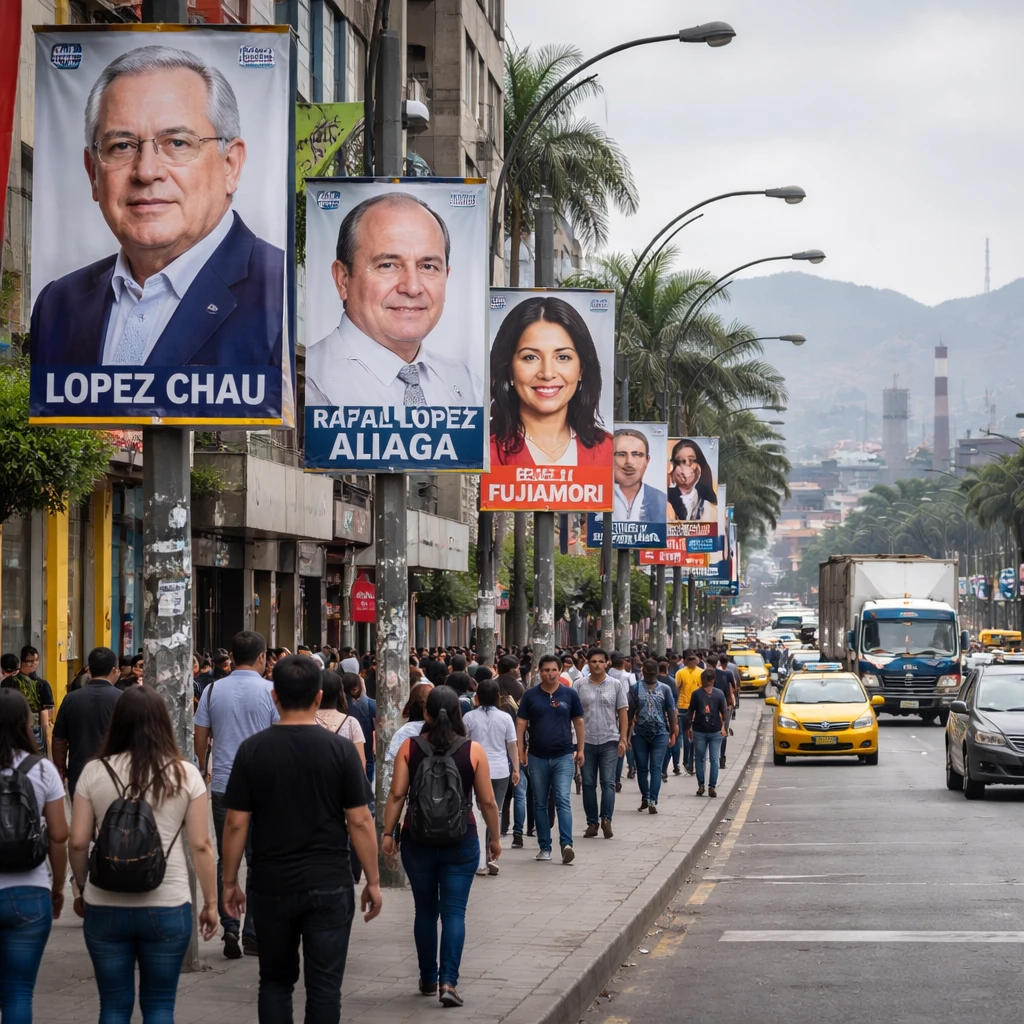
A Datum Internacional poll conducted March 6-10 shows left-wing economist Alfonso Lopez Chau rising to 6.5% support, closing the gap with leading right-wing contenders Rafael Lopez Aliaga (11.4%) and Keiko Fujimori (10.9%) ahead of Peru's April 12 presidential vote. High levels of undecided voters and a narrow margin of error leave the race fluid, while recent official data show the economy grew 3.54% year-on-year in January driven by higher production of copper, zinc, gold and silver.

Key Points

  • Poll conducted March 6-10 shows Alfonso Lopez Chau rising to 6.5% from 5.1%, closing in on leading candidates Rafael Lopez Aliaga (11.4%) and Keiko Fujimori (10.9%) within a +/-2.5% margin of error.
  • A large share of voters remain undecided or plan not to vote (36.7%), down from 38.5% but well above the 18% at a comparable point before the 2021 election; this contributes to an uncertain electoral outcome and likely a June runoff.
  • Peru’s economy expanded 3.54% year-on-year in January, supported by increased production of copper, zinc, gold and silver, underscoring the continued importance of the mining sector to the national economy and markets.

Summary: A recent Datum Internacional survey points to tightening competition in Peru's presidential race, with a left-wing candidate making gains against two right-wing frontrunners in the weeks before the first-round vote on April 12. The poll also highlights a large pool of undecided voters and provides context on the country's economic performance.

Poll details

The Datum Internacional poll, fielded March 6-10 and released on America Television, shows Alfonso Lopez Chau, an economist and former central bank director running for Juntos por el Peru, at 6.5% support. That marks an increase from 5.1% in the prior survey.

Leading the field are Rafael Lopez Aliaga with 11.4% and Keiko Fujimori with 10.9%, according to the same survey. Those figures fall within the poll's margin of error of +/-2.5%, which could imply a technical tie among the top contenders.

Retired air force general and former intelligence director Wolfgang Crozo is in fourth place at 5.1%.

The share of respondents who are undecided or say they will not vote declined to 36.7% from 38.5% in the prior poll, though it remains elevated compared with the 18% recorded at a similar point before the 2021 presidential election.

Political timetable and expectations

Peru will hold its presidential election on April 12. Given the distribution of support reflected in the poll, no first-round winner is expected, and a run-off vote is anticipated in June. The incoming president is set to take office at the end of July.

Peru has experienced sustained political turnover in recent years, registering eight presidents since 2018.

Economic backdrop

Official figures cited in the poll report show Peru's economy expanded 3.54% year-on-year in January, a performance supported by increased production of copper, zinc, gold and silver. The country remains the world’s third-largest copper producer and has an economy that is heavily reliant on mining.

Analysis considerations

The poll indicates shifting voter preferences with a substantial share of the electorate still undecided. From a market and sector perspective, the mining-reliant nature of the economy is a salient factor referenced in the data, given the reported uptick in metal production in January.

Keiko Fujimori is running for president for a fourth time; she is the daughter of the late ex-president Alberto Fujimori, who was imprisoned 16 years for human rights abuses.

Conclusion

The survey suggests a competitive and unsettled presidential contest with a sizeable bloc of undecided voters. With the first round scheduled for April 12 and a runoff expected in June, the next month of campaigning will be critical in shaping final voter decisions.

Risks

  • High proportion of undecided voters (36.7%) presents electoral uncertainty - impacts political outcomes and potential near-term market sentiment, particularly in sectors sensitive to policy shifts such as mining and commodities.
  • Close standings within the poll’s margin of error (+/-2.5%) mean the leading positions are not secure - this heightens political volatility ahead of the April 12 vote and could influence investor positioning until the runoff is resolved.
  • Sustained political instability in Peru, evidenced by eight presidents since 2018, remains an ongoing uncertainty - this persistent turnover can affect regulatory consistency and long-term planning for sectors dependent on government policy, notably the mining industry.

More from World

U.N. Extends Afghanistan Assistance Mission for Three Months After U.S. Seeks Review Mar 16, 2026 Kennedy Center trustees set to vote on temporary closure for Trump's renovation plan Mar 16, 2026 Human Rights Watch Says El Salvador Has Detained Deported Salvadorans Without Judicial Oversight Mar 16, 2026 BBC Seeks Dismissal of Donald Trump’s $10 Billion Defamation Suit Over Edited Documentary Mar 16, 2026 Encyclopaedia Britannica Sues OpenAI, Alleging Unauthorised Use of Reference Content Mar 16, 2026