
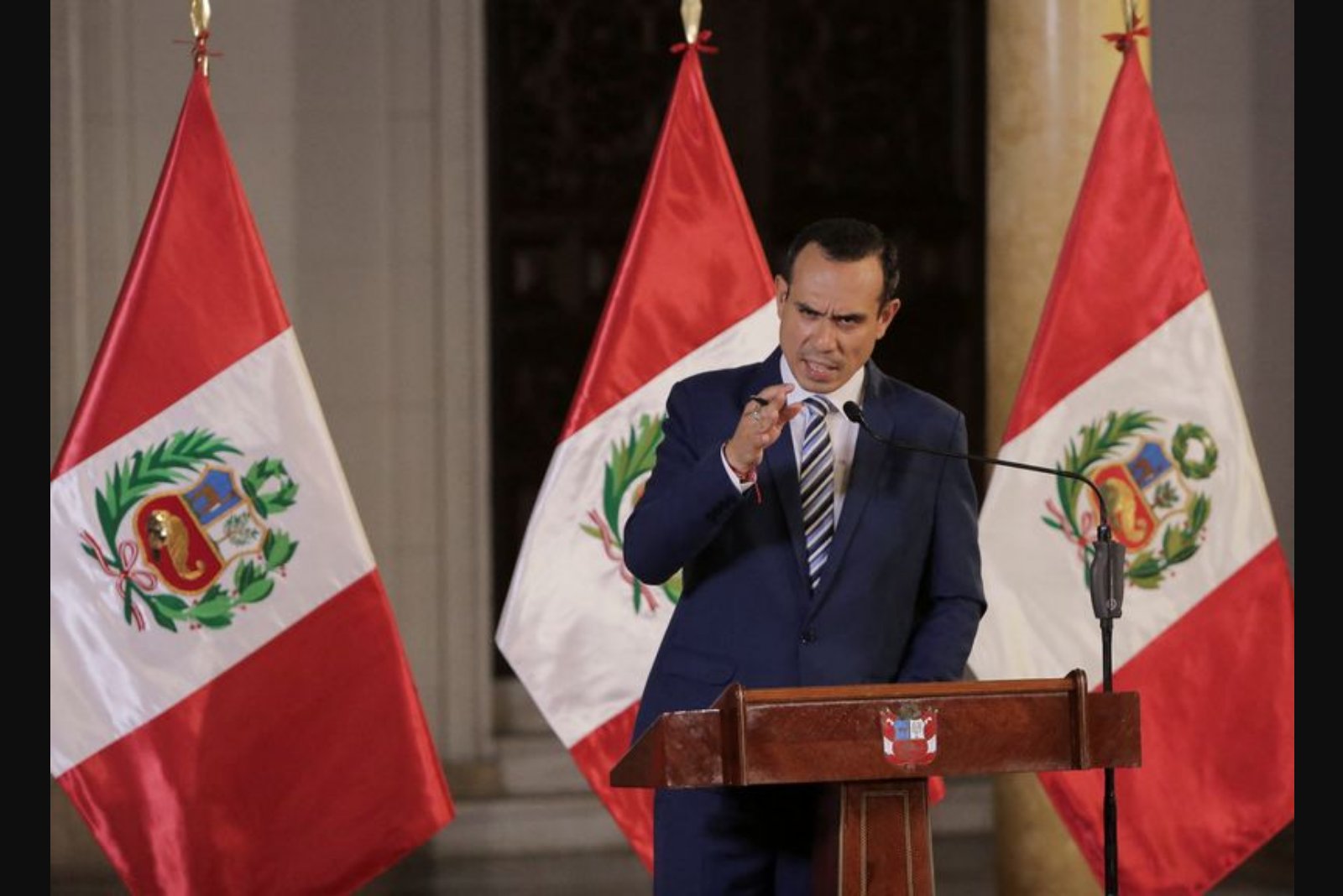
Peru's legislature voted on Tuesday to oust President Jose Jeri, removing him from office after a four-month tenure clouded by a scandal over an undisclosed meeting with a Chinese businessman. The motion to censure Jeri passed with 75 votes in favor, 24 against and three abstentions.
Under the congressional action, Jeri was stripped of his title as head of Congress - a move that also ended his interim presidency because he had assumed the executive office through the line of succession. The censure path used by legislators differs from an impeachment process in that it requires only a simple majority, while impeachment would have required a supermajority of 87 votes in the 130-seat legislature.
The case that triggered Jeri's removal has been dubbed "Chifagate" - drawing on a local term for Chinese restaurants - after footage emerged last month of Jeri arriving at a restaurant late at night wearing a hood to meet Zhihua Yang, a Chinese businessman who owns retail stores and holds a concession for an energy project. The meeting was not publicly disclosed, and its revelation prompted criticism from lawmakers and the public.
Jeri had become president in October when Peru's Congress voted unanimously to remove his predecessor, Dina Boluarte. Boluarte had lost the backing of right-wing parties amid corruption allegations and public anger over rising crime, and because she had no vice president, Jeri - then head of Congress - became next in the line of succession. That interim pathway was the procedural basis for Tuesday's censure and removal.
Lawmakers will now select a new head of Congress who will automatically assume the presidency. The current head of Congress, Fernando Rospigliosi, while constitutionally next in line, has said he will not take on the presidency. Rospigliosi also set a deadline for parties to present candidates - they have until 6 p.m. local time - and the legislature is scheduled to vote on a new president on Wednesday.
The change in leadership will make Peru's president the country's eighth in as many years and marks the third consecutive removal from office of a sitting president. The political turmoil has created a rapid succession of leaders and procedural transitions within Congress.
Representative Ruth Luque, who supported the censure action, argued that the country needs a transition focused on public interest and security rather than on private influence. "We ask to end this agony so we can truly create the transition citizens are hoping for," she said. "Not a transition with hidden interests, influence-peddling, secret meetings and hooded figures. We don’t want that sort of transition."
Lawmakers and political observers are navigating a compressed timeline: national elections are scheduled for April 12. The field for that vote is expected to be large, with dozens of candidates anticipated to enter the race. Recent polling from Ipsos cited in congressional discussion indicates that substantial portions of the electorate remain undecided about their choices for the April ballot.
The procedural sequence set in motion by the censure mirrors a past congressional selection for the presidency in times of crisis: in 2020, Congress chose a congressional leader to serve as president amid a sharp political crisis and protests following a five-day tenure by a previous president. While the circumstances differ, the constitutional mechanism of Congress selecting a head who then assumes the presidency has precedent in Peru's recent political history.
Jeri said he would respect the outcome of the congressional vote. With the presidency reverting to a congressional selection process, legislators must move quickly to name a new head of Congress who will take on the executive responsibilities until the April election determines the next democratically elected president.
Key points
- Peru's Congress voted 75-24-3 to censure and remove President Jose Jeri following revelations of an undisclosed meeting with Chinese businessman Zhihua Yang.
- The censure stripped Jeri of his role as head of Congress and, because he was serving as interim president through the line of succession, removed him from the presidency; legislators will elect a new congressional leader who will become president.
- National elections are scheduled for April 12 amid a crowded field of candidates and a large pool of undecided voters, creating continued political uncertainty.
Risks and uncertainties
- Procedural uncertainty - With the current congressional head declining the presidency and parties having a tight deadline to present candidates, the short window to elect a new leader creates institutional unpredictability that can affect governance continuity.
- Political volatility ahead of elections - A crowded candidate field and high levels of undecided voters, as indicated by recent polling, leave the electoral outcome uncertain and may influence campaign dynamics and public confidence.
- Concerns about influence and transparency - The censure was driven by undisclosed meetings and allegations of potential influence-peddling tied to a businessman with interests in retail and an energy concession, raising governance and integrity questions for sectors linked to business-government interactions.