
World March 5, 2026

Pentagon Says U.S. Objectives in Iran Remain Limited Despite Presidential Remarks

Defense secretary reiterates mission scope as administration comments raise questions about future leadership influence

By Priya Menon
Pentagon Says U.S. Objectives in Iran Remain Limited Despite Presidential Remarks

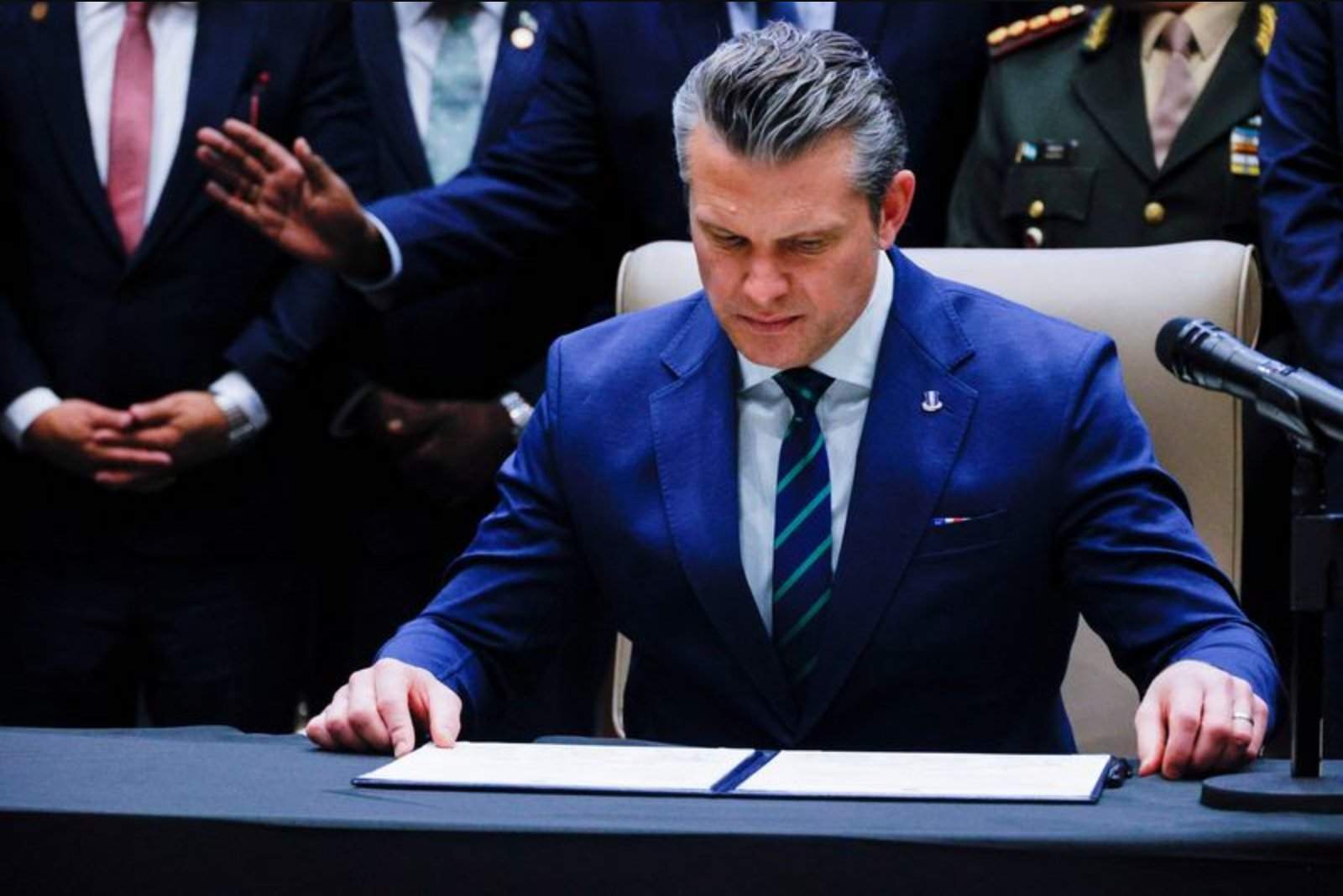
U.S. Defense Secretary Pete Hegseth on Thursday reaffirmed that American military goals in Iran have not broadened, following comments by President Donald Trump about U.S. involvement in selecting Iran's next leader. The Pentagon has described Operation Epic Fury as aimed at destroying Iran's offensive missiles, missile production capabilities and naval assets, and preventing Tehran from obtaining a nuclear weapon. Officials also report more than 2,000 targets struck in the past six days, including Iranian warships.

Key Points

  • The Pentagon has framed Operation Epic Fury as focused on destroying Iran’s offensive missiles, missile production capabilities and naval forces - a set of objectives that maps to defense procurement and naval sustainment sectors.
  • Defense Secretary Pete Hegseth stated there is no expansion of U.S. military objectives, emphasizing a defined operational goal set.
  • President Donald Trump said in a telephone interview that the United States would need to help select Iran's next leader; this political comment has prompted public clarification from the Defense Department.

U.S. Defense Secretary Pete Hegseth said on Thursday there has been no expansion of U.S. military objectives in Iran, stressing that the United States "knows exactly what we're trying to achieve." His clarification came after President Donald Trump said in a telephone interview that the United States would have to help choose Iran's next leader.

Earlier this week the Pentagon outlined the aims of the military campaign, identifying it by the name Operation Epic Fury. According to that Pentagon statement, the campaign is concentrated on destroying Iran's offensive missile systems, degrading missile production infrastructure and targeting its naval forces, with an overarching aim of preventing Tehran from acquiring a nuclear weapon.

Hegseth addressed the relationship between the administration's public comments and the military mission, saying "There’s no expansion in our objectives. We know exactly what we’re trying to achieve." He also commented on the president's remarks about Iran's leadership, saying Trump was "having a heck of a say in who runs Iran given the ongoing operation."

Officials report that in the past six days U.S. forces have struck more than 2,000 targets inside Iran, a tally that has included Iranian warships. The scale of the strikes and the stated targets - missiles, missile production and naval assets - align with the Pentagon's described objectives for Operation Epic Fury.

From an industrial and supply-chain perspective, those objectives and the tempo of operations relate directly to sectors that provide missile systems, naval platforms and associated sustainment logistics. The public messaging from both military and civilian leaders has been carefully framed to outline the scope of operations while also raising questions about political statements and their potential impact on perceptions of mission intent.


Summary: The defense secretary reaffirmed that U.S. military aims in Iran have not changed, emphasizing a focused campaign against missiles, missile production and naval forces, while the president said the United States would have to help pick Iran's next leader. U.S. forces have struck more than 2,000 targets in six days, including warships.

  • Operation: Operation Epic Fury is described as targeting offensive missiles, missile production and the Iranian Navy.
  • Political comments: The president said the United States would have to help choose Iran's next leader; the defense secretary reiterated no expansion of military objectives.
  • Strike tempo: Over 2,000 targets have been hit in six days, including naval vessels.

Risks

  • Public statements by political leaders about Iran's leadership could create perceptions of expanded objectives, raising uncertainty for diplomatic and military signaling - relevant to government relations and defense policy planning.
  • A high tempo of strikes - reported as more than 2,000 targets in six days, including Iranian warships - carries the risk of further escalation and continued operational demands on naval and munitions supply chains, affecting defense manufacturing and shipyard workloads.
  • Differences in public messaging between civilian leadership and military spokespeople could complicate market assessments for defense contractors and suppliers who track production rates and backlog conversion.

More from World

Jamaica to terminate Cuban medical cooperation after talks fail, local media reports Mar 5, 2026 United States and Venezuela Move to Restore Diplomatic and Consular Ties Mar 5, 2026 U.S. and Israel Execute Major Strikes on Iran; Supreme Leader Reported Killed Mar 5, 2026 Syria reopens Aleppo-Mediterranean air corridor as flights gradually resume Mar 5, 2026 Federal Judge Refuses to Pause California’s AI Data-Disclosure Law in xAI Challenge Mar 5, 2026