
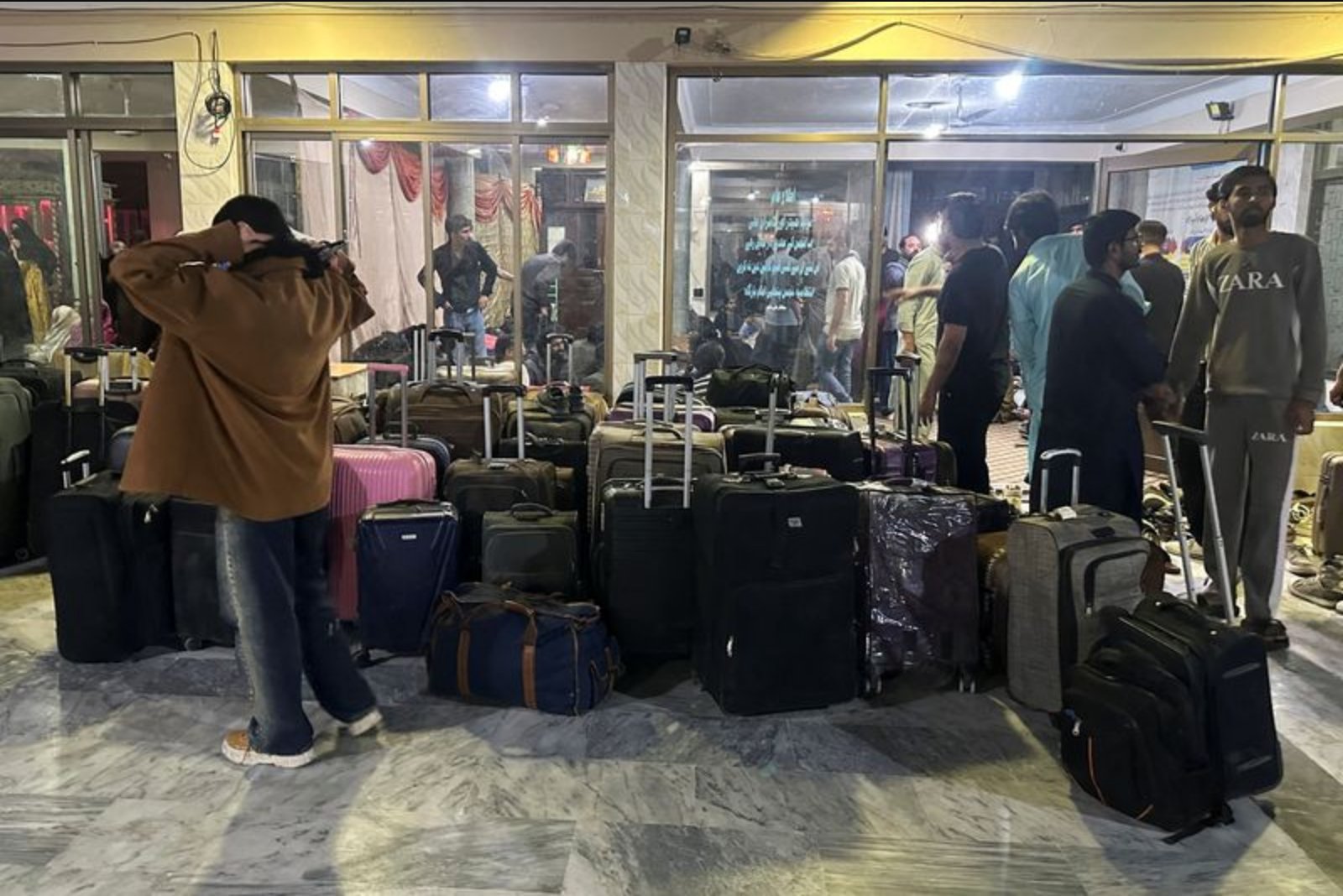
Quetta, Pakistan - March 5
Pakistanis escaping the fighting in Iran recounted scenes of explosions and missile strikes that felt like the earth itself was trembling beneath their feet, and described a capital where many residents have fled and fires and smoke now mar the skyline.
Those leaving Iran say Tehran has been shaken repeatedly by strikes, leaving buildings burning and streets largely deserted. The wider conflict has escalated sharply, with a U.S. submarine reported to have sunk an Iranian warship off Sri Lanka on Wednesday and NATO air defences intercepting an Iranian missile fired toward Turkey. Governments across the region have been racing to extract citizens stranded abroad while most regional airspace remains closed because of the danger posed by missiles to passenger aircraft.
"I was in the classroom when a powerful explosion rocked our university building," said Hareem Zahra, 23, a student at the Tehran University of Engineering, after she crossed into Pakistan on foot. "We saw thick smoke coming from many buildings on fire," she added, saying Tehran remained under attack up until the moment she left.
Pakistan's ambassador to Tehran, Mudassir Tipu, said nearly 1,000 Pakistanis - students, business people and pilgrims - have left Iran since the war began, from a population of some 35,000 Pakistanis in the country. He warned of serious logistical challenges, noting that internet service is unavailable in much of Iran, hindering communications and evacuation efforts.
Residents who escaped said the capital looked like a ghost town. Nadir Abbas, 25, a student of Persian literature in Tehran, said many streets were empty and that he had seen a drone strike hit a basketball court where he said six girl players died; his account could not be independently verified.
Other evacuees described strikes happening regularly. "The first attack happened right next to my hospital," said Sakhi Aun Mohammad, a student at Tehran University of Medical Sciences. After he reached the border with Pakistan, an Iranian friend called to tell him he was safe but that the hostel where he had been staying had been attacked.
A Pakistani diplomat still in Tehran reported attacks occurring every four to five hours and said one missile struck a building adjacent to his office. "At times you will feel as if something exploded right at your feet," he said. "The last time I got out was at night. Buildings had collapsed, some others were on fire. There is destruction everywhere. It is almost like a ghost town."
The conflict has involved strikes and counterstrikes across multiple theaters. Iran has launched a barrage of ballistic missiles aimed at Israel and U.S. partners in the Gulf - including Qatar, Kuwait, the United Arab Emirates and Saudi Arabia - in response to U.S. and Israeli air strikes that killed Supreme Leader Ayatollah Ali Khamenei on Saturday, according to statements referenced by evacuees and officials. NATO forces reportedly destroyed an Iranian missile fired toward Turkey, and separate naval action resulted in a U.S. submarine sinking an Iranian warship off Sri Lanka on Wednesday.
Authorities are facing mounting difficulties in moving citizens to safety. With most airspace in the region closed to civilian traffic due to the threat of missile strikes on passenger flights, governments have turned to land routes and overland crossings to evacuate people. The disruptions to communications within Iran have further complicated coordination.
For Pakistan, the crisis poses a diplomatic and domestic challenge. Islamabad is trying to balance deepening ties with Washington while also expressing support for Iran. Home to the world’s second-largest Shi'ite population after Iran, Pakistan faces the prospect that being drawn into the conflict could fuel instability at home and complicate efforts to bring citizens back safely.
As hundreds continue to cross into Pakistan, evacuees and officials say Tehran bears visible scars from repeated strikes, and the immediate priority for many is safe passage out of the country amid ongoing uncertainty about how the conflict will unfold.