
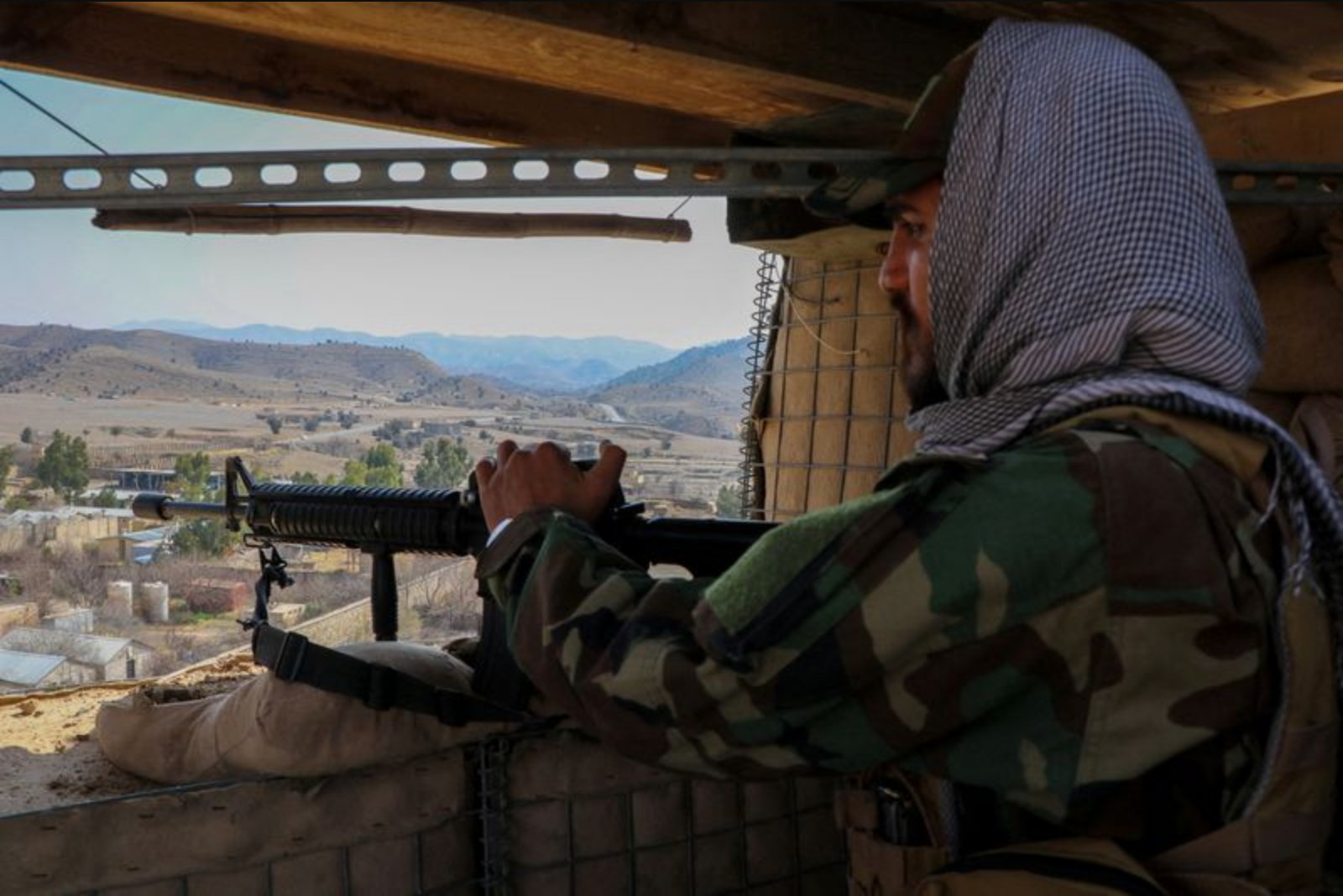
Weeks after the Taliban’s rapid return to power in 2021 prompted visiting overtures from Pakistan’s security establishment, a now-dramatic rupture has opened between Islamabad and Kabul. In 2021, Pakistan’s then intelligence chief flew to Kabul and told a reporter: "Don't worry, everything will be okay." Today, the relationship is marked by the heaviest fighting between Pakistan and the Afghan Taliban since that time.
Pakistan, long viewed as enjoying close ties with the Taliban, has accused the movement of sheltering and aiding militant groups such as the Tehreek-e-Taliban Pakistan (TTP) that have carried out attacks inside Pakistan. The Afghan Taliban denies directing such operations and says Pakistan’s security challenges are an internal matter for Islamabad. The dispute reflects a deeper mismatch in expectations between the two sides - Pakistan expected reciprocal compliance after years of support, while the Taliban did not consider itself beholden to Islamabad, analysts say.
"Neither side had an honest conversation about what the relationship would actually look like. That structural misunderstanding is the seed of everything that followed," said Jennifer Brick Murtazashvili, a political scientist and Afghanistan expert at the University of Pittsburgh.
Although clashes had been occurring along their rugged 2,600-km frontier for months, the recent shift is significant because Pakistani forces used warplanes to strike Taliban military installations beyond the border regions, including targets deep inside Afghanistan's capital, Kabul, and in Kandahar, the seat of Taliban supreme leader Hibatullah Akhundzada, according to Pakistan military spokesman Lieutenant General Ahmed Sharif Chaudhry. Pakistan’s Defence Minister Khawaja Muhammad Asif described the confrontation as an "open war" on Friday.
The clashes have thrust a broad swathe of Asia - stretching from the Gulf to the Himalayas - into uncertainty. The turmoil coincides with a U.S. military buildup in response to tensions involving Iran, while Pakistan’s relationship with rival India remains tense after four days of fighting last May. The combination of frayed ties on multiple fronts complicates regional security calculations and elevates the risk of prolonged instability.
On paper, Pakistan’s armed forces present a commanding conventional advantage. The country fields around 660,000 active military personnel and operates a fleet of 465 combat aircraft, supported by several thousand armoured fighting vehicles and artillery pieces. By contrast, the Afghan Taliban’s available manpower is far smaller - roughly 172,000 active fighters - with only a limited number of armoured vehicles and no air force.
Yet the Taliban’s battlefield experience and potential to leverage allied insurgent groups complicate any simple metric of strength. Analysts warn that the group can either retreat from escalation or intensify support for militant proxies such as the TTP and the Baloch Liberation Army (BLA), enabling operations inside Pakistan and extending the conflict beyond border clashes.
"So either the Taliban can basically take a step back from the brink, or they can step forward and continue fighting at the borderland, but also increase support for TTP, BLA, and all the other groups to operate inside Pakistan," said Avinash Paliwal, reader in international relations at SOAS University of London.
The BLA, based in Pakistan’s largest and poorest province of Balochistan that borders both Iran and Afghanistan, has waged a long-running insurgency and in recent years has carried out large coordinated attacks. Islamabad has repeatedly accused India of backing insurgent groups in the past - allegations New Delhi denies - and India has maintained a robust military posture along its border with Pakistan since last May. Former Pakistani diplomat Maleeha Lodhi described a two-front conflict as a longstanding nightmare scenario for Islamabad.
"For Pakistan, a prolonged breakdown in relations (with Afghanistan) compounds its security challenge, given the unstable situation on the eastern frontier with India," Lodhi said.
Analysts warn that the immediate battleground is likely to expand. "We are in uncharted territory," said Abdul Basit, an expert on militancy and violent extremism at Singapore’s S. Rajaratnam School of International Studies. "What we are witnessing is a recipe for instability, as a result of which there will be more violence, there will be more tensions. And terrorist groups will gain strength by exploiting the chaos." The potential for insurgent groups to leverage disorder is a central concern among observers.
Amid rising tensions, a number of influential countries - including China, Russia, Turkey and Qatar - have indicated willingness to help mediate, but their diplomatic efforts have produced limited success to date. The gulf between what each side expects and what it will accept remains wide, making near-term de-escalation a challenging prospect.
"The challenge for now is that there’s a huge gap between the expectations of the two sides," said Ibraheem Bahiss, a senior analyst with the International Crisis Group focused on Afghanistan. "We need to somehow bridge that to come to a more realistic compromise that’s both doable and digestible for both sides."
For markets and supply chains, the immediate implications stem from heightened geopolitical risk across a region critical to energy flows and overland trade routes. While firms and governments assess responses, the persistence of military confrontation and cross-border instability threatens to complicate logistics planning, shipping patterns, and investor confidence in the near term.
Ultimately, the current trajectory suggests a conflict that may not be resolved quickly. The combination of conventional Pakistani military strength, the Taliban’s resilience, the potential for proxy escalation, and entrenched regional rivalries points to a period of sustained uncertainty. How the parties - and external mediators - navigate the gap in expectations will determine whether the situation stabilises or further entrenches into a long-running crisis.