
One week into the U.S.-Israeli military campaign directed at Iran, the situation has moved beyond a series of targeted strikes and is now reverberating across the Middle East and into U.S. domestic politics. Actions that included the killing of Supreme Leader Ayatollah Ali Khamenei and significant blows to Iranian forces on land, at sea and in the air have not produced a clear, narrowly bounded outcome. Instead, the crisis has widened into a regional confrontation that could extend U.S. military involvement and create consequences that Washington may struggle to control.
President Donald Trump came into office pledging to avoid open-ended foreign entanglements and to favor quick, limited operations. Analysts note that his previous operations, such as the January special operation in Venezuela and a single, sharp strike on Iran's nuclear sites last June, fit that model. By contrast, the current campaign - publicly labeled Operation Epic Fury and described by U.S. officials as the largest military operation since the 2003 Iraq invasion - appears to many observers to carry the risk of becoming a prolonged military commitment.
"Iran is a messy and potentially protracted military campaign," said Laura Blumenfeld of the Johns Hopkins School for Advanced International Studies in Washington. "Trump is risking the global economy, regional stability and his own Republican Party's performance in the U.S. midterm elections."
Administration officials and the president have advanced multiple rationales for the campaign, but critics say a precise set of objectives and a clearly defined endgame remain elusive. White House spokesperson Anna Kelly rejected that critique, saying the president has laid out goals to "destroy Iran's ballistic missiles and production capacity, demolish their navy, end their ability to arm proxies, and prevent them from ever obtaining a nuclear weapon." Even so, officials and analysts caution that without a consistent strategic narrative and measures for success, the potential costs of a protracted campaign will be harder to manage.
Political calculus and domestic implications
Domestically, Trump faces a widening set of political risks. So far his core Make America Great Again movement has largely supported the campaign despite some criticism from within that faction about a departure from earlier promises to avoid new wars. But broader public opinion appears less supportive, and polling indicators show opposition among independent voters - a group that often determines the balance of power in midterm elections. Analysts warn that should support among the MAGA base soften, or American casualties rise, Republican prospects in November could suffer.
"The American people are not interested in repeating the mistakes of Iraq and Afghanistan," said Brian Darling, a Republican strategist. "The MAGA base is split between those who relied on no-new-war promises and ones who are loyal to Trump's judgment."
Confusion over ultimate aims for Iran has compounded political uncertainty. Early in the crisis the president suggested that fomenting internal revolt or overthrowing Iran's rulers was a potential objective. Within days, his emphasis shifted away from regime change. Later remarks included saying he would play a role in choosing Iran's next leader and encouraging Iranian Kurdish rebels to take action, followed by a social media demand for Iran's "unconditional surrender." Observers say that mixed messaging has complicated both the diplomatic and domestic narratives around the campaign.
Regional escalation and proxy activity
The campaign has increased pressures across the region. Iran's retaliatory strikes have targeted Israel and other neighbors, an approach that aims to sow disorder and raise the costs for Israel, the U.S. and allied states. The conflict has now extended as Iran appears capable of activating proxy groups; Lebanon's Hezbollah militia has renewed hostilities with Israel, expanding the theater into another country.
American losses have been comparatively limited to date, with six U.S. service members killed. The president has not ruled out further deployments of ground forces and has been candid about potential casualties. Asked whether Americans should fear Iran-inspired attacks on U.S. soil, the president said in a published interview: "I guess ... Like I said, some people will die." Former intelligence official Jonathan Panikoff warned that higher U.S. casualties could hasten domestic pressure for an end to the campaign. "Nothing is likely to hasten an early end to the war more than American casualties ... That's what Iran is counting on," he said.
Comparisons to Venezuela operation and miscalculations
Some analysts believe the administration miscalculated by expecting the Iran campaign to unfold along the lines of its operation in Venezuela earlier this year. That operation reportedly featured U.S. special forces capturing Venezuelan President Nicolas Maduro, which in the view of some U.S. officials opened opportunities to exert influence over that country's oil resources without prolonged military presence. Iran, by contrast, has presented a far more formidable and resilient adversary, with deep-rooted clerical and security institutions that have continued to operate even after high-level targeting.
Even the joint U.S.-Israeli "decapitation" strike that removed Khamenei and other senior leaders has not prevented Iran from mobilizing a military response. That outcome has also raised questions among some analysts about the possibility that replacements could be even more hardline, and whether the country's political architecture might fragment if current rulers fall - a scenario that would carry its own set of risks for regional stability.
Mark Dubowitz, CEO of the Foundation for the Defense of Democracies, praised the overall strategy while cautioning that the president should publicly clarify that he does not want the country to disintegrate.
Energy markets and the Strait of Hormuz
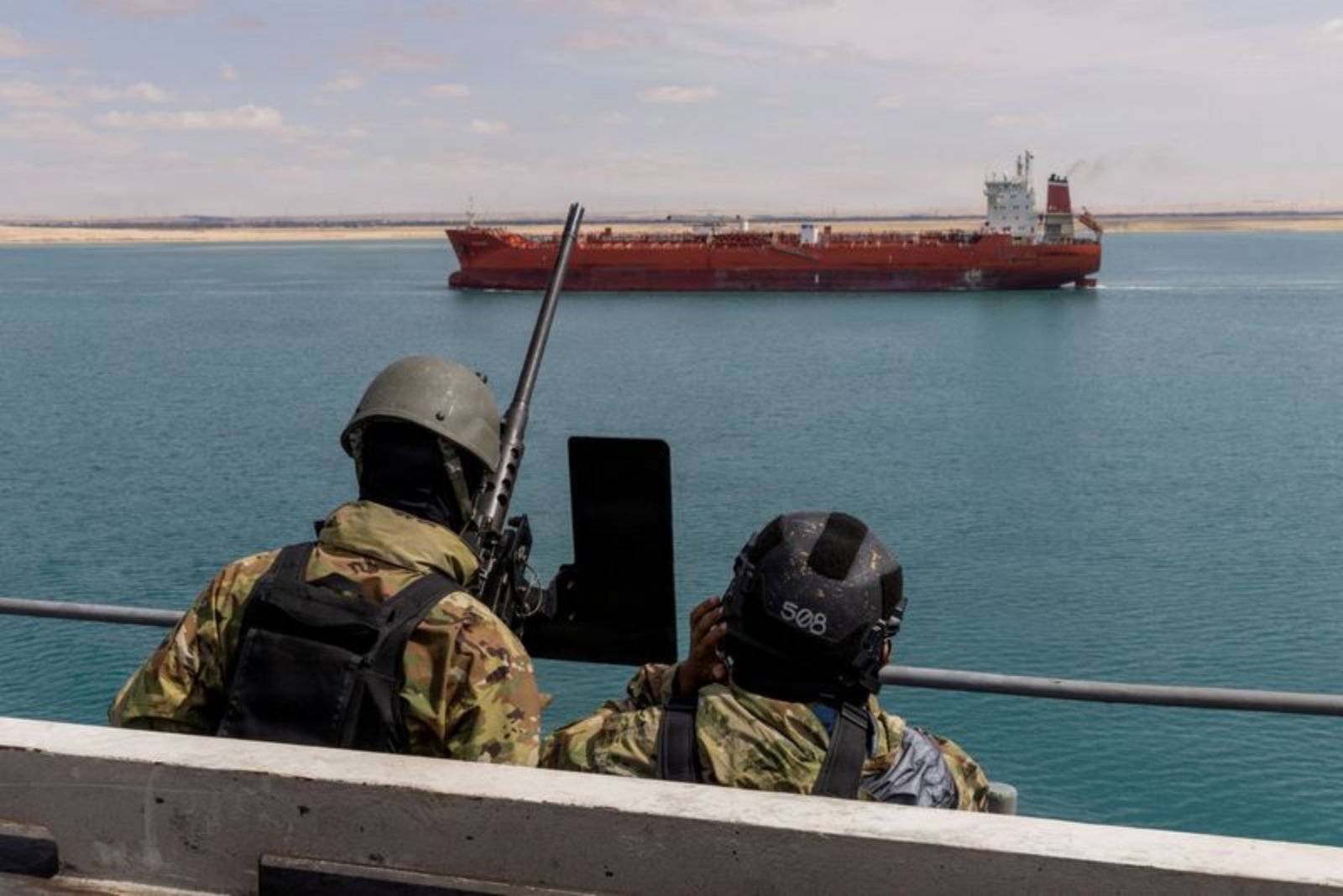
One of the most immediate concerns stems from threats to the Strait of Hormuz, the narrow waterway through which roughly one-fifth of global oil passes. Shipping has stagnated in the area, and tanker traffic has been halted. The interruption of flows through this chokepoint has the potential to inflict significant economic damage if it continues, with consequences for global energy markets and for consumer energy costs that could echo back to American voters.
Although the president has publicly downplayed worries about rising gasoline prices, he and his aides have scrambled to find ways to mitigate the campaign's impact on energy supplies. Polling indicates that voters regard the cost of living as a top concern, and rising fuel costs would likely intensify domestic political pressure.
"It's an economic pain point on the U.S. economy that it seems was not fully anticipated," said Josh Lipsky of the Atlantic Council. One former U.S. military official close to the administration suggested to analysts that the widening economic consequences surprised some in the White House because those with detailed knowledge of oil markets were not consulted prior to the strikes on Iran. The White House spokesperson reiterated that "The Iranian regime is being absolutely crushed" but did not directly address whether economic and energy contingencies had been fully planned.
Allied reactions and the decision-making dynamic
Some traditional U.S. allies were reportedly caught off guard by the campaign. A Western diplomat described an internal perception that the decision-making circle in the White House was narrowly drawn. Several senior aides had warned publicly and privately that escalation with Iran could be difficult to contain, but the president proceeded with the strikes despite those warnings, according to people familiar with the matter.
Gulf Arab states, which host long-standing U.S. bases and have made commitments to large American investments, have lined up behind Washington more visibly after Iran directed missile and drone strikes at them. Nonetheless, not every regional actor has embraced the campaign. In an open letter published this week, UAE billionaire Khalaf Al Habtoor asked: "Who gave you the right to turn our region into a battlefield?"
Costs, timeline and strategic uncertainty
The campaign's ultimate duration is uncertain and will likely be the key determinant of its broader costs. The administration has offered varying projections - the president has said the operation could last four or five weeks or "whatever it takes" - yet a clear plan for what comes after kinetic operations is not apparent from public statements. Analysts warn that the accumulating price tag, the risk of mounting casualties, and the economic implications of disrupted oil exports combine to make the campaign a major gamble for the U.S. presidency.
Retired Lieutenant General Ben Hodges, a former commander of U.S. Army Europe, complimented the conduct of military operations but criticized the campaign's political, strategic and diplomatic preparation. "From a political, strategic and diplomatic standpoint, it seems not to have been thought all the way through," he said.
As the campaign continues to evolve, Washington's capacity to manage the economic ripple effects, shore up allied support and present a coherent strategic narrative will be tested. The coming weeks are likely to determine whether the operation achieves the limited, defining results the administration has articulated or whether it becomes a protracted and more costly military engagement with wide-ranging implications for regional stability and U.S. politics.