
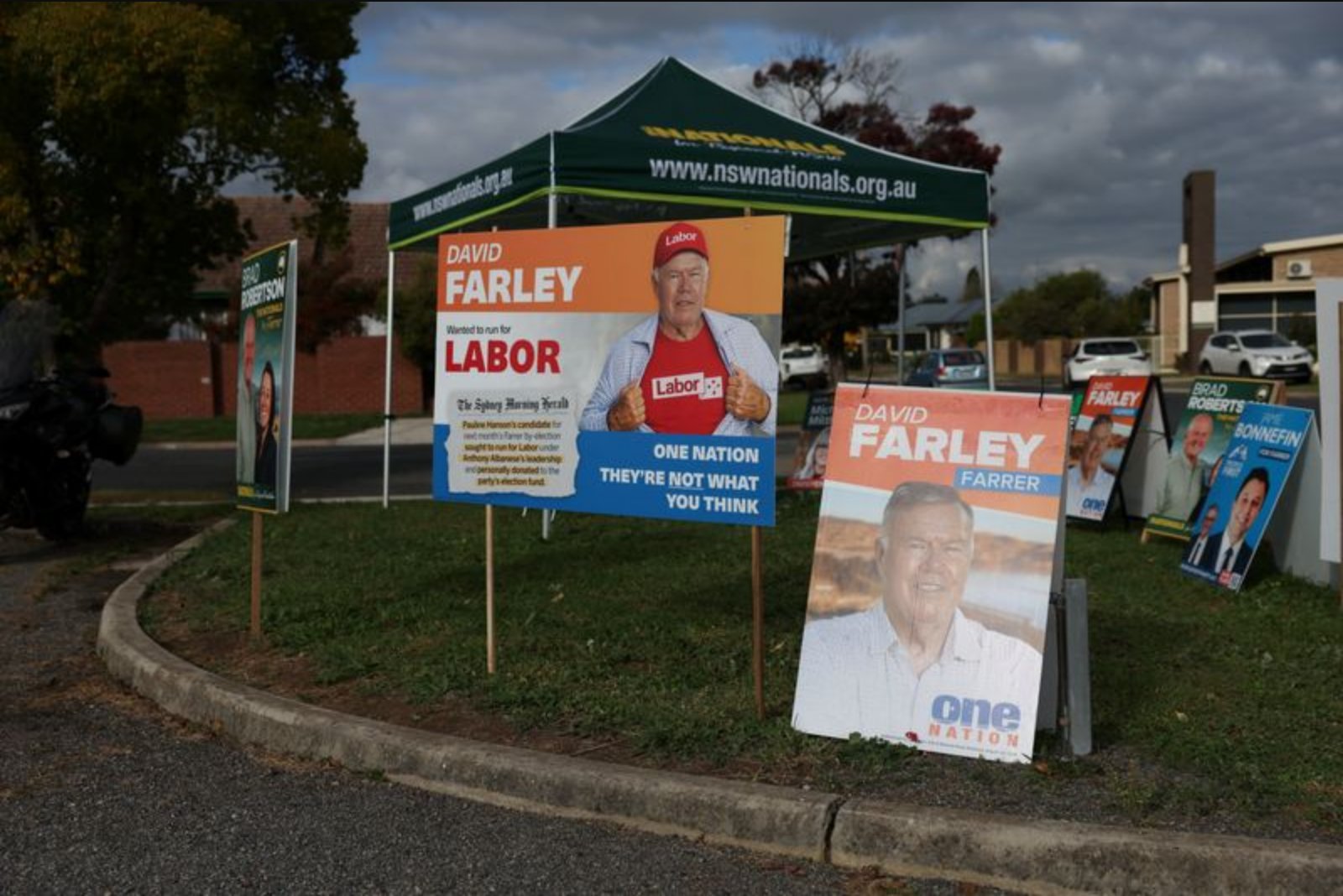
SYDNEY, May 9 - Preliminary results from Saturday's byelection indicate that Pauline Hanson’s One Nation has secured its first seat in Australia’s House of Representatives. The projected victor is David Farley, a former agribusiness executive, who won the rural Farrer electorate with a projected 59.1% of the vote, according to the Australian Broadcasting Corp.
Farrer, located roughly 550 km south of Sydney and about 320 km north of Melbourne, was previously held by the Liberal Party. The seat became vacant after the resignation of former Liberal leader Sussan Ley in February. The Labor Party did not field a candidate in the contest for the electorate, which has been in conservative hands since its creation more than half a century ago.
The projected margin prompted a clear early call from election analysts. "It’s very clear, the next member for Farrer is David Farley," Australian Broadcasting Corp election analyst Casey Briggs said in a broadcast. "It’s not a close result."
Observers have noted the significance of the outcome for One Nation: it marks the first time the party has won a lower-house seat since Pauline Hanson established the party 30 years ago. While the gain is historically notable for the party, it does not alter the standing of the federal government. The ruling Labor Party continues to hold a majority in the House of Representatives, retaining 94 of the chamber's 150 seats.
Commentators have framed the Farrer result as consistent with a wider pattern of growing electoral support for far-right populist parties internationally. The report referenced contemporaneous losses suffered by Britain’s ruling Labour party in council elections earlier in the week as an example of political shifts in other countries.
With the byelection outcome finalized through preliminary counts, the immediate parliamentary arithmetic remains unchanged. The electoral change in Farrer represents a localized shift in representation, notable for One Nation's lower-house breakthrough but not sufficient to affect the Labor government's majority.
Clear summary: Preliminary counts show One Nation candidate David Farley winning the Farrer byelection with a projected 59.1% of the vote, giving the party its first seat in the House of Representatives since its formation. The result follows the resignation of former Liberal MP Sussan Ley and does not change Labor's 94-seat majority.