
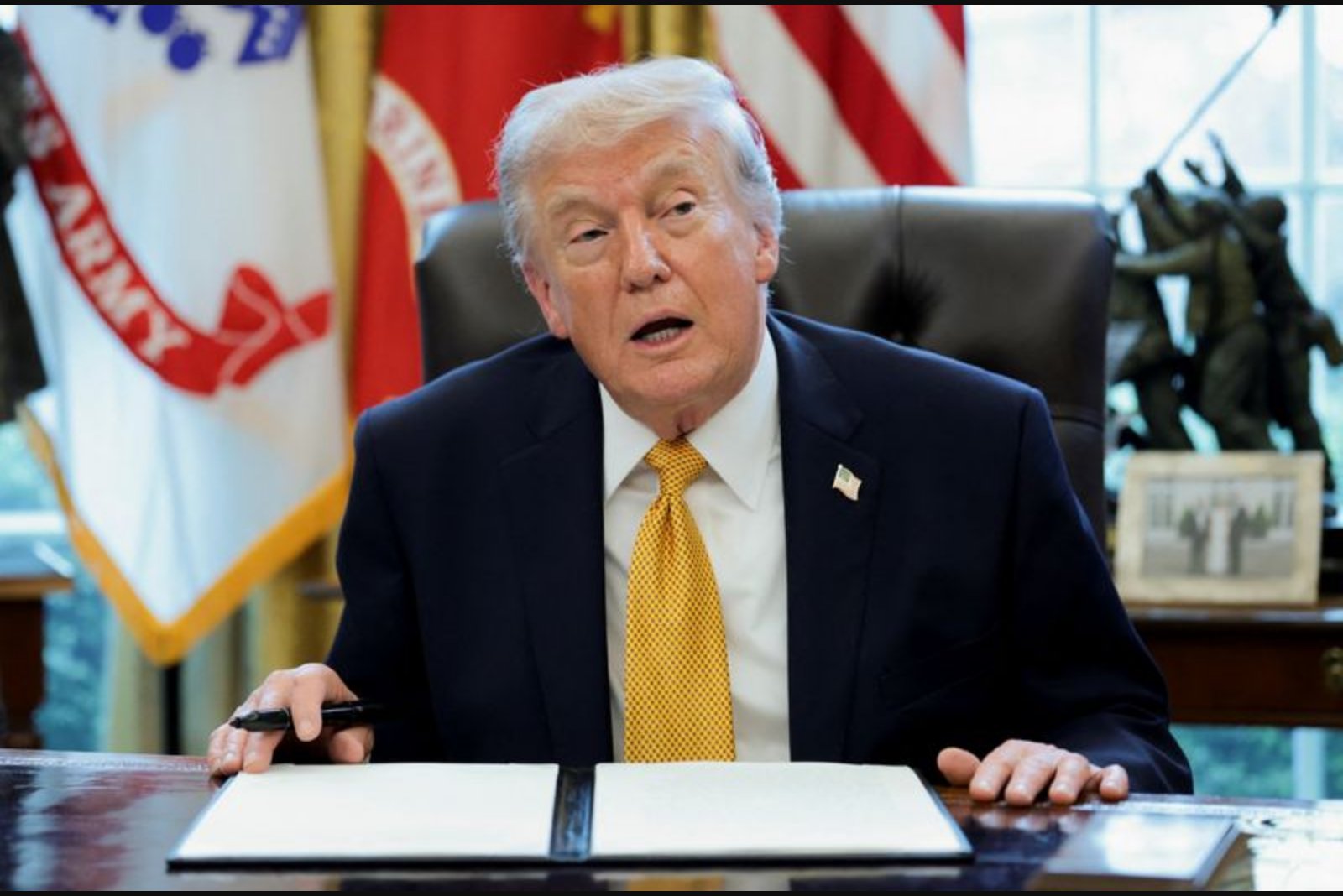
U.S. officials and sources familiar with intelligence reporting say President Donald Trump was told before the U.S. and Israel launched air strikes on Iran that Tehran could retaliate by striking U.S. allies in the Gulf. The briefing content contrasts with public remarks by the president, who has said Iran's subsequent attacks on Gulf states - including Qatar, Saudi Arabia, the United Arab Emirates, Bahrain and Kuwait - came as a surprise.
According to one source familiar with pre-war intelligence assessments, the possibility that Iran would strike at Gulf capitals was not presented as a certainty but it was explicitly identified as a potential outcome. "It certainly was on the list of potential outcomes," the source said, while noting the assessments did not call such a response a guarantee. Two additional sources who reviewed the reporting reached the same conclusion; all three requested anonymity to discuss sensitive intelligence matters.
The president emphasized on Monday that he was surprised by the geographic breadth of Tehran's reaction. He made the point twice that day, first during a meeting at the White House with the Kennedy Center board and later at an Oval Office signing event, saying that "they weren't supposed to go after all these other countries in the Middle East" and that the strikes were unexpected.
These public statements are set against a string of administration assertions that have not been explicitly corroborated in the reporting provided to the public, including claims about Iran's imminent ability to build a missile capable of reaching the U.S. homeland and an accelerated timetable for producing a nuclear weapon. Such claims, along with assessments about perceived threats to U.S. forces and interests in the region, have been cited by Mr. Trump and some senior aides to justify the decision to join Israel in launching the air campaign against Iran on February 28.
Sources with knowledge of the pre-operation briefings said the president was also told Iran would likely try to close the Strait of Hormuz - a critical maritime chokepoint responsible for moving roughly 20% of global oil supplies. In the weeks after the strikes began, Iranian drones and missiles struck a range of targets across Gulf states, including U.S. military bases, an Emirates base that hosted French troops, civilian buildings such as hotels and airports, and energy infrastructure. Tehran has also halted almost all shipping through the Strait of Hormuz, a move that has contributed to a sharp rise in global energy prices.
Lawmakers on the Democratic side who attended administration briefings last week said they had not been presented with evidence of an imminent threat that made the U.S. and Israel's air campaign necessary. Questions from Congress followed the intensifying attacks and the administration's public framing of its actions.
The Office of the Director of National Intelligence declined to comment on the intelligence assessments. The White House did not immediately respond to requests for comment on the conflicting portrayals of what had been conveyed to the president ahead of the strikes.
U.S. officials familiar with the briefings told reporters that leaders were warned the U.S.-Israeli strikes could prompt a wider regional war. Those warnings emphasized that Iranian retaliation might extend to Gulf capitals, particularly if Tehran believed those governments had condoned or aided the attacks. One source said that, before the operation, the intelligence community anticipated that Israel's plan to target senior Iranian figures would likely provoke strikes on U.S. military and diplomatic sites.
Despite these assessments, administration officials did not order the departure of diplomatic staff from several regional embassies until after the air strikes began. The intelligence community had cautioned that Iran "could" broaden its campaign to include American allies in the region, the source said.
The sequence of briefings, public statements and subsequent Iranian actions underscores the complexity and potential for escalation inherent in the strikes. Officials and lawmakers remain focused on understanding what was presented to the president and how those assessments informed the decision to engage militarily alongside Israel.