
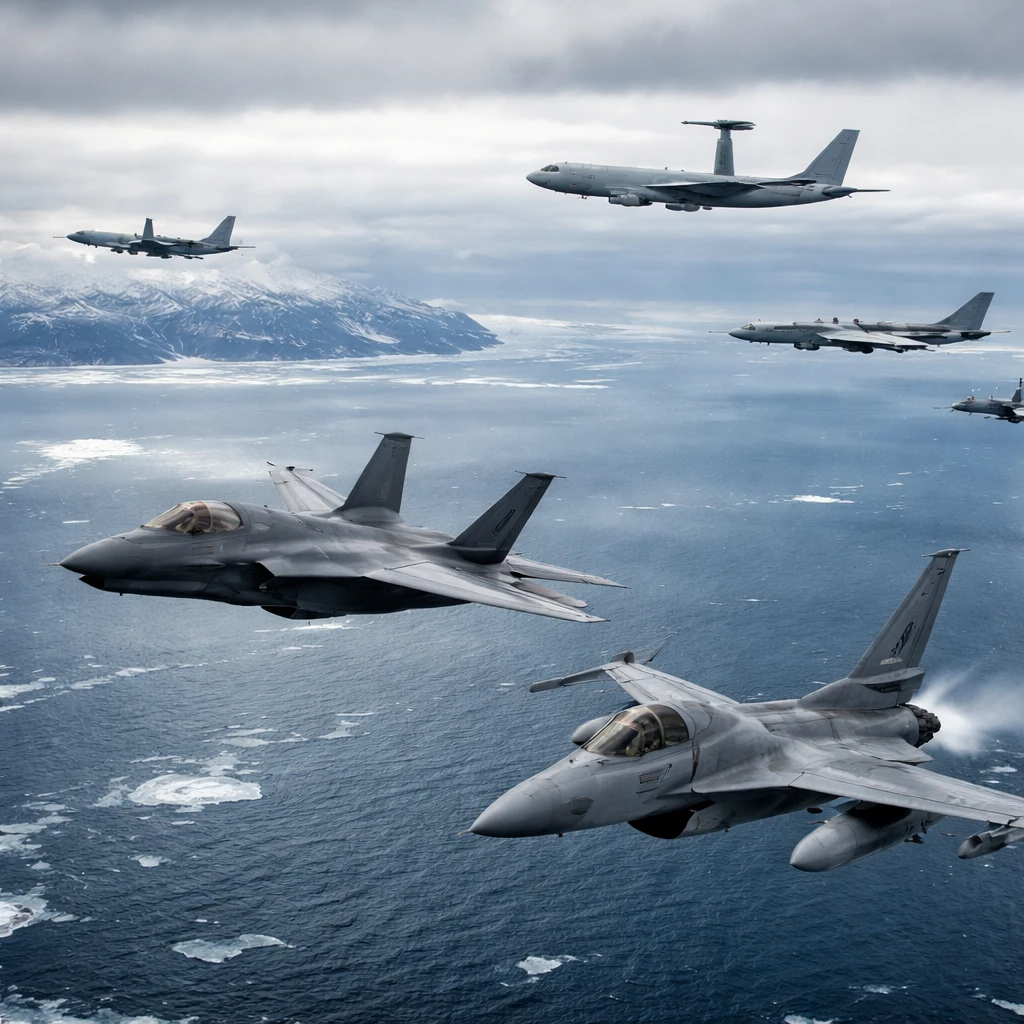
Feb 19 - The North American Aerospace Defense Command (NORAD) reported that it detected and tracked several Russian military aircraft operating within the Alaskan Air Defense Identification Zone (ADIZ) off Alaska.
In its statement, NORAD said the group of Russian aircraft included two Tupolev Tu-95s, two Sukhoi Su-35s and a single A-50. To respond, NORAD dispatched a range of U.S. and Canadian aircraft: two F-16 fighters, two F-35 fighters, one E-3 airborne warning and control system aircraft, and four KC-135 aerial refueling tankers.
The allied aircraft were launched to intercept, positively identify and escort the Russian formation, according to NORAD. The statement noted that the Russian aircraft remained in international airspace throughout the encounter and did not enter sovereign airspace of the United States or Canada.
NORAD added that the escort mission continued until the Russian aircraft departed the Alaskan ADIZ. No additional operational details or follow-on actions were provided in the statement.
Context and operational detail
The responding force combined tactical fighters with airborne surveillance and tanker support, indicating the mission included identification and extended-range escort capability. NORAD characterized the mission as interception, positive identification and escort, and reported that the Russian aircraft left the ADIZ without crossing into U.S. or Canadian sovereign airspace.
Key points
- NORAD detected two Tu-95s, two Su-35s and one A-50 operating in the Alaskan ADIZ.
- Allied forces launched two F-16s, two F-35s, one E-3 and four KC-135s to intercept, identify and escort the aircraft.
- The Russian aircraft remained in international airspace and were escorted until they departed the Alaskan ADIZ.
Impacted sectors
- Defense - direct operational activity involving military aircraft and NORAD response assets.
- Aerospace - deployment and use of manned surveillance, fighter and tanker platforms.
Risks and uncertainties
- Limited information on mission intent - the NORAD statement reports detection and escort but does not provide further details on the objectives of the Russian flights; this leaves intent unclear. (Impacted sector: Defense)
- Scope of operations beyond the ADIZ - the statement confirms departure from the Alaskan ADIZ but does not specify subsequent routing or destinations for the aircraft. (Impacted sector: Aerospace)
- Operational details withheld - NORAD provided the composition of both the Russian formation and responding assets but did not disclose additional tactical or timing specifics. (Impacted sector: Defense)