
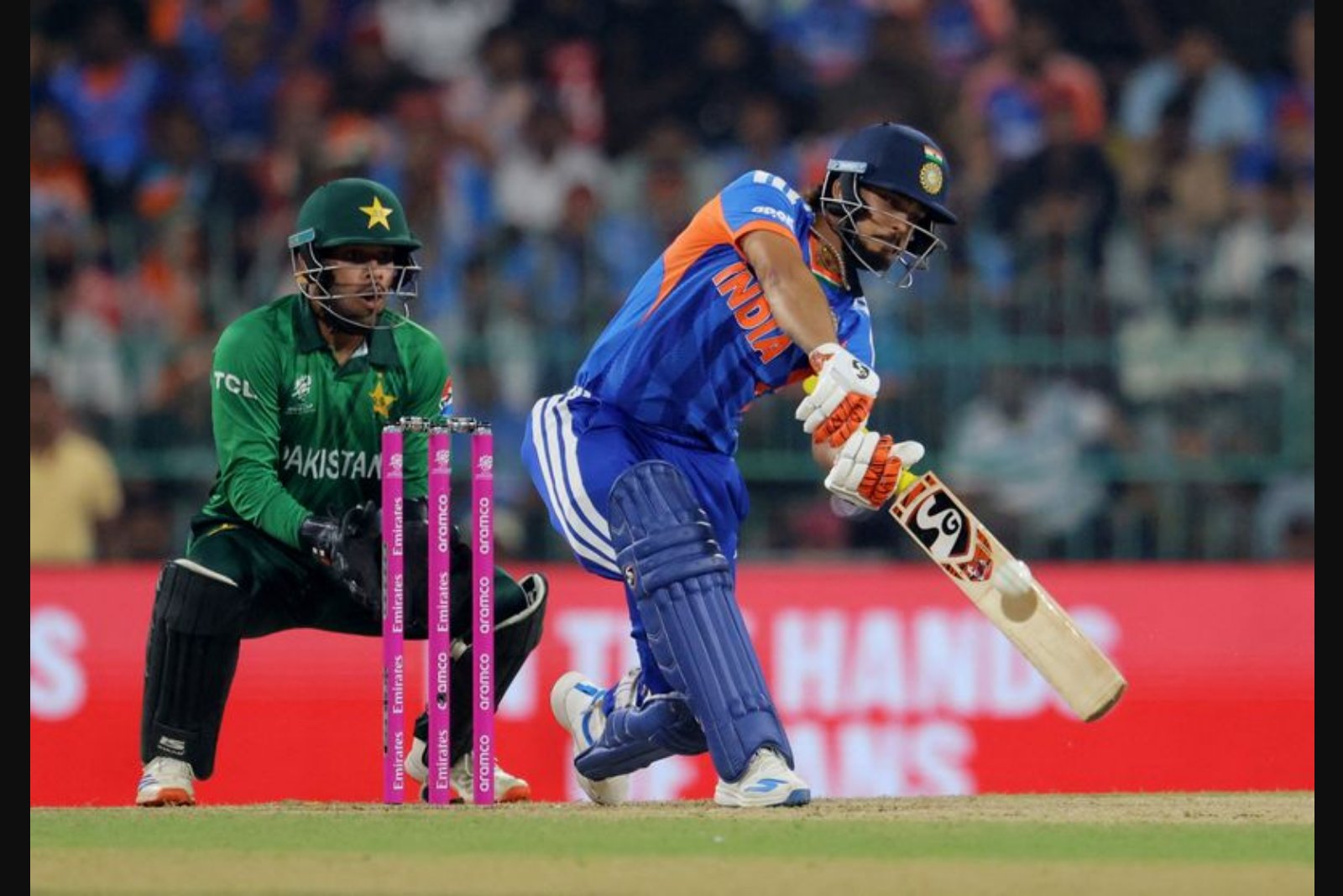
COLOMBO, Feb 15 - Pakistan captain Salman Agha opted to field after winning the toss ahead of a high-profile Twenty20 World Cup Group A fixture against India, but the customary pre-match handshake between the two skippers did not take place.
The match went ahead after Pakistan had earlier announced and then reversed a decision to boycott the encounter in solidarity with Bangladesh. Bangladesh had refused to tour India over safety concerns and were subsequently replaced in the competition by Scotland.
At the toss, Salman Agha and his India counterpart Suryakumar Yadav did not shake hands. Pakistan’s captain declined to elaborate beyond his briefing about the tactical reasons for choosing to bowl.
"It looks a bit tacky, so we feel it will assist the bowlers for the first few overs, so we want to use that," Salman said, referring to the decision to field. He also stressed the significance of the contest without expanding on off-field matters: "It’s a big game, we all know that. But in our group, we all are very relaxed and we’re just focusing on the game."
India entered the match with a strengthened batting order as Abhishek Sharma, the current top-ranked T20 batter, returned after missing his team’s first two fixtures due to a stomach infection. In the bowling department, India made a tactical change, replacing seamer Arshdeep Singh with left-arm wristspinner Kuldeep Yadav.
India skipper Suryakumar Yadav indicated he was content with the toss outcome and said his side had preferred to bat. "We batted in the last two games and won both the games defending. So we don’t want to change anything," he said.
Speaking about the context of the game, Suryakumar acknowledged that matches between the two countries carry heightened attention and emotion. "I think it’s easy to say that it’s not just another game, but it is an occasion," he said. "These games always have high stakes but, at the same time, you’ve got to know what you want to do, that’s more important. Stay in the present, back your skills, put your A game forward and be yourself."
After the toss, India headed the Group A standings on net run rate, while Pakistan also held four points from two matches.
Team line-ups for the match were announced as follows:
Pakistan: Sahibzada Farhan, Saim Ayub, Salman Agha (captain), Babar Azam, Shadab Khan, Usman Khan (wicketkeeper), Mohammad Nawaz, Faheem Ashraf, Shaheen Shah Afridi, Usman Tariq, Abrar Ahmed
India: Ishan Kishan (wicketkeeper), Abhishek Sharma, Tilak Varma, Suryakumar Yadav (captain), Hardik Pandya, Shivam Dube, Rinku Singh, Axar Patel, Kuldeep Yadav, Varun Chakravarthy, Jasprit Bumrah
This encounter followed earlier off-field developments that had threatened participation, with Pakistan initially indicating a boycott in solidarity with Bangladesh before reversing that stance. Bangladesh had declined to tour India citing safety concerns, and Scotland took their place in the tournament.
The match carried both on-field tactical considerations - exemplified by Pakistan’s choice to bowl and India’s personnel changes - and off-field sensitivities tied to decisions around team participation and safety that had already shaped the tournament's Group A composition.