
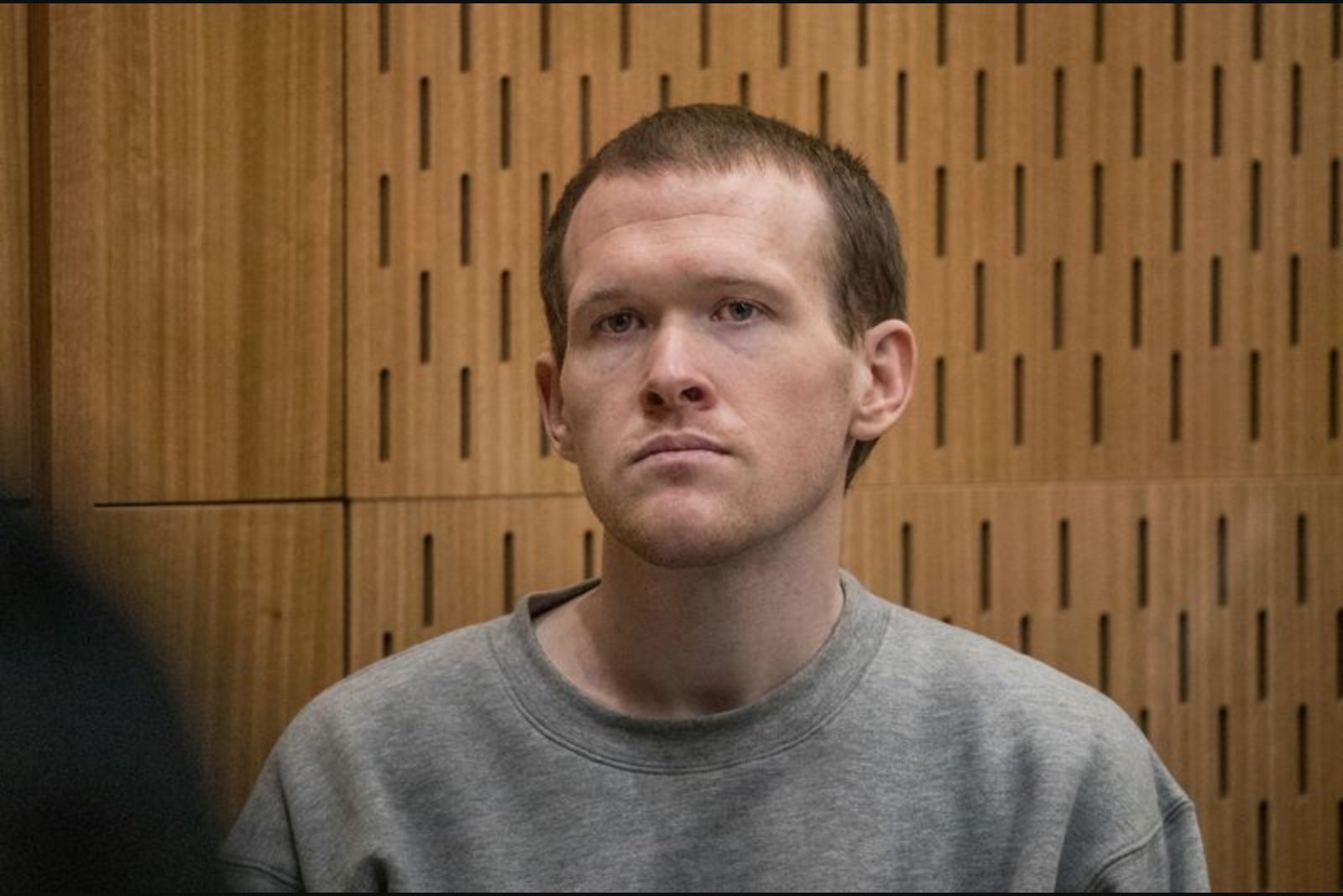
Brenton Tarrant, the 35-year-old Australian who carried out the deadliest mass shooting in New Zealand history, told an appellate court on Monday that he was not in a rational mental state when he admitted guilt to dozens of charges related to the March 2019 attacks in Christchurch.
Appearing in Wellington via video link, Tarrant sought to have the guilty pleas he entered a year after the shootings vacated. He said his mental health deteriorated amid what he described as harsh conditions of imprisonment while he was held awaiting trial, and that this deterioration meant he lacked the capacity to make informed, voluntary choices when he pleaded guilty.
Tarrant, an Australian national, opened fire on worshippers at two mosques during Friday prayers in March 2019. He used military-style semi-automatic weapons and livestreamed the killings on Facebook with a head-mounted camera. He also released a racist manifesto shortly before the attack. The assault resulted in the deaths of 51 people.
Following his arrest, Tarrant initially denied all charges and was preparing to go to trial. A year after the attacks, however, he entered guilty pleas to 51 counts of murder, 40 counts of attempted murder and a single count of committing a terrorist act.
In court on Monday, Tarrant said the conditions of his imprisonment had been so detrimental to his mental state that he was essentially not fit to plead guilty at the time he did. He told the court, "I did not have the mind frame or mental health required to be making informed decisions at that time."
He expanded on that claim in a further statement quoted in local reporting: "I think the issue is, did I really know what I wanted to do or what would be a good idea? No, I didn t actually ... I was making choices, but they were not choices made voluntarily and they were not choices made rationally due to the (prison)conditions."
Counsel representing Tarrant have had their names and identities suppressed by order of the Court and were not available for comment. A court document filed in the appeal process indicates the Court of Appeal will consider whether Tarrant was incapable of making rational decisions when he entered his guilty pleas "as a result of the conditions of his imprisonment, which he says were torturous and inhumane."
Tarrant is currently serving a life sentence without parole - a sentence imposed for the first time in New Zealand's legal history in his case. The appeal hearing has been scheduled for five days and is expected to conclude on Friday.
The appeal process provides several possible outcomes depending on the court's findings. If the Court of Appeal refuses to vacate the guilty pleas, the legal process will move forward with a later hearing this year focused on his challenge to the life sentence imposed. If the Court of Appeal accepts the application to set aside the pleas, the matter will be sent back to the High Court and Tarrant would face trial on the charges to which he had previously pleaded guilty.
The case centers on contested questions about Tarrant's mental capacity while in custody and whether the conditions of his detention affected his ability to make voluntary, informed decisions in the lead-up to his guilty pleas. The Court of Appeal's examination will therefore pivot on medical and legal assessments of his mental state during that period and on the legal standards for voluntariness and competence in entering pleas.
Context and next steps:
- The five-day appeal hearing is scheduled to end on Friday.
- If the application to vacate the pleas is refused, an additional hearing later in the year will address the sentence appeal.
- If the appeal court accepts the challenge, the case will return to the High Court for a trial on the original charges.