
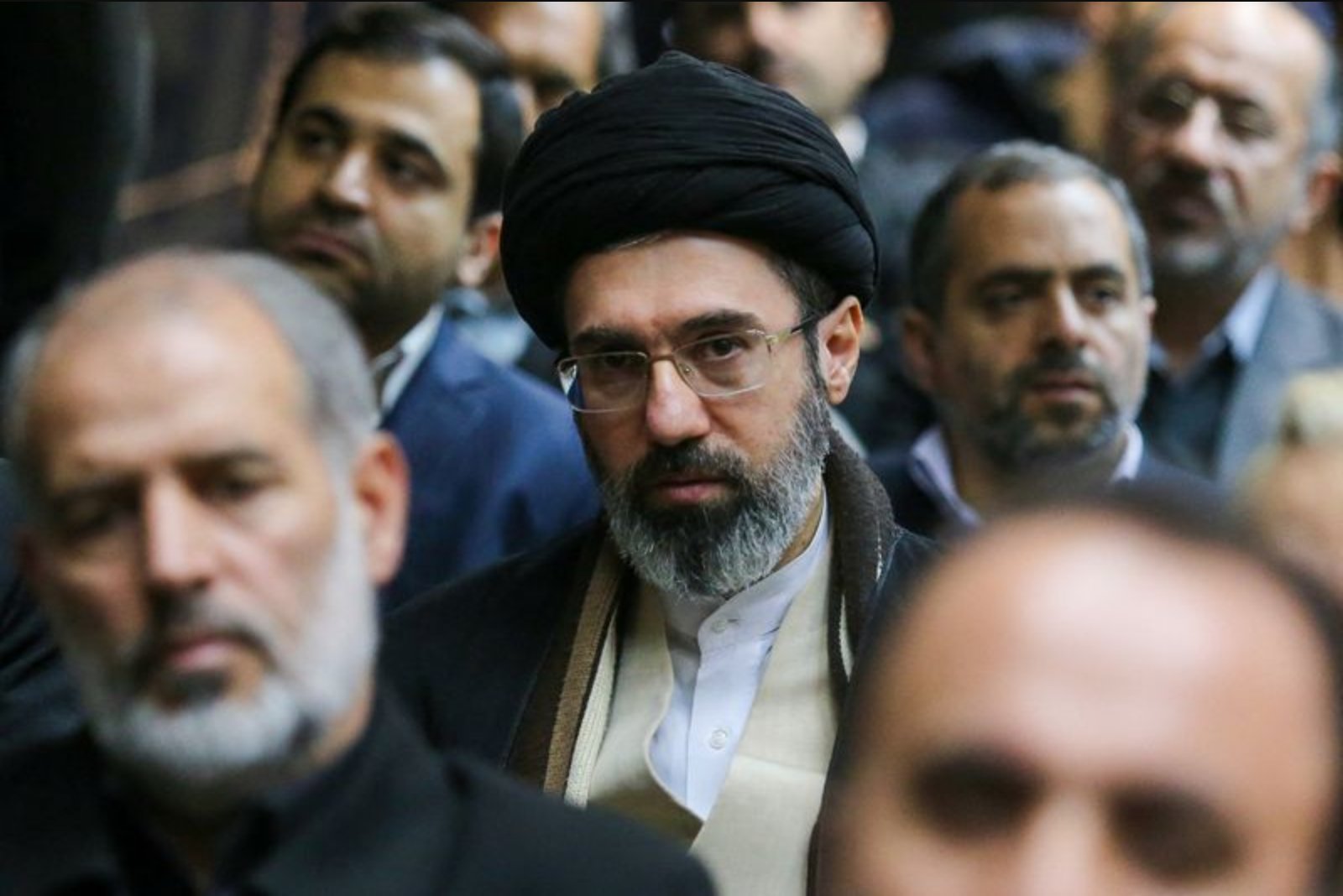
In his first public remarks since taking over from his slain father, Mojtaba Khamenei delivered a forceful message on state television, pledging retribution for the blood of Iran's martyrs and ordering the continued closure of the Strait of Hormuz.
The new supreme leader said the United States must withdraw all of its military bases from the region and reiterated that the strait - which skirts Iran's southern coast and handles about a fifth of global oil shipments - should remain shut to increase pressure on perceived enemies.
The address came as attacks on commercial shipping intensified. Two tankers were reported ablaze in an Iraqi port after being struck by suspected explosive-laden boats linked to Iran, marking a sharp escalation in assaults that have restricted oil flows from the Middle East.
Images verified by Reuters and filmed from the shore of the port of Basra showed vessels consumed by towering orange fireballs that illuminated the night sky following the incidents. Iraqi authorities blamed Iranian boats for the strikes. At least one crew member was reported killed in those attacks.
Earlier on the same day, three other ships were hit in the Gulf. Iran's Revolutionary Guards claimed responsibility for at least one of those attacks, saying a Thai bulk carrier was set alight after disobeying their orders. Separately, a container ship was reported struck by an unidentified projectile near the United Arab Emirates.
Global energy and security impact
Officials and international agencies have described the broader conflict as severely disruptive to energy supplies. The war, which began with a U.S.-Israeli bombing campaign at the end of February, has so far resulted in about 2,000 fatalities and prompted what the International Energy Agency called the largest disruption to global energy supplies in history.
Amid attempts to challenge claims that much of Iran's long-range arsenal had been neutralized, additional drones were reported flying into Kuwait, Iraq, the United Arab Emirates, Bahrain and Oman on Thursday. Lebanon's Iran-backed militia Hezbollah fired its largest rocket salvo of the conflict into Israel, which in turn triggered fresh Israeli strikes on Beirut.
Oil prices rose back above $100 a barrel after earlier declines, which had followed public remarks from U.S. President Donald Trump asserting the war would conclude soon. Iran has stated it will block oil transits through the Strait of Hormuz until U.S. and Israeli attacks cease.
U.S. president's stance
President Trump has sought to reassure energy markets by characterizing the surge in oil prices as temporary, but he has not presented a plan to end the war or to reopen the strait. U.S. and Israeli officials have said their objective is to degrade Iran's missile and nuclear capabilities, while Trump has publicly demanded Iran's "unconditional surrender" and sought influence over the appointment of its leaders.
Speaking at a campaign-style rally in Hebron, Kentucky, the president stated, "You never like to say too early you won. We won. In the first hour it was over." He also said the United States had "virtually destroyed Iran," and added, "We don't want to leave early, do we? We got to finish the job."
Immediate consequences
The combined effect of the supreme leader's vows and the spike in maritime attacks has intensified pressure on global energy markets and raised security concerns across the Gulf shipping lanes. The strikes on vessels, the reported loss of life among crew members, and the series of drone flights and rocket exchanges have contributed to an elevated level of regional instability.
How long the strait will remain closed, or what specific military steps the United States, its partners or Iran will take next, remained uncertain based on the available reporting.
Key developments in the unfolding situation include the new supreme leader's declaration to avenge martyrs and keep the Strait of Hormuz closed, the sharp rise in attacks on merchant shipping including fires in Basra, and renewed rocket and drone activity across multiple Gulf states and into Israel and Lebanon.