
Overview
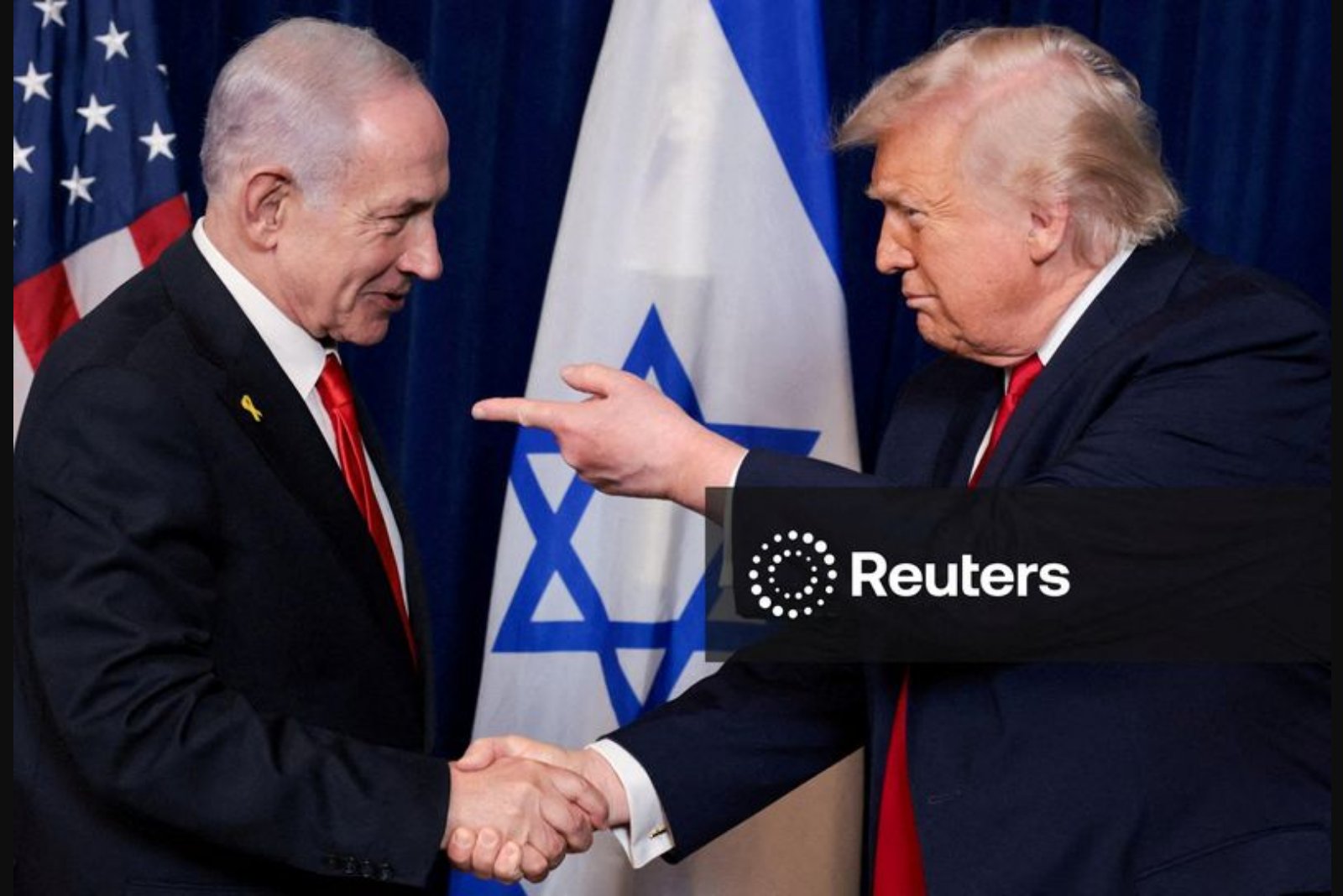
President Donald Trump will host Israeli Prime Minister Benjamin Netanyahu at the White House on Wednesday. Netanyahu is expected to press the president to expand the scope of U.S. diplomacy with Iran beyond nuclear issues to address Tehran's missile program and other security concerns, according to people familiar with the matter.
This will be Netanyahu's seventh meeting with Trump since the president returned to office nearly 13 months ago. The visit comes as U.S. officials prepare for another round of discussions with Iran after nuclear-focused talks took place in Oman last Friday amid rising tensions across the Middle East.
What Netanyahu is expected to press
Israel is reportedly concerned that U.S. negotiators may limit a deal to nuclear constraints while leaving Iran's ballistic missile capabilities and its support for armed proxy groups unchecked. Senior Israeli officials fear that a narrowly tailored agreement would not remove what they consider strategic threats, including assistance to organizations such as Hamas and Hezbollah.
Before departing for Washington, Netanyahu told reporters: "I will present to the president our perceptions of the principles in the negotiations." Sources said the two leaders might also discuss possible military options if diplomacy between the U.S. and Iran does not yield the outcomes Israel seeks.
Context of rising tensions
Diplomacy between the U.S. and Iran has unfolded against a backdrop of threats and military posturing. Trump has publicly warned that strikes on Iran are possible if an agreement is not reached, a stance Tehran has met with vows of retaliation. In media interviews on Tuesday, the president reiterated his warning, saying that while he believes Iran wants to make a deal, he would do "something very tough" if they refused.
Trump told Axios he was considering sending a second aircraft carrier strike group as part of a large buildup of U.S. forces positioned near Iran. That buildup and the president's repeated warnings have heightened fears of a broader regional conflict.
Recent contacts and U.S. team involved
Netanyahu arrived in Washington on Tuesday night and met with U.S. special envoy Steve Witkoff and with Jared Kushner, who led the U.S. delegation at the recent Iran talks, according to a post on X by Israel's ambassador to Washington, Michael Leiter.
Both sides described the talks held in Oman last week as positive and said further meetings were expected. U.S. Secretary of State Marco Rubio had said prior to the Oman meetings that any talks would need to encompass Iran's missile systems, its backing of proxy groups, and its treatment of its own people. Iran, however, stated that Friday's discussions were limited to nuclear matters and has ruled out restrictions on its missiles.
Gaza and the stalled ceasefire plan
The Gaza ceasefire agreement that the U.S. helped broker will also figure in the White House talks. President Trump has sought to push forward with a ceasefire arrangement and a 20-point plan intended to end the fighting and initiate reconstruction of the Palestinian territory. Progress on that plan has stalled, with significant disputes remaining over complicated steps it proposes, including the disarmament of Hamas and phased Israeli troop withdrawals.
When asked about U.S. priorities for the meeting, White House spokeswoman Anna Kelly said: "We continue to work closely with our ally Israel to implement President Trump's historic Gaza peace agreement and to strengthen regional security."
Timing and political backdrop
Netanyahu's trip had originally been slated for February 18 but was moved up amid renewed U.S. engagement with Iran. Both Washington and Tehran indicated last week that talks in Oman were constructive and additional sessions were anticipated.
While Trump and Netanyahu have largely been aligned and the United States remains Israel's principal arms supplier, the meeting has potential to expose differences. One point of divergence involves a provision in Trump's Gaza plan that suggests a path to eventual Palestinian statehood - an outcome Netanyahu and his far-right coalition have long opposed.
West Bank measures draw international criticism
Domestically, Netanyahu's security cabinet recently approved measures intended to facilitate land purchases for Israeli settlers in the occupied West Bank and to grant Israel broader authorities in areas Palestinians view as central to a future state. The move prompted international condemnation.
Trump was quoted as telling Axios: "I am against annexation. We have enough things to think about now."
Military history and concerns about Iranian recovery
The article notes that last June, the U.S. joined Israel's strikes on Iranian nuclear facilities during a 12-day war and that Israel also heavily damaged Iran's air defenses and missile arsenal. According to two Israeli officials cited in reporting, there have been indications that efforts are underway to rebuild those capabilities, which Israel regards as a strategic threat.
Trump had previously threatened last month to intervene militarily during a severe crackdown on nationwide anti-government protests in Iran, but ultimately decided against direct intervention.
Financial markets and investment note included in original reporting
Embedded within the reporting were questions about investment opportunities for 2026 and the value of improving data for investment decisions. The original material emphasized that institutional-grade data and AI-driven insights can aid investors in identifying opportunities, and suggested tools that combine such data may help, though not guarantee, better investment outcomes. It also referenced asking an AI tool named WarrenAI as a way to evaluate potential best investments in 2026.
What remains uncertain
The limits of upcoming negotiations and whether Washington will insist on missile and proxy constraints remain unclear. Iran has publicly rejected restrictions on its missiles and maintains that its nuclear work is peaceful. The U.S. and Israel have accused Iran of prior efforts to develop nuclear weapons, and the degree to which Tehran will accept broader concessions is uncertain.
Netanyahu's meeting with President Trump is therefore likely to focus on narrowing those gaps and coordinating positions ahead of further U.S.-Iran talks, while also addressing developments in Gaza and Israeli domestic policy that have drawn international attention.