
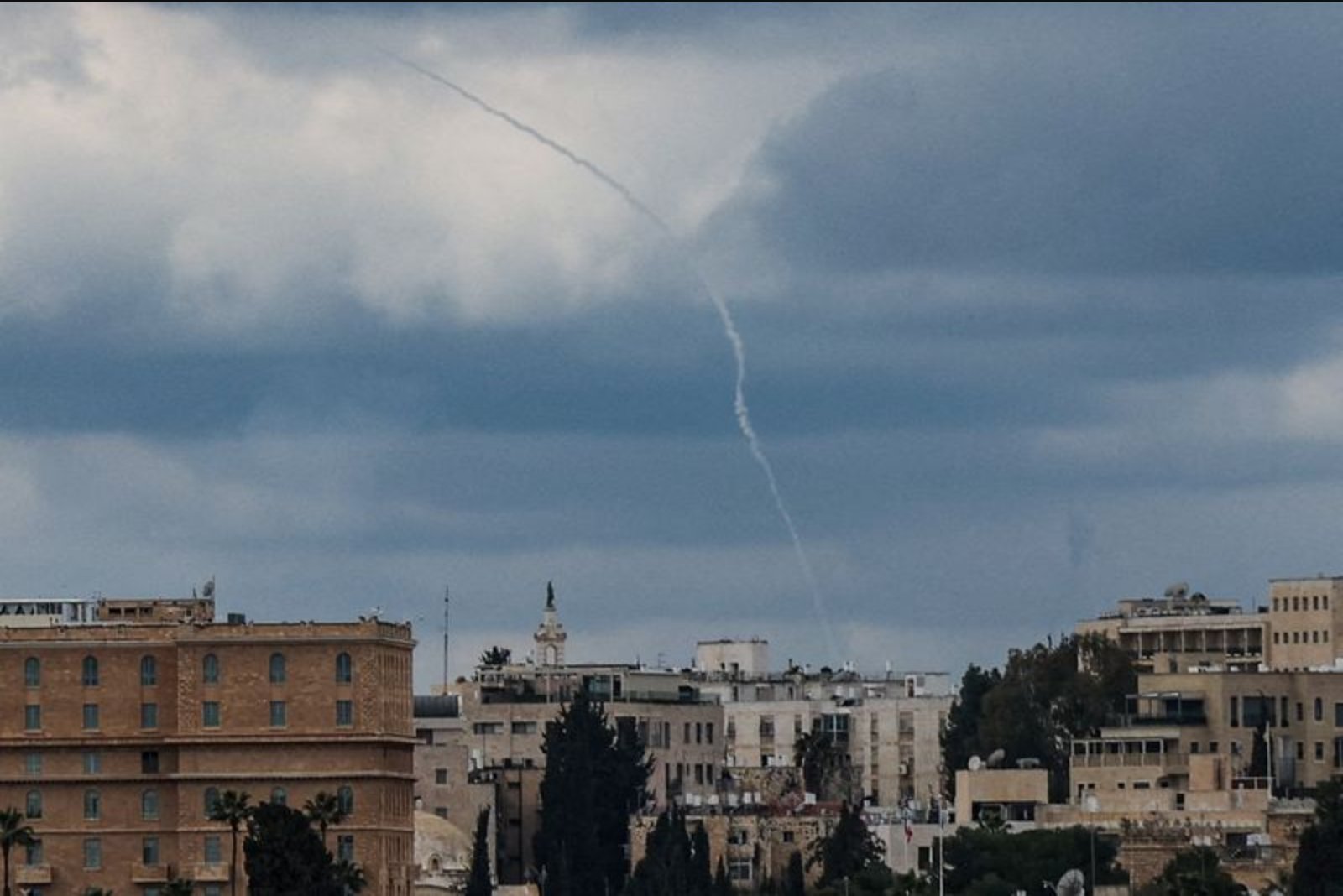
Israeli Prime Minister Benjamin Netanyahu told Fox News’ Hannity program that he expects the campaign against Iran to be limited in duration, rejecting comparisons to protracted regional wars. "I said it could be quick and decisive. It may take some time, but it’s not going to take years. It’s not an endless war," he said, pushing back against the idea that the conflict could drag on for years.
The hostilities have broadened rapidly. As the conflict entered its fourth day on Tuesday, explosions rattled buildings across Tel Aviv while Israeli air defenses intercepted incoming Iranian missiles. Other strikes reportedly hit the complex housing Iran’s state broadcaster IRIB in Tehran, and Israel carried out attacks targeting Hezbollah militants in towns across Lebanon.
Early on Tuesday Saudi authorities reported that two drones, apparently launched from Iran, struck the U.S. embassy in Riyadh. The attack caused minor damage and ignited a fire, and Saudi forces said that at least eight additional drones were intercepted before they reached the city.
Meanwhile, Iran’s Islamic Revolutionary Guard Corps (IRGC) said its naval forces had destroyed the main command building and headquarters of a U.S. airbase in Bahrain, describing the action as part of the 14th wave of "Operation Promise of the Truth 4." The IRGC said it launched what it termed a large-scale drone and missile attack on the base in the Sheikh Isa area, asserting that 20 drones and three missiles struck their intended targets.
The U.S. State Department and the White House had not immediately responded to requests for comment on the IRGC statements.
U.S. officials have offered differing public assessments of the campaign’s likely duration and scope. President Donald Trump initially suggested the conflict could last "four to five weeks," but has since justified a broader, open-ended effort against Iran. U.S. Secretary of State Marco Rubio warned that "the hardest hits are yet to come from the U.S. military" and declined to offer a timeline for U.S. engagement.
Rubio told reporters that the United States acted preemptively because it anticipated a response to Israel’s strike plans and believed American forces would be put at risk. "We knew that that would precipitate an attack against American forces, and we knew that if we didn’t preemptively go after them before they launched those attacks, we would suffer higher casualties," he said.
On the question of whether U.S. ground forces would be deployed, Rubio said the mission’s objectives - the destruction of ballistic missile capabilities, including launch and manufacturing facilities - could be achieved without ground troops. "Right now we are not postured for ground forces. But obviously the president has those options and he is not going to rule out anything," he added.
The air campaign by U.S. and Israeli forces began with strikes on Tehran over the weekend that the U.S. said killed Iran’s Supreme Leader Ali Khamenei. Iran and its proxy Hezbollah have retaliated, drawing fighting into Lebanon and other parts of the Gulf region and resulting in hundreds of civilian deaths across Iran, Israel and Lebanon, according to the accounts provided.
The U.S. military reported it had struck more than 1,250 targets in Iran and said it destroyed 11 Iranian ships. The conflict has also cost U.S. lives: six American service members were killed in retaliatory strikes that hit Kuwait over the weekend, the U.S. military said. In the chaos of those attacks, U.S. Central Command said Kuwait accidentally shot down three U.S. F-15E fighter jets; all six crew members ejected and were recovered.
Economic and transport systems have been heavily disrupted. The conflict has thrown global air transport into disarray and prompted the shutdown of shipping through the Strait of Hormuz, a critical waterway accounting for one-fifth of the world’s oil trade that passes close to the Iranian coast. The closure and the targeting of vessels have driven oil prices higher and sent shipping costs soaring.
Major Gulf aviation hubs remained affected: Dubai, which typically handles over 1,000 flights a day, stayed closed for a fourth day, leaving tens of thousands of passengers stranded and representing one of the most significant tests of aviation since the COVID-19 pandemic. Asian airline shares extended losses while carriers monitored escalating fuel prices and noted a surge in bookings as passengers rerouted away from Middle Eastern carriers.
Shipping rates also spiked, with supertanker costs in the Middle East reaching all-time highs amid attacks on ships traversing the Strait of Hormuz, according to shipping data and industry observations cited.
Within the United States, the political and public response to the military action has been mixed. Trump has framed the operation as necessary to prevent Iran from furthering its nuclear ambitions and expanding a ballistic missile program he described as growing rapidly. The president has argued the preemptive action was justified by an imminent threat from Iran, though he did not provide specific evidence in public remarks. Some U.S. lawmakers said they had not seen evidence to support that assessment.
Commercial satellite imagery was reported by an independent policy institute to show what appears to be the first known strikes on an Iranian nuclear site since the start of the conflict, a development cited by analysts and officials. Iran has denied pursuing nuclear weapons and characterized the U.S. and Israeli assault as unprovoked, noting that it came amid negotiations between Tehran and Washington over a nuclear accord. The article’s source material recalled that Trump had previously withdrawn the United States from an earlier international agreement curbing Iran’s nuclear program in 2018.
International reactions include condemnation of the war from Russia, China and Turkey, reflecting the geopolitical sensitivity and potential diplomatic fallout. Domestically in the U.S., the campaign poses political risk for the president’s party, with a weekend poll cited showing only one in four Americans support the attack.
Context and implications for markets and sectors
The widening conflict has immediate consequences for several economic sectors. Energy markets are highly sensitive to any closure or disruption of the Strait of Hormuz, given the volume of oil transiting the route. Higher crude prices and rising freight costs for oil and gas shipping have been reported, alongside record supertanker rates in the Middle East.
Aviation has been severely affected as regional airspace closures and airport shutdowns have grounded large volumes of traffic, stranding passengers and weighing on airline revenues and share prices, particularly in Asia where carriers saw extended losses. Insurance and shipping industries face elevated risks and higher premiums as naval and aerial attacks target vessels and routes.
Defense and security sectors are central to the ongoing operations, with reported strikes on military bases, naval assets, and strategic infrastructure. Financial markets may also react to the political uncertainty and casualty figures reported.
What remains uncertain
While political leaders have offered conflicting timelines and objectives for the campaign, significant unknowns persist about the full scope and duration of military engagement, the prospects for further escalation involving additional state and non-state actors, and the longer-term economic fallout from sustained disruptions to transport and energy supplies.
Until clear, verifiable information is provided by the parties involved, assessments of duration, casualty totals, and the specific targeting of infrastructure remain fluid and subject to official confirmation.