
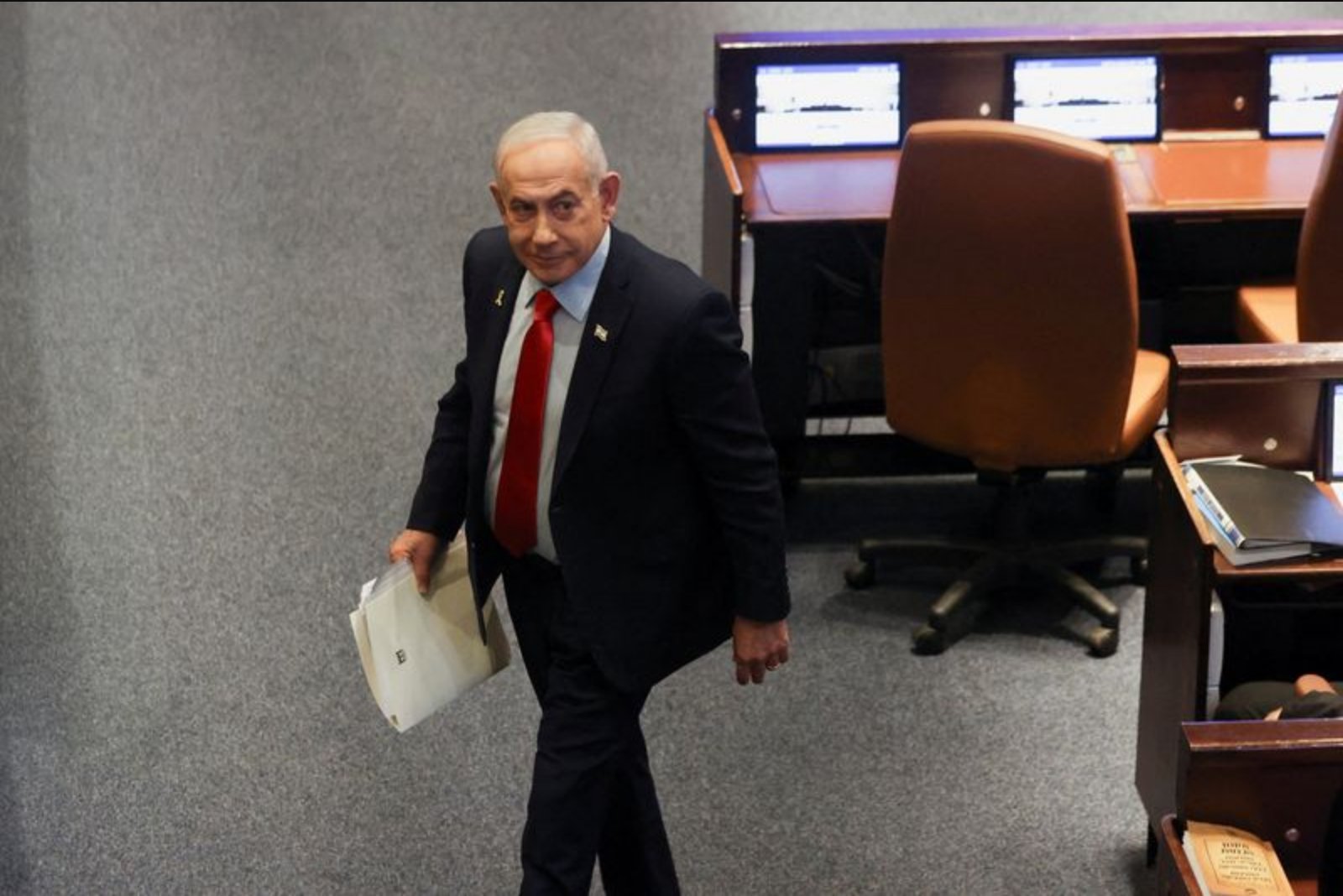
Israeli Prime Minister Benjamin Netanyahu released a short video on Sunday showing himself at a café on the outskirts of Jerusalem, responding directly to rumours circulated by Iranian state media and shared online in Iran that he had been killed or harmed.
The footage, shared via his Telegram account, depicts Netanyahu seated with an aide. As the aide asks about the circulated reports that he was dead or injured, Netanyahu reaches for a cup of coffee and replies with a wordplay based on the Hebrew slang meaning of the word "dead," which can imply being "crazy about" someone or something. In the exchange he says, "I’m crazy about coffee. You know what? I’m crazy about my people," addressing the aide while taking the coffee.
Verification of the clip’s setting and timing was carried out against file imagery of the café; the interiors visible in the video aligned with those images. The date was corroborated by multiple videos and photographs posted by the café documenting the prime minister’s visit on Sunday.
The brief public appearance comes amid a period of constrained media access to Netanyahu. Since the United States and Israel launched attacks on Iran on February 28, the prime minister has been shown visiting at least two towns struck by Iranian missiles, a hospital, a port and military bases. Those visits were accompanied by little to no media access, with footage and material released by his office rather than through open press access.
Netanyahu, who seldom grants interviews to the Israeli press or holds in-person news conferences, held his first press conference since the onset of the war via a video link on Thursday. That format mirrored how he addressed the public in June during Israel’s 12-day conflict with Iran.
Domestically, emergency safety measures enacted since the start of the war prohibit public gatherings and have kept many residents at home or close to shelters and safe rooms. Schools remain closed across most of the country under these restrictions.
Context and verification
The café video served to counter the specific online reports that the prime minister had been killed or wounded, offering direct visual confirmation of his condition and location on the day of the clip. The authorities and the café-provided imagery were used to match both setting and timing of the recording.
Public communication pattern
The release of office-distributed videos and use of remote press briefings reflect a controlled approach to public communications during the current conflict period, with limited in-person press access and reliance on digital dissemination.