
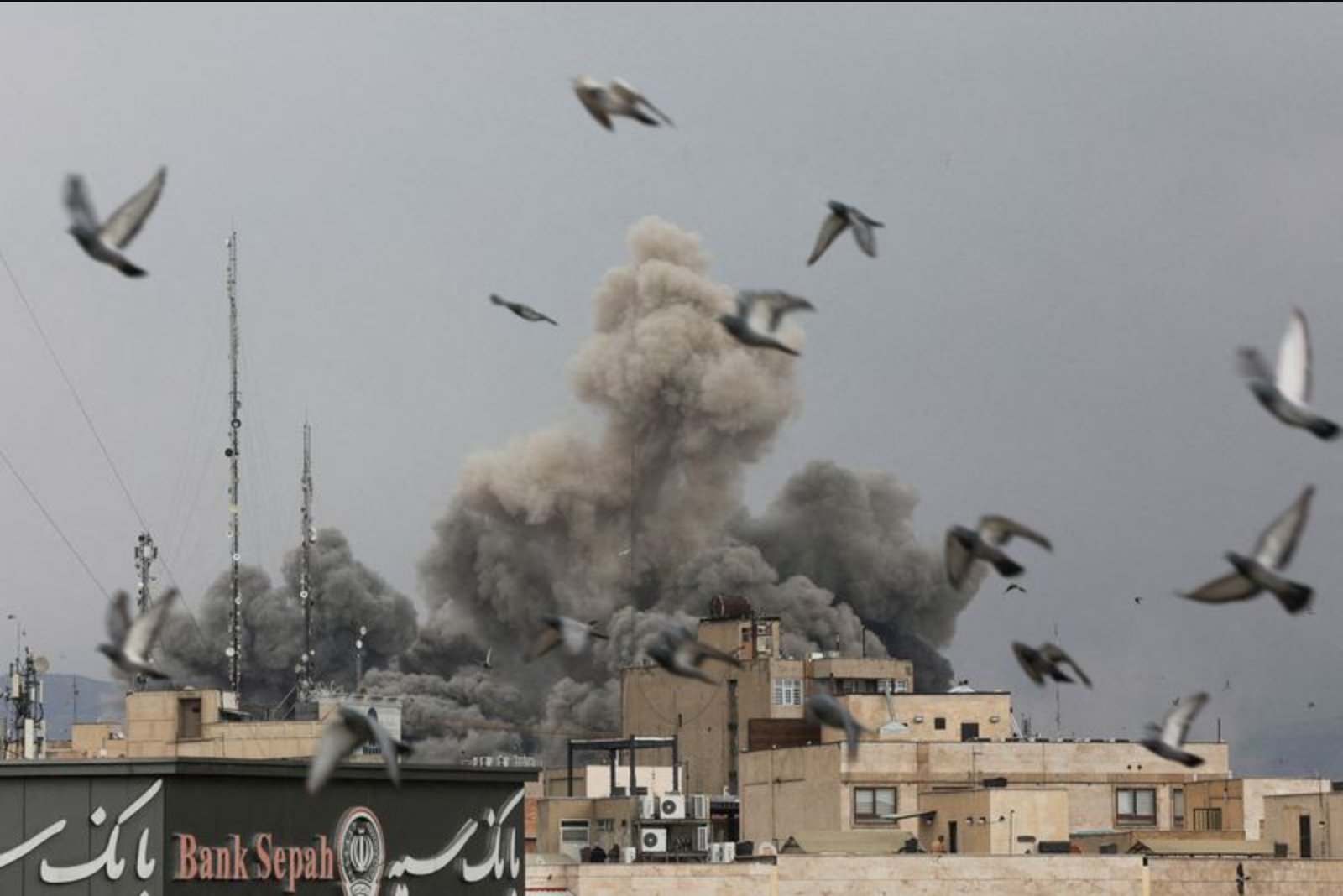
Israeli Prime Minister Benjamin Netanyahu told U.S. television viewers on Monday that the military campaign conducted by the United States and Israel against Iran could take "some time" but would not last for years. Speaking on Fox News' "Hannity" program, Netanyahu said the conflict would not become an "endless war," describing expectations that it could be "quick and decisive" even if it required additional time.
The joint air campaign opened with attacks on Tehran on Saturday that, according to reports, killed Iranian Supreme Leader Ali Khamenei. Those strikes prompted Iranian retaliation against Israel and led to missile attacks at Arab countries hosting U.S. bases across the Middle East, marking a rapid escalation of hostilities in the region.
President Donald Trump initially set a relatively short public timeline for the operation, projecting it could last four to five weeks when he announced the strikes on Saturday. He later acknowledged that the conflict could extend beyond that window. Over the course of the weekend and into Monday, Mr. Trump offered differing emphases on the campaign's objectives, at times urging Iranians to "take back your country," a comment that suggested a goal of toppling the Tehran government, and at other times focusing on preventing Iran from acquiring a nuclear weapon and disabling its long-range ballistic missile capabilities.
In his Fox News comments, Netanyahu explicitly rejected the notion that the campaign would resemble some earlier, protracted wars in the region. "I said it could be quick and decisive. It may take some time, but it's not going to take years. It's not an endless war," he said.
"Now, of course, it's up to the people of Iran in the final count to change the government, but we are creating - America and Israel together are creating - the conditions for them to do so," Netanyahu added, framing the military campaign as contributing to internal pressure on Iran.
Netanyahu also portrayed the conflict as offering an opening for broader, longer-term normalization in the Middle East, including between Israel and Saudi Arabia. When asked directly whether he saw a path to lasting peace, he replied, "Yes I do."
Public reaction within the United States reflected notable skepticism. A Reuters/Ipsos poll conducted over the weekend found that only one in four Americans approved of the U.S. strikes on Iran, a finding the report connected to the legacy of extended U.S. wars in Iraq and Afghanistan that spanned several years and left many Americans wary of prolonged foreign military engagements.
Mr. Trump's public statements have shifted in emphasis since the outset of the strikes. On Saturday he appeared to exhort Iranians to rise against their leadership; by Monday his remarks made no explicit reference to toppling the Iranian government and instead focused on preventing a nuclear weapons capability and countering long-range missile development, objectives Tehran denies it is pursuing. The article's account further notes that Israel is widely regarded as the only Middle Eastern country with nuclear weapons, and that the United States also possesses nuclear arms.
The current sequence of events - from the initial strikes on Tehran to subsequent Iranian retaliation and missile attacks at locations with U.S. military presence - has introduced uncertainties about timelines, objectives, and political outcomes. Israeli and U.S. leaders characterize the campaign as capable of producing decisive results without becoming a drawn-out conflict, while public opinion in the United States appears divided.