
Overview
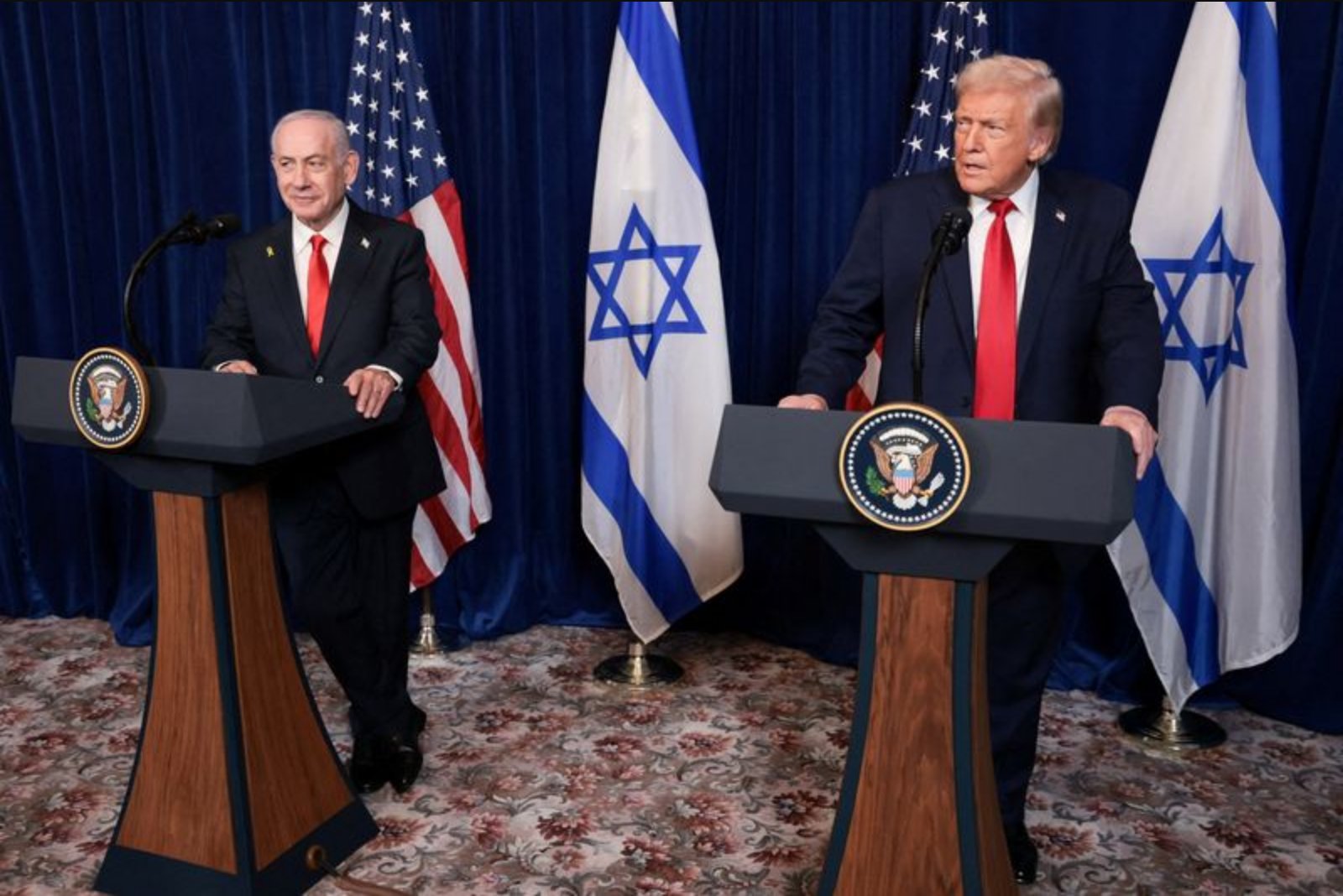
Israel’s strike campaign against Iran - which culminated in the killing of Iran’s Supreme Leader Ayatollah Ali Khamenei and large parts of the country’s leadership - fulfilled a longstanding ambition of Prime Minister Benjamin Netanyahu. Yet the initial appearance of unity between Jerusalem and Washington has revealed important rifts over what comes next, with the stated objectives of the two allies beginning to diverge amid a conflict that could last well beyond the early weeks of operations.
Divergent public aims
At the opening of the air campaign, leaders in both countries spoke of toppling Iran’s rulers. However, public comments in the days following the attacks showed a split in emphasis. President Donald Trump, speaking from the White House two days after the strikes that eliminated Iran’s top leadership, described the U.S. aim in narrower terms - to destroy Iranian missile systems, weaken its naval capabilities and prevent the acquisition of a nuclear weapon. He did not reprise the goal of regime overthrow.
Speaking at a press briefing on the same day, Pentagon chief Pete Hegseth said the operation was not a "so-called regime-change war." That contrasted with Mr. Netanyahu’s immediate and repeated exhortations for Iranians to rise up and oust their rulers. As recently as Monday night, the Israeli prime minister told Fox News: "We’re going to create the conditions, first, for the Iranian people to get control of their destiny."
A U.S. official familiar with White House objectives told Reuters that the two nations have different military aims. "Regime change is one of theirs," the official said on condition of anonymity, underscoring an official separation between Washington’s more limited operational language and Jerusalem’s more expansive political objectives.
Origins of the campaign and the planning timeline
Israeli officials who had been pressing U.S. leaders framed the operation as a critical moment to thwart Tehran’s nuclear intentions and to dismantle its ballistic missile capabilities. According to public remarks by President Trump, the operation could last "four or five weeks" or "whatever it takes," signaling an openness to a timeframe that could be short or open-ended. Mr. Trump also told reporters at the White House: "I don’t get bored, I never get bored," when asked about his capacity for sustained attention to the campaign.
People involved in U.S.-Israeli discussions said much of the military planning took place over months, even while diplomatic efforts continued. The two countries had been conducting parallel tracks: sending envoys to nuclear talks in Geneva and Oman while also preparing operational steps. An Israeli official said the timing for the attack was decided weeks in advance. One notable sign of operational repositioning occurred the day after a February 11, 2026 meeting at the White House during which Mr. Netanyahu spent three hours with President Trump in a session closed to the press; on the following day the USS Gerald Ford aircraft carrier departed the Caribbean, where it had been operating in support of activity in Venezuela, and set a course for the Mediterranean.
Mr. Netanyahu framed his persuasion of successive U.S. administrations as the product of long effort, telling Fox News on Monday: "I have tried to persuade successive American administrations to take firm action, and President Trump did." President Trump rejected characterizations that Israel compelled U.S. participation in the conflict, telling reporters: "Based on the way the negotiation was going, I think they were going to attack first, and I didn’t want that to happen. So if anything I might have forced Israel’s hand."
Who controls the endgame?
Despite the close tactical cooperation, Israeli officials privately acknowledge that the ultimate decision to cease operations rests with the U.S. The responsibility for concluding the campaign lies with Washington’s leadership, and some U.S. commentators expect Mr. Trump could seek an "early off-ramp" if his calculus changes. Dan Shapiro, a former U.S. ambassador to Israel under the Obama administration who now works at the Atlantic Council, said: "If President Trump decides that he’s reached the end of this operation before Netanyahu wants it to end, he’s still going to end it."
This potential for a divergence over termination timing means the campaign’s duration and ambitions could be shaped as much by U.S. domestic politics as by battlefield developments.
Domestic political pressures in the United States
President Trump confronts mounting domestic constraints that could influence strategic choices as the operation lengthens or expands. Polling shows limited U.S. public support for strikes on Iran; Reuters/Ipsos polling cited in reporting indicates only one in four Americans say they support U.S. strikes on Iran. That low level of public backing sits alongside a domestic political calendar in which primary votes had been scheduled to begin on Tuesday in key battleground states including Texas and North Carolina - contests with the potential to shape control of Congress in the midterm elections later this year.
Economic fallout is also an immediate concern. The crisis has disrupted maritime shipping and energy production, which in turn has driven energy prices higher. Gasoline prices in the United States rose by 11 cents per gallon this week, with larger spikes in global markets that suggest further upward pressure may follow. For many Americans already facing affordability challenges, rising fuel costs could be a constant, visible consequence of the conflict.
Within U.S. public opinion, attitudes toward Israel have also shifted and become more partisan. A Pew Research Center poll from October referenced in reporting found that 59% of Americans had an unfavorable view of Israel’s government, up from 51% a year earlier. That change in sentiment contributes to a fraught domestic political landscape for the White House as it navigates a military partnership with Israel.
Netanyahu’s political calculus at home
For Benjamin Netanyahu, the war represents both a personal and political opportunity. He has long been Israel’s dominant political figure, serving in power for most of the last three decades. The current campaign gives him a chance to shore up a legacy and to reassert his credentials as a security-focused leader before national elections due by October.
Netanyahu’s coalition is fragile and his legal standing precarious: he faces corruption charges he denies and his far-right alliance shows signs of internal strains. The memory of serious security failures, most notably the October 7, 2023 attack by Iran-backed Hamas militants which killed more than 1,200 people and resulted in 251 hostages, has eroded his security credentials. The subsequent two-year Israeli military campaign in Gaza produced heavy casualties and destruction: Palestinian health authorities reported at least 72,000 deaths and substantial devastation in the enclave, while Israel suffered its highest military fatalities in decades.
Netanyahu has sought to focus public attention on gains he credits to Israeli strategy: weakening Iran-affiliated proxies such as Hamas and Hezbollah in Lebanon, and, he says, the ouster of Syria’s leader Bashar al-Assad. For a leader facing a challenging re-election landscape, a relatively swift and apparently successful operation in Iran could bolster his standing among Israelis who prioritize security.
Political analysts cited in reporting argue that if Israeli fatalities and the economic burdens of the campaign remain limited, Mr. Netanyahu could improve his electoral chances. Udi Sommer, a political scientist at Tel Aviv University, suggested that a relatively rapid success - for example by June 2025 as he phrased it - would enhance Netanyahu’s image as Israel’s protector and as a figure who cultivated a particularly effective relationship with the U.S. administration in Washington.
Public sentiment and the limits of military gains
Despite possible strategic wins against Iranian military assets, political analysts warned that success abroad may not erase domestic discontent borne of the past three years. Amotz Asa-el of the Jerusalem-based Shalom Hartman research institute observed that the traumatic events of recent years have profoundly affected Israeli public opinion, including swing voters whose mood may not be assuaged purely by foreign policy successes.
Asa-el said: "The past three years’ events have been so traumatic and so dramatic and so revolting to that swing vote that I don’t think any kind of salvation in Iran will offset this." That comment highlights the uncertainty for Netanyahu’s political fortunes even if military aims are achieved.
What remains uncertain
Key questions persist about the campaign’s end state and its broader consequences. The United States has articulated objectives tied to disabling missile systems, naval capacity and nuclear pathways, while Israel has publicly advocated for a political transition in Tehran. Who ultimately sets the limits - the United States, which will decide when to stop its participation, or Israel, which has pressed for regime change - remains unclear in practical terms and will shape next steps as the operation develops.
At the same time, domestic politics, energy market volatility and disrupted shipping lanes are tangible factors that could feed back into strategic decisions in both capitals. Those dynamics will likely inform how long the allied campaign can sustain public and political support, and whether the stated aims of each partner remain aligned as military operations proceed.
Conclusion
The initial phase of the Israel-U.S. campaign against Iran's leadership has fulfilled a longstanding Israeli objective, but it has also exposed important differences in public aims and potential exit strategies. The coming weeks are likely to reveal whether Washington and Jerusalem can maintain a common plan as domestic pressures and economic consequences exert their own influence on decision-making.