
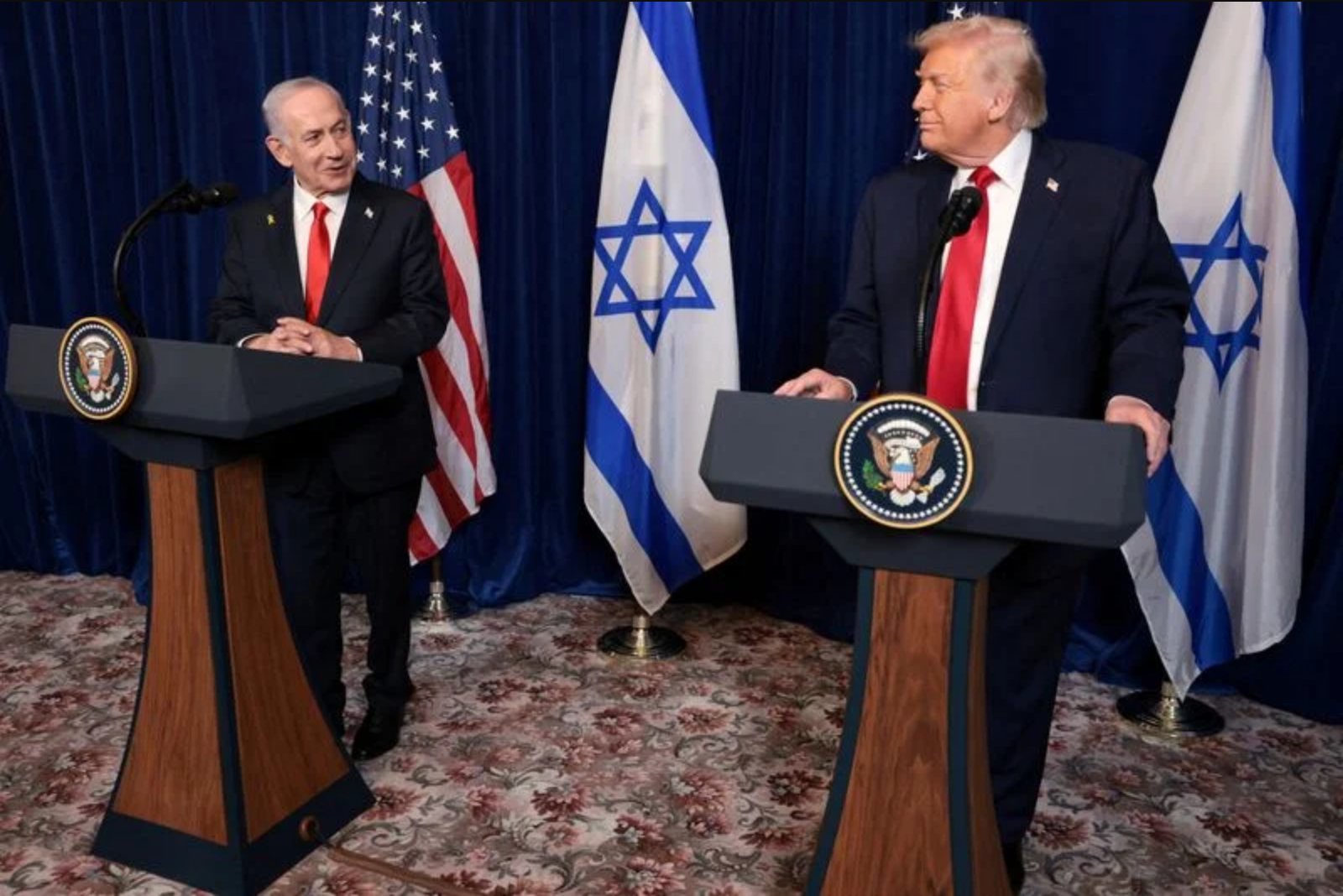
Benjamin Netanyahu had presented a tightly aligned partnership with Donald Trump as both a strategic instrument against Iran and a political lever at home. But the interim memorandum between Washington and Tehran has placed the Israeli prime minister on a sharp collision course with the U.S. president, exposing divergent objectives even as Israeli forces remain embroiled in operations in Lebanon.
Officials in Jerusalem, outwardly cautious to avoid provoking Israel’s most consequential ally, are expressing blunt frustration behind closed doors. One senior Israeli official, speaking on condition of anonymity, called the preliminary agreement "terrible for Israel." The official added that this view was broadly shared across Israeli leadership, "from the prime minister to the chief of staff."
Under the terms outlined by Washington, a ceasefire will be in place over the next 60 days while negotiators seek a fuller settlement designed to address U.S. and Israeli concerns, with an emphasis on Tehran’s nuclear programme. U.S. statements characterize the interval as an opportunity to secure a comprehensive agreement. Israeli officials told Reuters they expect the negotiating period to be extended, which they believe would limit Israel’s freedom to pursue military options while unresolved threats persist.
Key points of contention have repeatedly surfaced between Netanyahu and Trump over Israel’s unwillingness to constrain its operations against Iran-backed Hezbollah in Lebanon. The friction has at times been overt. Earlier in the month, an angry phone call from Trump included the president telling Netanyahu he was "fucking crazy" and ordering him not to strike Beirut while the United States worked to secure a deal with Iran. Netanyahu complied that day and canceled planned strikes but launched an attack on Beirut’s southern suburbs a week later. That strike helped trigger Iranian missile attacks on Israel and prompted an unusual public rebuke from Trump toward both sides.
In the hours before the U.S. and Iran announced their interim arrangement, Israel again struck the Lebanese capital after rockets were fired at Israeli territory from Lebanon. President Trump characterized the rocket fire as "small and meaningless."
Netanyahu, who faces autumn elections in which polls project he will lose, may feel increased pressure to defy U.S. direction as domestic sentiment shifts. Surveys indicate a falling confidence in the U.S. president’s prioritization of Israeli security, complicating Netanyahu’s longstanding claim that his closeness with Trump distinguishes him from rival candidates.
"This is a pretty stark moment of divergence of interests," said Dan Shapiro, a former U.S. ambassador to Israel and now with the Atlantic Council. Shapiro suggested Netanyahu would likely stop short of openly opposing the deal in order to avoid an outright confrontation with Trump, but that Israel would signal it did not consider itself bound by the agreement and would reserve its rights.
The memorandum of understanding between the U.S. and Iran is expected to be signed in Switzerland. While negotiators have not publicly disclosed full terms, Pakistan, serving as a mediator, said the pact calls for a permanent halt to military operations on all fronts, including in Lebanon.
In reaction, Israel’s defence minister, Israel Katz, declared that Israeli troops would remain "indefinitely" deployed in buffer zones that Israel has seized in Lebanon, Syria and Gaza to neutralize perceived militant threats. Katz warned that if Iran attacks Israel as a result of events in Lebanon, Israel would respond "with all our might."
The interim deal is set to reopen the Strait of Hormuz, a critical oil chokepoint, while deferring the decisive question over Tehran’s nuclear programme to a 60-day negotiation period aimed at producing a final agreement. Israeli officials note that two additional objectives that both Netanyahu and Trump cited as reasons for the initial military campaign - curbing Iran’s missile programme and ending its support for regional armed groups - do not appear to be on the negotiating agenda for the coming talks.
Several senior Israeli officials, speaking on condition of anonymity because they were not authorized to comment publicly, told Reuters they regarded it as very likely that the 60-day window would be extended to 90 days, with U.S. forces remaining deployed in the region while Washington presses for a broader arrangement. Two other officials said Israel was surprised when Trump indicated last week that a deal was close, and conceded that Israel had limited success in shaping the course of the negotiations.
Political analysts say the U.S.-Iran agreement undermines a central pillar of Netanyahu’s campaign narrative: that his personal relationship with Trump produces uniquely favorable outcomes for Israel. During Trump’s first term, Washington enacted significant policy shifts that Netanyahu often cited as proof of the benefit of that alliance, including moving the U.S. embassy to Jerusalem and supporting the Abraham Accords that established diplomatic ties between Israel and certain Arab states. Trump also walked away from a nuclear pact negotiated under a previous U.S. administration, a move Netanyahu had long supported.
Jonathan Rynhold, a political scientist at Bar-Ilan University near Tel Aviv, said Netanyahu will find it hard to persuade Israeli voters that the U.S.-Iran agreement validates his approach. "(Netanyahu) will be unable to sell this agreement to the Israeli public," Rynhold said. He added that Netanyahu’s most optimistic outcome would be that the negotiations fail and hostilities resume in a way that Israel sees as advantageous within the 60-day window.
Public opinion data underscores the shift in perceptions. A poll released by the Israel Democracy Institute found that only 41% of Jewish Israelis now believe their security is a central consideration for President Trump, a decline from 64% in March.
Echoing national security concerns, Eli Cohen, Israel’s energy minister, said Israel would be ready to act unilaterally should Iran attempt to rebuild its nuclear and ballistic missile programmes. Cohen also suggested the likelihood of Tehran taking such steps during Trump’s presidency was low. Speaking to Israel’s public broadcaster Kan, Cohen said, "If Iran tries to renew its nuclear and ballistic missile programmes - we will be there and act."
For now, Jerusalem must navigate a complex diplomatic terrain: publicly avoid rupturing ties with Washington, privately coordinate steps to protect its security interests, and simultaneously manage a domestic political scene that is increasingly skeptical of the current U.S. approach. Military operations remain focused on Lebanon even as regional dynamics are temporarily frozen by a U.S.-Iran agreement that Israeli leaders view as at odds with their own security priorities.
Summary: An interim U.S.-Iran memorandum to halt hostilities and open a 60-day negotiation period has deepened tensions between Benjamin Netanyahu and Donald Trump. Israeli leaders privately view the deal as damaging to Israel’s interests and worry the negotiation window will be extended, restricting Israeli military options while leaving core concerns about Iran unresolved. Netanyahu faces domestic pressure as military operations remain focused on Lebanon and public confidence in U.S. commitment to Israel’s security has fallen.