
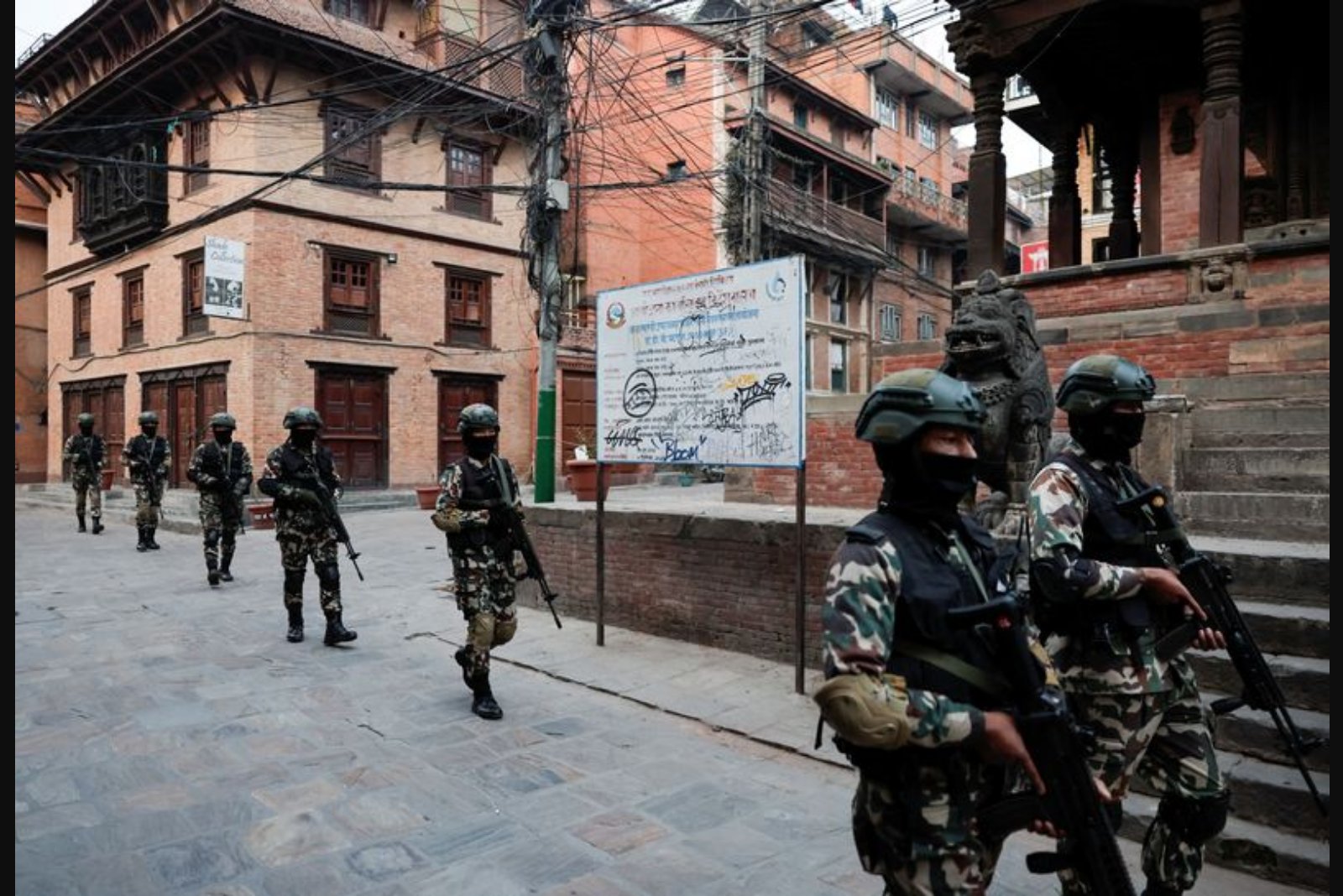
Nepal is holding a general election on Thursday, the first nationwide vote since youth-led demonstrations last September that demanded an end to corruption, the creation of more jobs and cleaner politics. The protests led to the deaths of 77 people and culminated in the resignation of the government.
For decades the Himalayan country, situated between China and India, has experienced deep political turbulence. Since 1990 it has seen 32 changes in government. Political instability has constrained a largely agrarian economy and contributed to a pattern in which millions of Nepalese seek employment abroad.
Nearly 19 million of Nepal's roughly 30 million residents are now eligible to vote to fill a 275-member legislature. The composition of that legislature will be determined by two methods: 165 members selected through direct elections and 110 chosen via proportional representation.
Election officials added about one million voters after last year's protests, and most of these newly registered electors are young. Their presence has intensified calls for reforms of Nepal's political framework and for economic changes aimed at generating formal employment with better wages.
Among the citizens mobilised by those calls is Bibas Pariyar, a 22-year-old painter who works in Kathmandu. Pariyar said he plans to return to his home district of Gorkha on Thursday to cast his ballot. "We need new people who can give work to people, reform agriculture and pay adequate remuneration for workers," he said. "The old politicians only amassed money for themselves through corruption and did nothing for the people." Gorkha is noted in the country for a long history of residents serving in the British and Indian militaries.
Candidates and party dynamics
The electoral contest brings together long-standing political forces and a rising centrist movement. The established parties include the centrist Nepali Congress (NC) and the Communist Party of Nepal (Unified Marxist-Leninist or UML), both of which have dominated national politics for decades.
Challenging the traditional parties is the centrist Rastriya Swatantra Party (RSP), which many analysts now view as a leading contender. The RSP's prime ministerial candidate is Balendra Shah, 35, a rapper-turned-politician who joined the three-year-old party in January. Shah, a former mayor of Kathmandu who emerged as one of the faces of the September protests, is competing directly with the UML's K.P. Sharma Oli, 74, a four-time premier who resigned following the protest-related killings.
Turning protest energy into electoral success
Observers point out that street momentum does not automatically translate into seats in parliament. Jay Nishaant, founder of the Nepal Democracy Foundation think tank, said campaign outcomes are typically decided by three factors: agenda, leadership and organisation. "For any election, three things decide the outcome: agenda, leadership and organisation," he said.
Nishaant suggested Nepal's situation may differ from a neighbouring case where youth-led protests also led to electoral contests. "That’s where Nepal may diverge from Bangladesh. Bangladesh’s July 2024 student leaders had a clear agenda and recognisable faces, but not a time-tested grassroots machine," he said. The comparison highlights the difficulty faced by youth movements in converting visible street support into the sustained organisational effort required to win large numbers of parliamentary seats. In Bangladesh’s February general election, the principal youth-driven party secured only six seats in a 300-member parliament.
Economic and political stakes
The election comes at a moment when demands for systemic reform intersect with persistent economic challenges. Protesters called explicitly for more employment opportunities and better pay, particularly formal jobs that could alter current labour patterns. The vote will be closely watched for indications of whether these demands translate into electoral change and policy priorities, especially in agriculture and labour markets that are central to the country’s economy.
With a large share of the population engaged in agriculture and a long-standing reliance on work abroad, the political outcome could influence approaches to job creation, remuneration and governance. The addition of roughly one million young voters further complicates the electoral calculus, making turnout and organisational strength decisive variables.
As results unfold, Nepal will reveal whether the energy of last September’s protests can be channelled into a reshaped political landscape or whether established parties will maintain their hold on power through traditional networks and structures.