
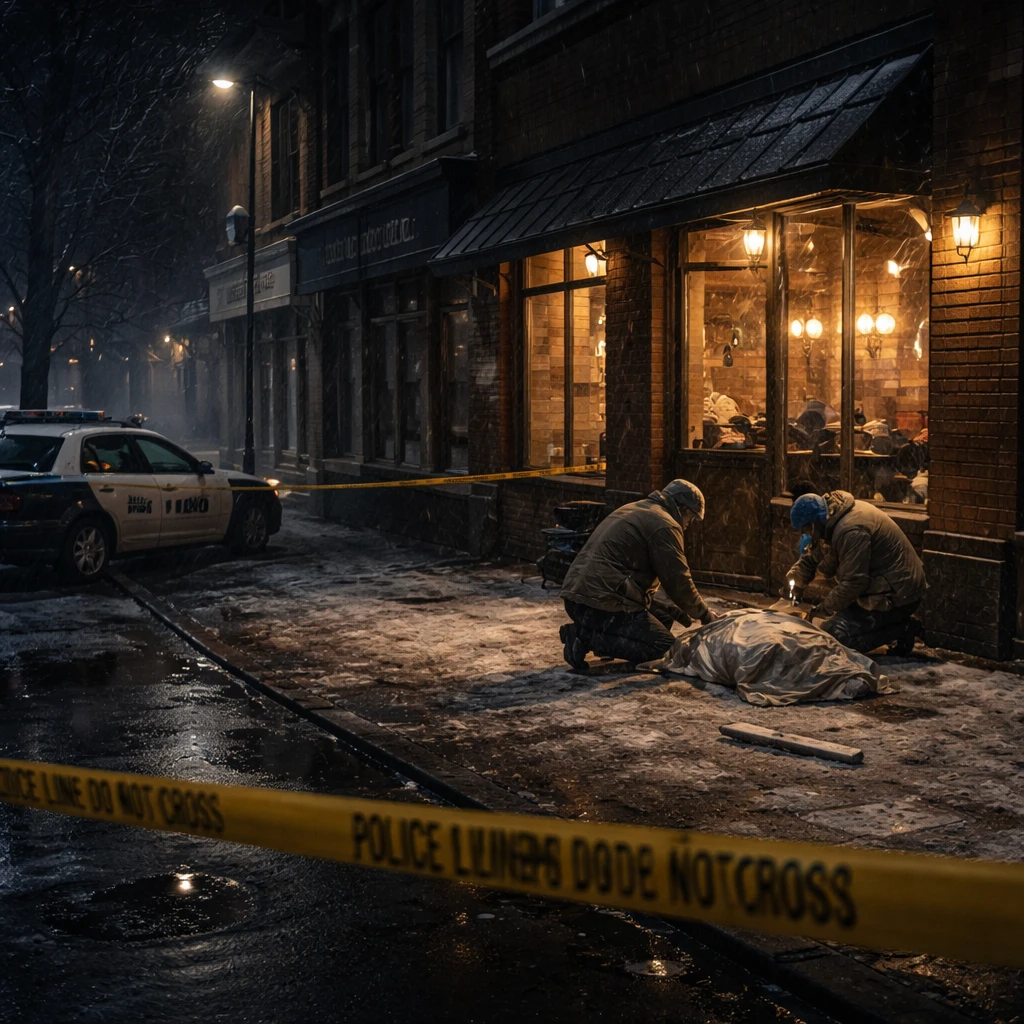
A man who had been in custody in Erie County and later released into the custody of U.S. Border Patrol was discovered dead on a downtown Buffalo street, city officials said on Wednesday. Police identified the deceased as Nurul Amin Shah Alam, 56.
Buffalo Police officers located Shah Alam's body on Tuesday evening, a spokesperson for the Buffalo Police Department said. Shah Alam had been missing since Feb. 19, the date agents dropped him off at a coffee shop miles from his home after he was released from a county jail. He had spent much of the prior year in that jail awaiting trial on criminal charges that were later resolved with a misdemeanor plea agreement.
Homicide detectives have opened an investigation into the circumstances surrounding Shah Alam's death, according to the Buffalo Police Department spokesperson.
Federal and local statements
Buffalo Mayor Sean Ryan criticized federal immigration authorities for their role in Shah Alam's release and subsequent disappearance, calling the decision-making that resulted in the man's death "inhumane." In a statement on Wednesday, the mayor said Shah Alam's death was preventable and that the decision by U.S. Customs and Border Protection was unprofessional and inhumane.
A U.S. Customs and Border Protection (CBP) spokesperson did not immediately respond to a request for comment from city officials. Separately, in a statement to Investigative Post, a Buffalo-based news outlet, a CBP spokesperson said agents had determined Shah Alam had entered the United States as a refugee and could not be deported, and that agents dropped him at a coffee shop.
"Border Patrol agents offered him a courtesy ride, which he chose to accept to a coffee shop, determined to be a warm, safe location near his last known address, rather than be released directly from the Border Patrol station," the agency told Investigative Post. "He showed no signs of distress, mobility issues or disabilities requiring special assistance."
Context and legal background
Temperatures in Buffalo were below freezing over the previous weekend, officials noted. The Erie County District Attorney's Office said Shah Alam had been arrested about a year earlier after an incident that resulted in minor injuries to two Buffalo Police officers. According to the district attorney's office, Shah Alam was released on bail earlier this month after agreeing to a plea deal resolving those charges.
Following his initial arrest, U.S. Immigration and Customs Enforcement issued an immigration detainer, a formal request that a noncitizen be taken into federal custody after scheduled release from criminal detention. In response to that immigration detainer, the Erie County Sheriff's Office contacted U.S. Border Patrol prior to Shah Alam's release, a spokesperson for the sheriff's office said.
Family account
Mohamad Faisal, one of Shah Alam's children, provided details about his father's arrest and circumstances in a text message. Faisal said the arrest a year ago stemmed from a misunderstanding between Shah Alam and police officers. Shah Alam, who did not speak English, had been out for a walk and was using a curtain rod he had purchased as a walking stick, the son said.
According to Faisal, Shah Alam became lost and walked onto the property of a Buffalo resident who called police. When Shah Alam did not obey police commands to drop the curtain rod, officers arrested him, Faisal said.
After Shah Alam was released last week, "Nobody told me or my family or attorney where my dad was dropped off," Faisal said. The son added that Shah Alam did not read, write or use electronic devices and that he only wanted to "eat home-cooked food" and to "be united with the rest of [his] family." Faisal said the family are Arakan Rohingya refugees.
Ongoing issues and inquiries
The investigation by homicide detectives is ongoing. City officials and family members have highlighted questions about communication and the decision to release Shah Alam at a coffee shop late at night, miles from his home. Mayor Ryan described the situation as the result of "inhumane" decision-making by federal immigration authorities, emphasizing Shah Alam's vulnerability as a nearly blind, non-English-speaking individual.
At the time of the CBP statement to Investigative Post, the agency asserted that Shah Alam showed no visible signs of distress or mobility limitations that would have required special assistance, and that the coffee shop had been chosen as a warm, safe location near his last known address. The Buffalo Police Department and Erie County authorities continue to coordinate with investigators as they work to determine the facts surrounding Shah Alam's death.
This case has prompted scrutiny from city leadership and raised questions about procedures for transferring custody of vulnerable individuals from local detention to federal immigration authorities. With homicide detectives investigating and family members seeking answers about Shah Alam's final hours, officials have emphasized that the precise circumstances and causes of death remain the subject of the investigation.