
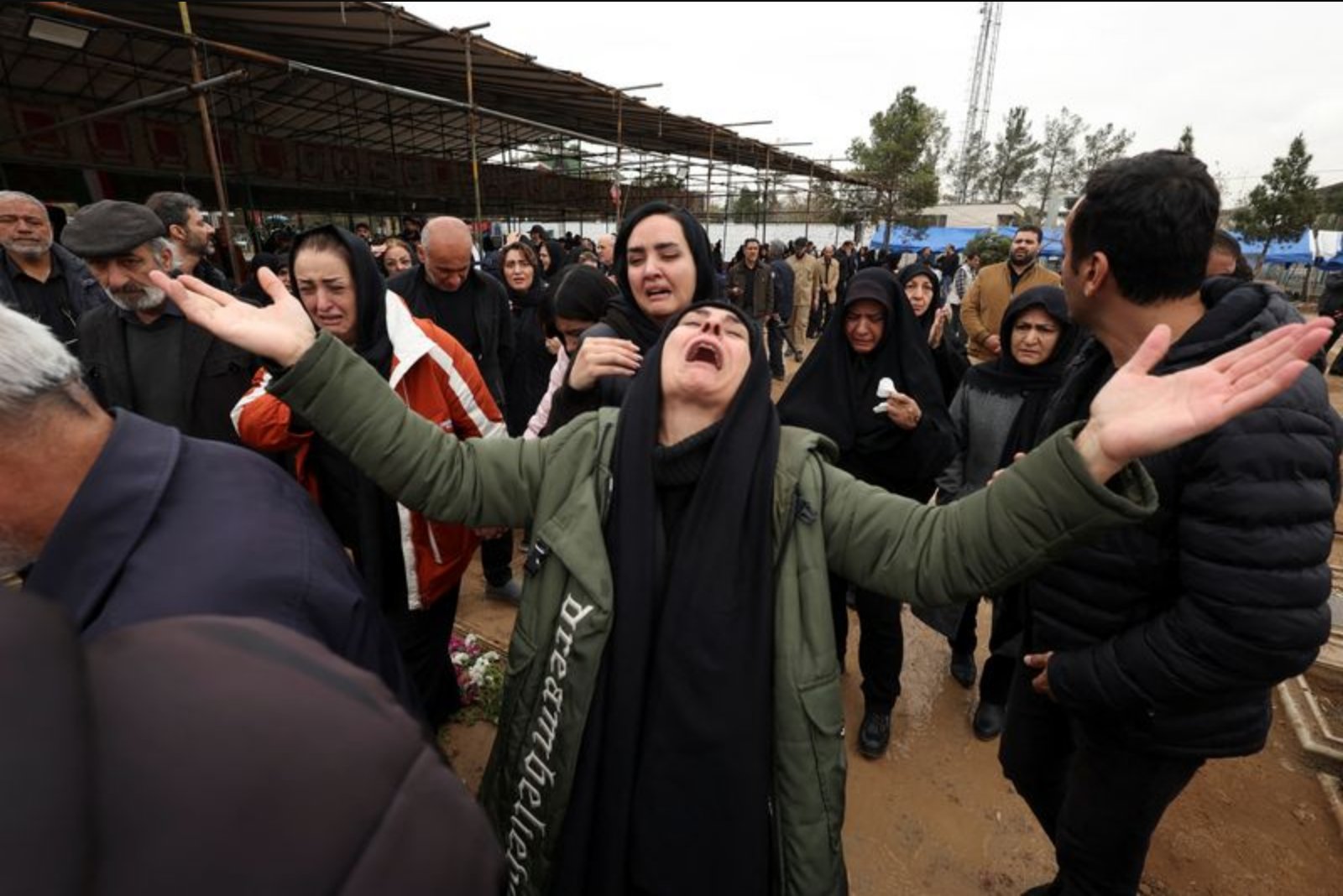
Gravediggers dug new plots and workers prepared white marble headstones as families arrived at Behesht-e Zahra cemetery on the southern outskirts of Tehran to bury relatives killed in the recent air campaign. The conflict - which began on February 28 with a series of air strikes on Tehran and other cities - has, according to Iranian officials, claimed the lives of more than 1,300 Iranians.
One of the mourners, Marzia Razaei, held a large portrait of her son, Arfan Shamei, and wept as rain fell softly across the cemetery. Shamei, 23, was killed when a blast tore through his military training camp in Kermanshah in western Iran on March 4. The explosion turned his tent into "a ball of flame," Razaei said, and left his body so badly burned that she was not able to see him.
Razaei said she had not seen her son for two months and that he had been due to come home on leave. His last day before the planned trip home was meant to have been on a Monday, the day she spoke with journalists at the cemetery. The leave had been arranged as part of preparations for an upcoming wedding.
Shamei's grave is in Section 42, where a dozen gravediggers worked while personnel placed engraved white marble stones bearing the names of the dead. As another body arrived for burial, family members bore the bier on their shoulders and the sound of an air strike echoed across the burial ground. Grey smoke was seen rising from a nearby district as mourners gathered under canopies decorated with photos of the deceased and Iranian flags.
Women sat close to the graves, some quietly weeping and others striking their chests in conspicuous displays of grief. Loudspeakers emitted Shi'ite Muslim hymns of mourning while a truck nearby held vibrant floral arrangements; petals were strewn over graves as families gathered to pay their respects.
Section 42 also contains graves of members of the Basij - a volunteer militia linked to the Islamic Revolutionary Guard Corps - as well as officials and detainees from Evin Prison, which has been a target in the current conflict and in strikes last June. The cemetery has become a focal point for both private mourning and public expressions of sorrow and anger.
Fatima Darbechi, 58, sat by the grave of her brother, who was 44 when he died early in the conflict. She said he had tried to rescue people trapped in a bombed car when another explosion sprayed him with shrapnel, inflicting mortal wounds. Darbechi recounted that their parents had died when her brother was a child and that she had raised him.
For some attendees, grief was accompanied by anger and defiance toward Israel and the United States for their roles in the bombing campaign. The mother of 25-year-old Ihsan Jangravi, speaking at the cemetery, shouted as she raised her fist and said: "When you burn our hearts, you do not stop us, you do not bring us to our knees."
The burials in Section 42 proceeded amid a backdrop of continuing hostilities and the broader regional crisis provoked by the air strikes. As bodies were lowered into the newly dug graves and mourners surrounded them, the cemetery resonated with the sounds of lamentation and, at times, of the nearby conflict itself.
Context and on-the-ground conditions
The cemetery setting conveyed both personal loss and public consequence. Graves were arranged beneath temporary canopies, with portraits and flags marking the identities of those killed. The arrival of additional casualties for burial underscored the continuing human toll described by Iranian officials.
Workers and family members moved through the space in a steady flow: gravediggers preparing plots, stone masons setting engraved markers, and relatives tending to flowers and photos. The audible presence of air strikes and the sight of smoke in the distance reminded those present that burials were taking place against an active and escalating backdrop.