
World February 26, 2026

Moscow Questions How U.S. 'Board of Peace' Will Fit Alongside U.N. Security Council

Russian officials flag overlap with the United Nations after Washington joins new peace body proposed by President Trump

By Priya Menon
Moscow Questions How U.S. 'Board of Peace' Will Fit Alongside U.N. Security Council

Russian foreign ministry officials have raised concerns about how the United States-led Board of Peace will coexist with the United Nations Security Council. Moscow questioned the board's self-description as a replacement for ineffective mechanisms and noted the absence of explicit reference to Gaza in its mandate, while also pointing out that U.N. Secretary-General Antonio Guterres has not been invited to the board's meetings so far.

Key Points

  • Russia has questioned how the U.S.-backed Board of Peace will coexist with the United Nations Security Council, highlighting potential institutional overlap - sectors impacted include international diplomacy and security policy.
  • The United States is the only permanent U.N. Security Council member to join the board; the other permanent members are Russia, China, Britain and France - this affects multilateral governance and diplomatic relations.
  • Russian officials noted the board's charter positions itself as a replacement for what it calls ineffective mechanisms and that the board's mandate does not explicitly mention Gaza - this raises questions for international peace-building processes and related defense and diplomatic sectors.

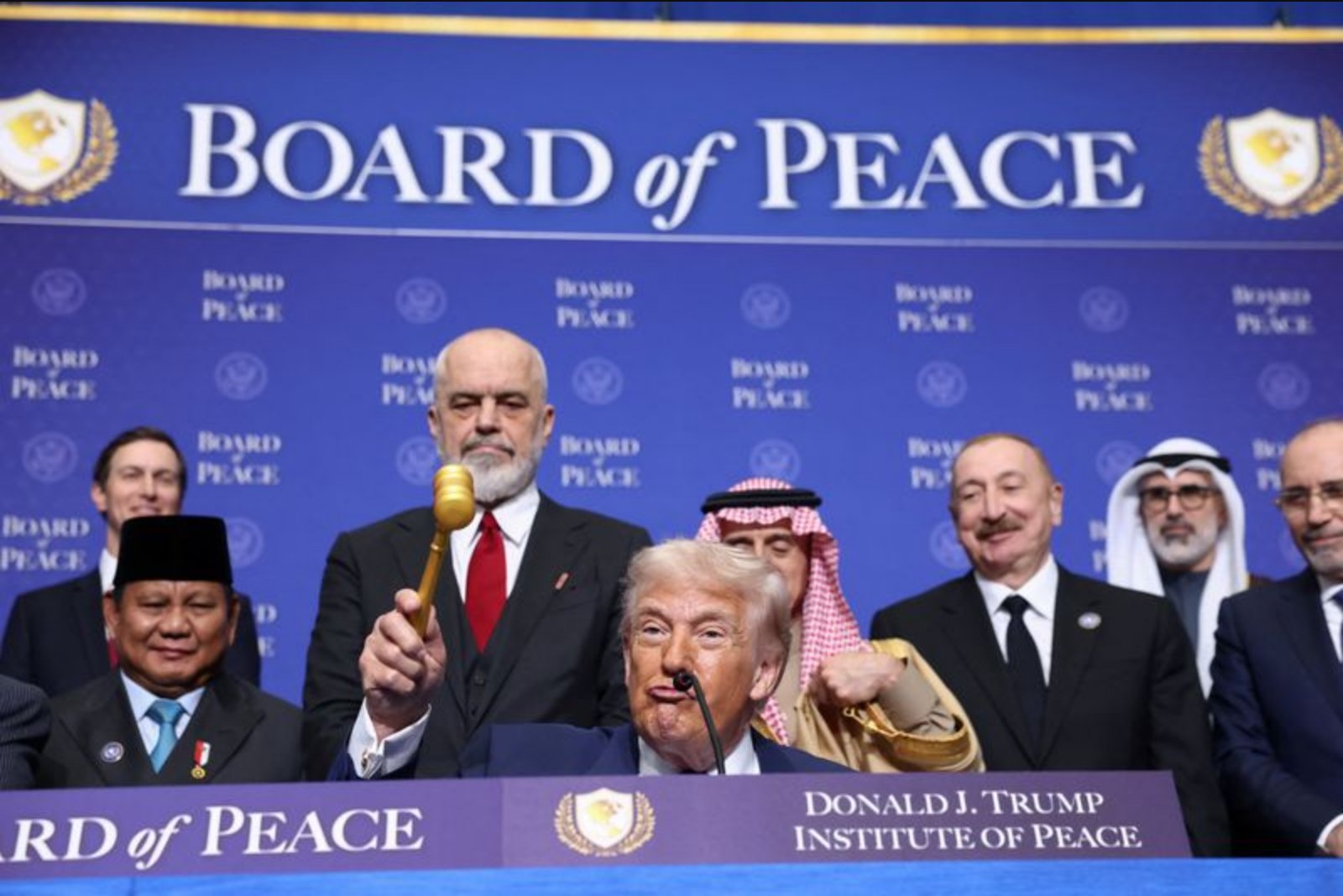
MOSCOW - Russian officials on Thursday publicly questioned the relationship between the new U.S.-backed Board of Peace and the United Nations Security Council, the body that has been central to multilateral peacemaking since the end of World War Two.

The Board of Peace was first proposed by U.S. President Donald Trump in September when he laid out his plan to end Israel's war in Gaza. Mr. Trump later indicated the board's remit would expand to address other conflicts around the world - areas of responsibility that have traditionally fallen within the U.N.'s remit.

Russia underscored that the United States is the only permanent member of the U.N. Security Council to have joined the board. The other permanent council members are Russia, China, Britain and France.

Kirill Logvinov, director of the international organisations department at the Russian foreign ministry, told the state news agency TASS that the board's founding document frames the new institution as intended to replace "mechanisms that have too often proved ineffective." He said the board's charter does not mention Gaza, a point he reiterated in an interview.

"It is clear that this approach raises questions about how the Board of Peace will coexist with the United Nations and its Security Council, which is the only universally recognised body for maintaining international peace and security," Logvinov said.

Logvinov also repeated Russia's observation that U.N. Secretary-General Antonio Guterres had not been invited to the board's meetings to date.

The board's charter states it will carry out "peace-building functions in accordance with international law." The document grants its chairman - President Trump - significant executive authority, including powers to veto decisions and to remove members, subject to certain constraints.

The U.N. describes the Security Council as the primary organ responsible for maintaining international peace and security. The council held its first meeting in London in 1946 and is headquartered in New York.


The questions voiced by Moscow focus on institutional overlap and procedural legitimacy as a new, U.S.-led body proposes to operate in an arena long dominated by the Security Council. Russian officials emphasised missing reference points in the board's mandate and procedural exclusions, such as the absence of an invitation to the U.N. secretary-general, as grounds for concern.

Risks

  • Uncertainty about the division of authority between the Board of Peace and the U.N. Security Council - this could complicate established international security processes and diplomatic coordination.
  • Procedural friction from exclusions, such as the U.N. secretary-general not being invited to board meetings so far, which may create legitimacy and cooperation challenges for peace initiatives - impacting international institutions and state-level diplomatic engagement.
  • Potential for overlapping mandates given the board's stated aim to replace supposedly ineffective mechanisms and its broad peace-building language, which could produce duplicative or conflicting efforts in conflict resolution - relevant to defense and international affairs sectors.

More from World

Starmer Confronts Crucial Test as Tight By-Election Sees Three-Party Contest in Manchester Feb 26, 2026 Spain’s mass regularisation plan strains already overstretched immigration system Feb 26, 2026 Chinese Military Drone Routinely Masks Transponder Signals in South China Sea Flights Feb 26, 2026 Macron to Update Nuclear Posture as European Allies Question U.S. Reliance Feb 26, 2026 Key Players and Stakes in Nepal’s March 5 Election Feb 25, 2026