
Moody's Ratings has affirmed Qatar's Aa2 ratings for both foreign- and local-currency long-term issuer debt as well as its foreign-currency senior unsecured debt, while keeping the outlook stable. The ratings agency also confirmed the (P)Aa2 senior unsecured foreign-currency rating for Qatar's medium-term note program.
The affirmation rests on Moody's expectation that Qatar's government balance sheet will remain strong, anchored by sizeable financial assets managed by the Qatar Investment Authority. These assets are estimated at more than 200% of GDP at the end of 2025 and are roughly five times the size of government debt, providing a sizable buffer to absorb fiscal and economic shocks.
Moody's highlighted that the government's financial buffers help mitigate credit risks associated with Qatar's heavy economic and fiscal reliance on hydrocarbons. In 2025 the oil and gas sector accounted for 35% of GDP and generated 79% of government revenue, underscoring the concentration of fiscal receipts in energy-related activity.
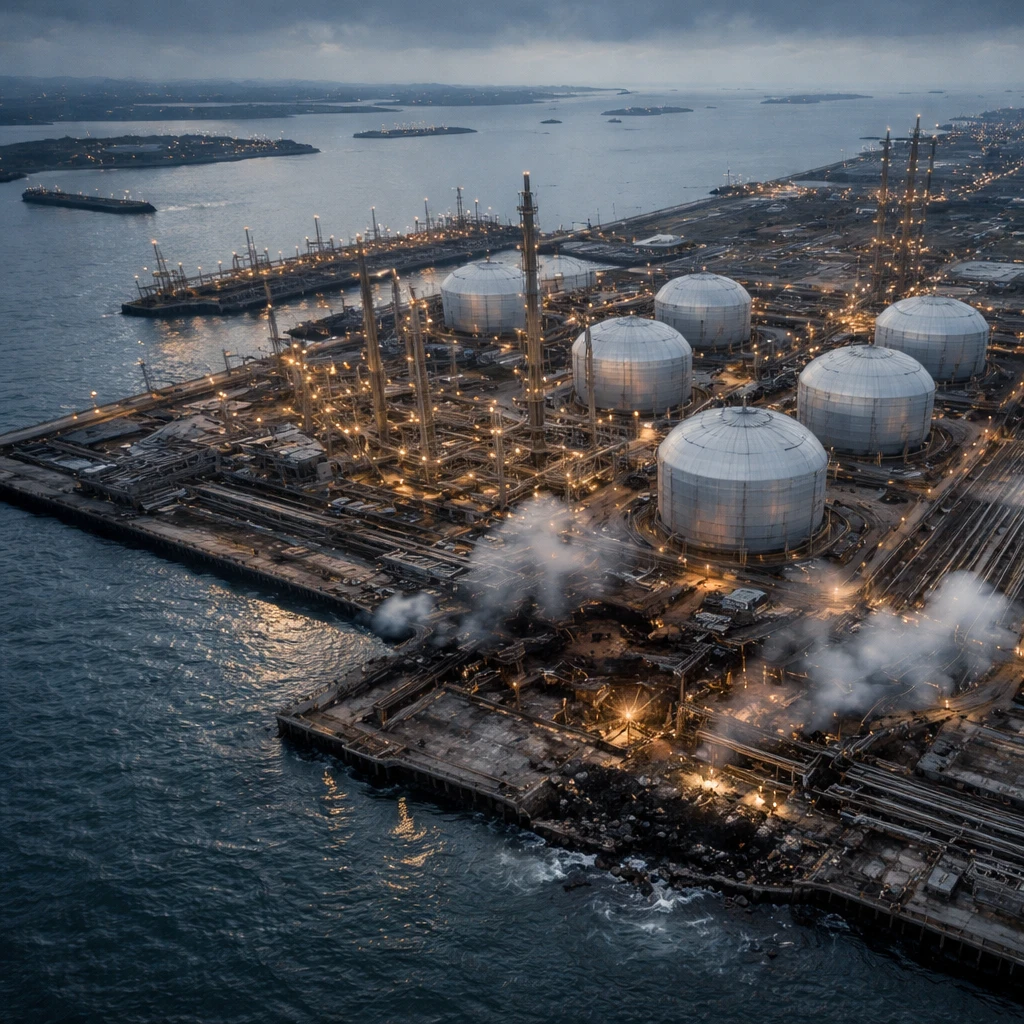
The stable outlook is based on a specific disruption scenario: a prolonged interruption to trade flows through the Strait of Hormuz that lasts through autumn, but without further major damage to energy production capacity. Qatar's liquefied natural gas operations have been largely suspended since early March after attacks on operating facilities and the effective closure of the Strait. On March 18-19, Iranian missile strikes damaged two of QatarEnergy's 14 LNG trains and one of its two gas-to-liquids facilities at Ras Laffan Industrial City, representing around 17% of current LNG production capacity.
Under Moody's assumed path, the near-total halt of Qatar's export-oriented LNG production through September is expected to trigger a sharp economic contraction of close to 14% for the year and to widen the fiscal deficit to between 5% and 6% of GDP, up from a 1% deficit in 2025. The ratings agency projects government debt will increase to about 51% of GDP from 43.2% in 2025 because of the combined effect of a larger deficit and a nominal GDP contraction.
Moody's anticipates that debt dynamics will improve after the shock: government debt is forecast to decline and then flatline around 43% of GDP for the remainder of the decade. The agency cites the gradual expansion of LNG production capacity and the support of elevated global energy prices as key factors that should underpin a robust recovery and better fiscal outcomes beginning in 2027.
The affirmation also extends to the Aa2-backed senior unsecured foreign-currency rating of Global Sukuk Ventures, a special purpose vehicle owned by the Government of Qatar. Moody's left Qatar's local currency and foreign currency country ceilings unchanged at Aaa.
Clear summary
Moody's maintained Qatar's Aa2 issuer ratings and stable outlook, pointing to government assets exceeding 200% of GDP as a buffer that offsets concentrated fiscal exposure to oil and gas. Recent missile strikes in March damaged LNG infrastructure and halted most exports, prompting Moody's to forecast a severe near-term economic contraction and wider deficits, followed by recovery supported by LNG capacity restoration and higher global energy prices from 2027.
Key points
- Moody's affirmed Qatar's Aa2 sovereign ratings and the (P)Aa2 rating on its medium-term note program, retaining a stable outlook.
- The government holds financial assets estimated at more than 200% of GDP at the end of 2025, about five times government debt, which Moody's views as a major credit-strength buffer.
- Damage to LNG infrastructure in March and a near-total suspension of LNG exports through September are expected to cause a near-term economic contraction of close to 14% and push the fiscal deficit to 5-6% of GDP, with recovery anticipated from 2027 onward.
Risks and uncertainties
- Prolonged disruptions to trade flows through the Strait of Hormuz through autumn, which Moody's factors into its stable outlook and which continue to pose operational and trade risks for the energy sector.
- Further major damage to energy production capacity - the stable outlook assumes there is no further major damage, so any additional impairment could alter fiscal and debt projections.
- The near-term near-total halt of LNG export-oriented production through September, which Moody's projects will materially contract the economy and widen the fiscal deficit, affecting sovereign finances and energy-related revenues.
Conclusion
Moody's decision to affirm Qatar's Aa2 rating and keep a stable outlook reflects a balance between the immediate economic shock from damaged LNG infrastructure and the country's exceptionally large sovereign financial assets. While the agency projects a sharp but temporary economic downturn and a rise in government debt in the short term, it also expects capacity restoration and favorable energy prices to support fiscal recovery from 2027.