
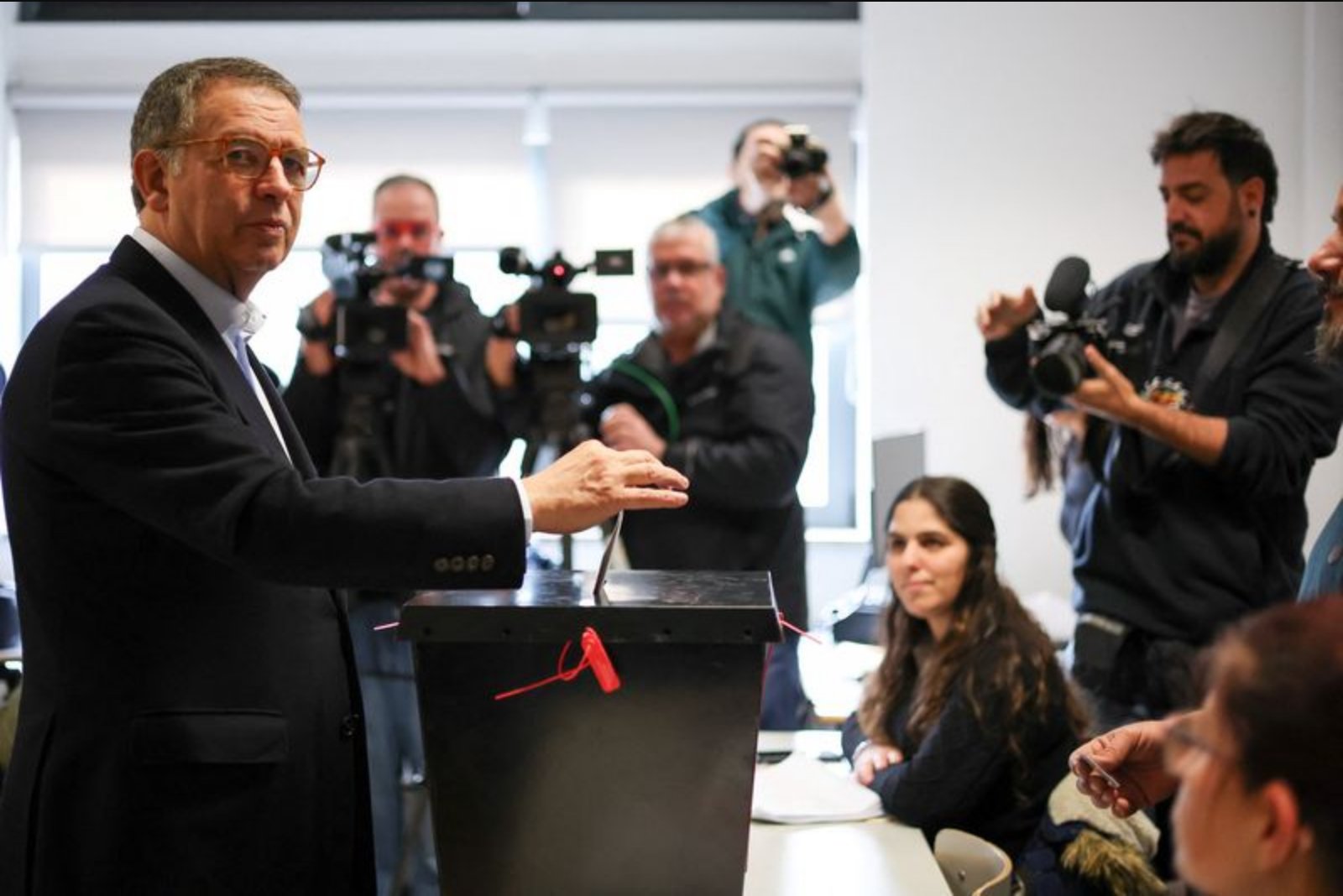
In Lisbon on Feb 8, exit polls from three television broadcasters projected a commanding lead for moderate Socialist candidate Antonio José Seguro in Portugal's presidential runoff. The surveys placed Seguro in a range of 67% to 73% of the vote, substantially ahead of his rival, far-right contender André Ventura, whose projected share sat between 27% and 33%.
The projected performance for Ventura, if confirmed by official tallies, would nonetheless represent an improvement on his party's showing in last year's general election. In that contest Ventura's anti-immigration Chega party obtained 22.8% of the vote. Chega's result in the general election made it the second-largest force in parliament, overtaking the Socialists and coming in behind the centre-right ruling alliance, which secured 31.2%.
Ventura, aged 43, is a former television sports commentator and is described in the exit-poll reporting as a charismatic figure. Despite trailing in the runoff projections, his higher share relative to the previous general election is noted as an indication of the expanding presence of the far right within Portugal and across parts of Europe.
Portugal's presidency is primarily ceremonial, but the office retains several important constitutional powers. Under certain circumstances the president can dissolve parliament, call a snap parliamentary election, and veto legislation. Those authorities mean the occupant of the largely symbolic role can play a pivotal part in moments of political instability or parliamentary deadlock.
The exit polls cited were conducted for the national television channels RTP, SIC and TVI/CNN and projected Seguro's advantage at the time of reporting. As with all exit-poll data, these figures reflected immediate post-voting responses rather than final certified results, and official confirmation would follow from electoral authorities.
Contextual note - The exit polls highlight two concurrent dynamics: a projected landslide for the moderate Socialist in the presidential runoff, and a measurable rise in support for a far-right candidate compared with the previous general election. The interplay of a ceremonial presidency that retains certain significant powers and shifting parliamentary balances was a central element in the reporting.