
Overview
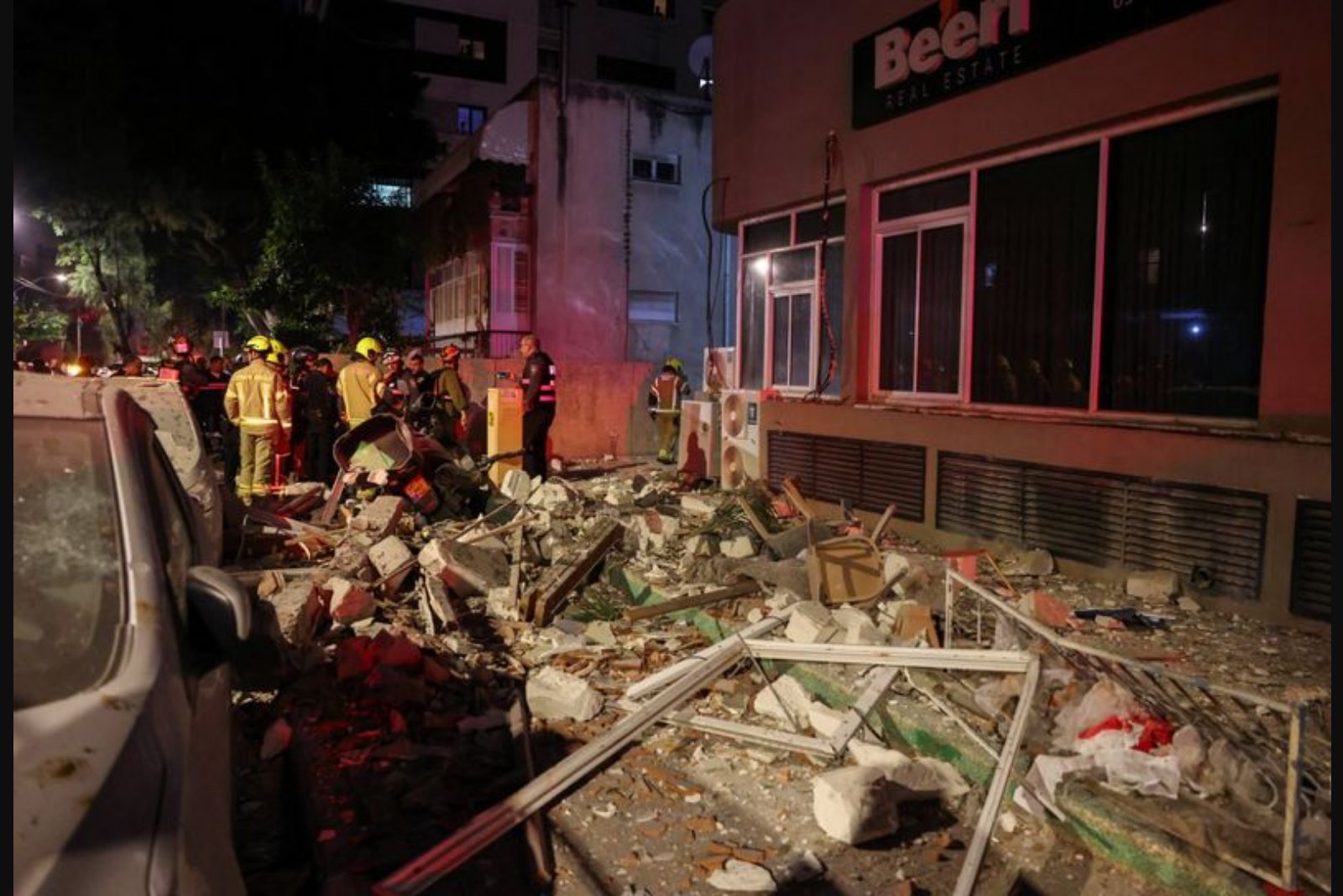
Iran targeted Tel Aviv with missiles carrying cluster warheads, state television reported, saying the strikes were retaliation for the assassination of Iran’s security chief Ali Larijani. Israel has asserted that Iran has repeatedly deployed cluster warheads - munitions that open in mid-air to disperse multiple submunitions over a wide area, complicating efforts to intercept incoming fire.
The attack on Tel Aviv overnight on Tuesday killed two people, bringing the reported death toll in Israel from the conflict to at least 14. Authorities described the city as densely populated at the time of the strike.
Impact near Iran’s nuclear site and international response
Separately, a projectile impacted an area close to Iran’s Bushehr nuclear power plant on Tuesday evening. Iran informed the International Atomic Energy Agency (IAEA) that the strike caused no damage or injuries. In response to the rising risks around nuclear facilities, IAEA Director General Rafael Grossi reiterated calls for maximum restraint during the conflict to reduce the danger of a nuclear accident.
Context of the strikes and targeted killings
Israeli and U.S. officials have said that one objective of their strikes on Iran more than two weeks earlier was to prevent the country from developing a nuclear weapons programme. Those earlier attacks killed Iran’s supreme leader and numerous other senior officials, and the Iranian government confirmed on Tuesday that Ali Larijani was the most senior figure to be killed since the campaign began. Iran’s Supreme National Security Council said Larijani, who served as its secretary, and two close associates - his son and his deputy, Alireza Bayat - were also killed in an Israeli attack on Monday night.
Leadership and diplomatic posture in Tehran
The targeted killings have occurred amid a conflict that shows little sign of abating. According to a senior Iranian official who requested anonymity, Iran’s newly named supreme leader Mojtaba Khamenei rejected proposals conveyed to the Foreign Ministry to reduce tensions or agree to a ceasefire with the United States. The official relayed Khamenei’s comments that it was not "the right time for peace until the United States and Israel are brought to their knees, accept defeat, and pay compensation." The official did not state whether the new supreme leader was physically present at the foreign-policy meeting he attended or participated remotely. The younger Khamenei has not yet been publicly shown in photographs or on television since his appointment last week.
Human toll and regional strikes
An Iran-based human rights group, HRANA, estimated on Monday that more than 3,000 people have been killed in Iran since the U.S.-Israeli attacks began at the end of February. Iranian strikes have also inflicted casualties beyond Iran’s borders, with fatalities reported in Iraq, across the Gulf states, and in Israel. The Lebanese Health Ministry said on Tuesday that more than 900 people have died since Israel began its attacks on Lebanon on March 2.
Maritime disruption and the oil market
The Strait of Hormuz, through which an estimated fifth of global oil trade passes, remains largely closed amid Iranian threats to attack tankers associated with the United States and Israel. Those threats and renewed attacks on oil facilities in the United Arab Emirates have contributed to sharp movements in energy markets: oil prices rose about 3% on Tuesday and are reported to be up roughly 45% since the start of the conflict on February 28. The surge in oil prices is raising concerns about renewed inflationary pressure globally.
International positions and diplomatic friction
U.S. President Donald Trump criticized allied nations for what he described as tepid responses to requests for military assistance aimed at reopening Strait of Hormuz shipping lanes. He said most NATO allies did not want to become involved and called that stance "a very foolish mistake." On social media the president added that because of recent "Military Success" the United States no longer needed NATO countries' assistance, also singling out Japan, Australia and South Korea.
European Union foreign policy chief Kaja Kallas said in an interview that no country was ready to risk lives to secure the strait. Kallas emphasized the need for diplomatic solutions to keep passage open and avoid crises in food, fertilizer and energy supplies.
U.S. internal debate and resignations
The United States has offered shifting rationales for joining Israel in strikes on Iran and has encountered criticism over the legal basis for engaging in a new war. The debate was underscored by the resignation of Joseph Kent, head of the U.S. National Counterterrorism Center, who said in his resignation letter to President Trump that Iran "posed no imminent threat to our nation."
Meanwhile, the U.S. military said it had targeted sites along Iran’s coastline near the Strait of Hormuz because Iranian anti-ship missiles posed a hazard to international shipping lanes.
Attacks on Gulf infrastructure and regional diplomacy
Gulf Arab states have reported sustained attacks since the conflict began, with more than 2,000 missile and drone strikes directed at U.S. diplomatic missions and military installations, as well as civilian and commercial targets such as oil infrastructure, ports, airports, ships, and residential and commercial buildings. Most of these attacks were reported to be aimed at the United Arab Emirates.
In response to the mounting instability, Saudi Arabia announced it will host a consultative meeting in Riyadh later on Wednesday evening, bringing together foreign ministers from a number of Arab and Islamic countries to discuss ways to support regional security and stability, the kingdom's foreign ministry said.
Economic and humanitarian consequences
The continuing hostilities have affected multiple sectors of the global economy. Global airlines warned of steep increases in jet fuel prices and flagged hundreds of millions of dollars in higher costs, potential fare increases, and the likelihood of route cancellations. Aviation has already been disrupted, with numerous flights cancelled, rescheduled or rerouted as most Middle East airspace remains closed amid the threat of missile and drone attacks.
The World Food Programme warned that if the conflict persists through June, tens of millions of people could face acute hunger. These humanitarian warnings sit alongside market concerns about a renewed spike in inflation driven by higher energy prices.
What remains uncertain
Key uncertainties include how long the sustained campaign of strikes will continue, whether diplomatic efforts convened by regional states will alter the course of the conflict, and how prolonged interruptions to maritime traffic and air corridors may affect global supply chains, inflation and food security. The IAEA has urged restraint to avert the risk of damage to nuclear facilities, an outcome that states and international agencies are working to prevent.
Reporting on the diplomatic exchanges, military actions, casualty figures, and economic impacts in this article is based on statements and data provided by the governments and organisations cited.