
Overview
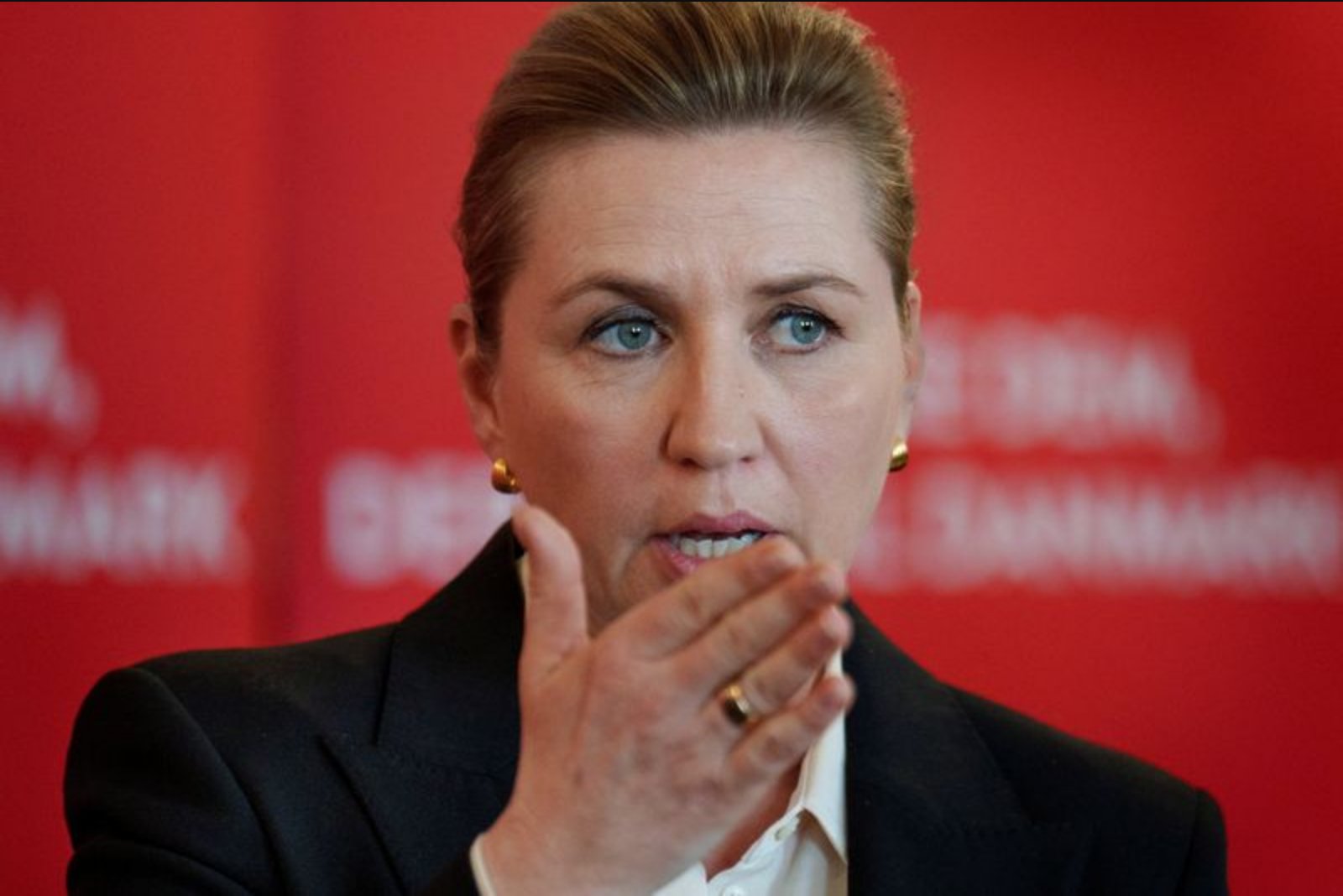
Mette Frederiksen has centered her reelection bid on a posture of firm international leadership, most visibly in the confrontation with the United States over Greenland. That posture, however, competes with voter unease at home about whether her government has done enough to relieve rising cost-of-living pressures. The outcome of the March 24 general election will determine whether Frederiksen can convert renewed international profile into continued domestic mandate.
Political trajectory and polling
Frederiksen’s Social Democrats recovered some ground after a low point late last year. In December, support for the party fell to 17% in opinion polls - a significant drop from the 28% it secured in the 2022 election - before recovering to roughly 22% in recent weeks. Party fortunes fell sharply in municipal elections last November, but a revival this year has given Frederiksen a pathway to potentially become Denmark’s longest-serving leader since World War Two if she completes another full term.
Domestic policy shifts and controversies
Frederiksen, 48, first entered parliament at 24 and has led the Social Democrats since 2015, becoming prime minister four years after taking party leadership and the second woman to lead Denmark’s government. Early in her career she emphasized defending Danish control over welfare, labour rules and borders, and resisted deeper EU integration on sovereign grounds. In recent years, however, security developments have prompted notable policy reversals.
Her government ordered the cull of Denmark’s entire mink population in 2020 amid concerns about the animals carrying the virus. A subsequent public inquiry concluded the action lacked a legal basis and found that the government had "grossly misled" the public, while also determining Frederiksen had not personally been aware that the government had overstepped its authority. The mink episode stands out among several decisions that provoked public anger.
Other controversial choices include the abolition of a public holiday to help finance higher defence spending - a move that angered workers - and a shift toward more restrictive immigration policies, particularly for non-Western migrants. Those immigration measures have blunted momentum for far-right challengers while alienating some traditional left-leaning allies.
Frederiksen has also been criticized for a top-down leadership style and for forming a coalition with the centre-right despite running in 2022 on the promise of leading a left-leaning majority government.
Security-driven realignment
Russia’s invasion of Ukraine and uncertainty about U.S. security guarantees prompted Frederiksen to pivot on several issues. She dropped Denmark’s opposition to collective EU debt, supported joint defence procurement, and moved away from the fiscally conservative "Frugal Four" bloc, arguing that European unity had become a security necessity. Those shifts have raised her profile abroad even as some voters question whether domestic priorities have received adequate attention.
Her handling of a string of crises - including the pandemic, the war in Ukraine, drone incursions, sabotage of the Nord Stream pipelines, and the Greenland dispute with Washington - has elevated her stature on the international stage. She has rallied allies over Greenland and become an outspoken backer of Ukraine. That international visibility contributed to speculation in 2023 that she might be floated as a candidate for NATO secretary-general, a possibility that has fed public questions about her long-term domestic commitment.
Public perception and electoral challenge
Political analyst Noa Redington captures a common strain of public sentiment: "People are really tired of her. She dominates everything in Danish politics, yet she has changed her mind on everything, from being the most Eurosceptic prime minister Denmark has ever had, to one of its most pro-European. That wears enormously on voters' trust."
Redington also notes a recurring theme in public debate about Frederiksen’s future: "There is something of a farewell tour about all this. If she is re-elected, her entire third term will be dominated by the question of when does she leave? Nobody believes she will serve a full term again." That perception introduces an additional element of uncertainty about her prospective third term should voters return her to office.
What is at stake
The election will test whether a leader who has weathered an exceptional sequence of security and political shocks - and whose international profile has risen as a result - can persuade voters that domestic concerns, notably the cost-of-living situation, will be addressed with equal intensity. If Frederiksen secures another full term, she will approach nearly 11 years in office, making her the longest-serving prime minister since fellow Social Democrat Thorvald Stauning, whose 15 years in power ended in 1942.
Key points
- Frederiksen is running for a third term in the March 24 general election, leveraging a defiant stance in the Greenland dispute to bolster her standing.
- Her government has shifted toward deeper European defence cooperation and collective fiscal measures in response to security concerns, affecting defence procurement and related sectors.
- Domestic controversies - including the 2020 mink cull, the abolition of a public holiday to fund defence spending, and stricter immigration policies - have eroded support among some voters and traditional allies.
Risks and uncertainties
- Voter concern about the cost-of-living crisis and whether Frederiksen has prioritized domestic issues could depress support - a risk for consumer-sensitive sectors and labour markets.
- Political fallout from past controversies, such as the mink inquiry finding that the public was "grossly misled," and the perception of a top-down leadership style may complicate coalition-building and policy continuity, with implications for public-sector labour and welfare policy implementation.
- Speculation about Frederiksen’s possible move to an international post - amplified by talks of a NATO candidacy - creates uncertainty about leadership continuity, which could affect investor and market sentiment around defence procurement and public spending plans.