
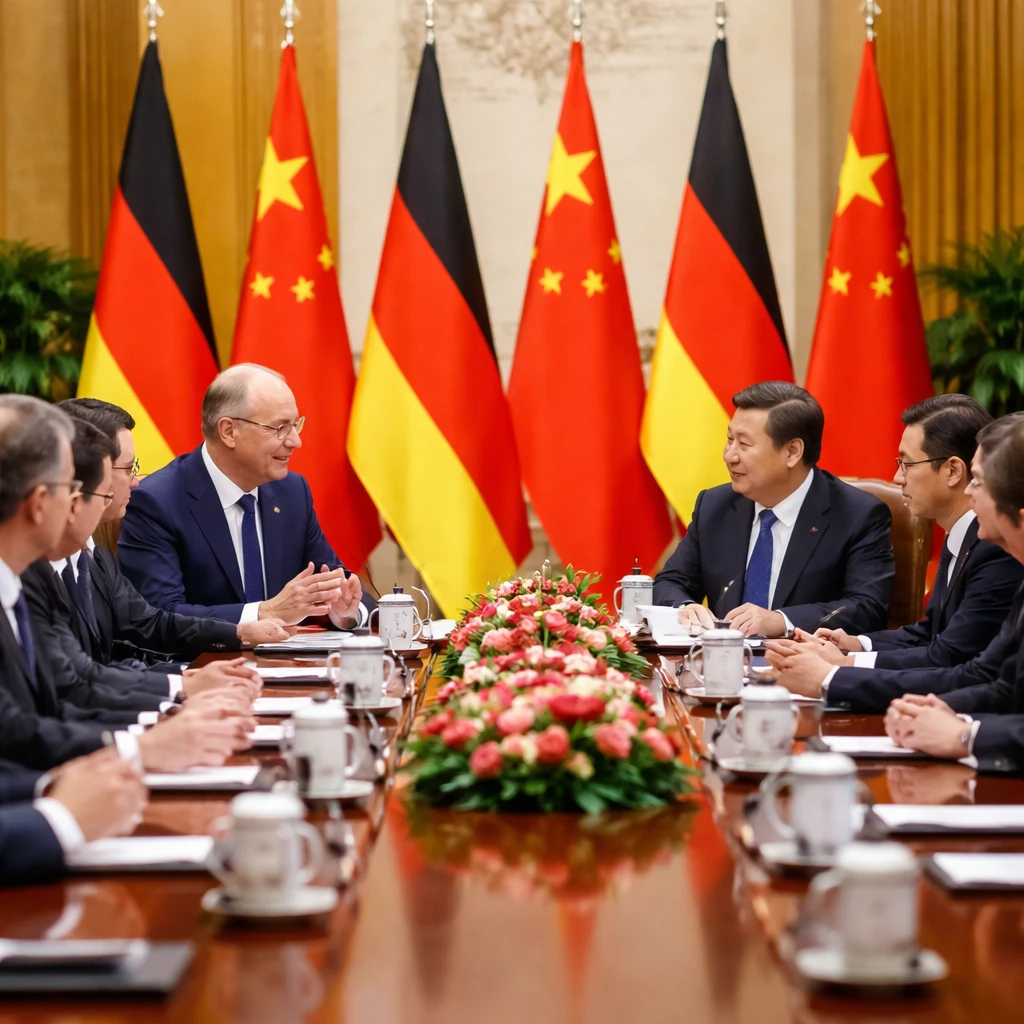
German Chancellor Friedrich Merz concluded a closely watched visit to Beijing this week, meeting with President Xi Jinping to mark the start of the lunar new year and to chart cooperation for the "Year of the Horse." The trip was notable for its high-level composition and its emphasis on economic and strategic ties.
A delegation of 30 top German business leaders accompanied the chancellor, a detail that underlines the scale of commercial interdependence between the two countries. Annual bilateral trade continues to exceed $200 billion, and two-way investment stock stands above $65 billion, reflecting sustained financial and commercial linkage between the world’s second and third-largest economies.
At the summit, both leaders reiterated their commitment to mutual respect and to achieving "win-win" results. The conversations concentrated on the evolving shape of industrial cooperation - moving away from a focus solely on traditional manufacturing and toward greater joint work in digital technologies and green innovation.
German media coverage highlighted the considerable care taken in arranging the visit, which observers say signals that Berlin regards its relationship with China as central to Germany’s technology and innovation plans through the 2030 horizon. That framing positions the partnership as part of long-term national strategy rather than a short-term commercial engagement.
Beyond economic ties, the meetings provided a platform for both capitals to advocate for a stable international architecture. China and Germany issued a joint press statement defending free trade and reaffirming the role of the United Nations in global governance. In his remarks, President Xi proposed three pillars for the future of bilateral relations - that the two sides be "reliable," "innovative," and "cultural" partners - and called on them to take the lead in safeguarding the international rule of law and in practicing effective coordination.
Chancellor Merz emphasized that Germany values its ties with China and expressed willingness to deepen the strategic partnership. Observers noted a diplomatic thaw at a time when several European leaders are reportedly adopting a "looking east" approach as part of efforts to secure economic stability.
The leaders further discussed aligning Germany’s digitalization objectives with China’s 15th Five-Year Plan. That alignment and the integrated development of industrial sectors were presented as potential stabilizing factors meant to buffer both economies against global volatility and to address contemporary pressures on the multilateral trading system.
While the summit focused on forward-looking cooperation in technology and green industries, it also underscored continuity in trade flows and investment levels that have characterized the relationship to date. The diplomatic exchanges and the participation of leading business figures signal sustained interest on both sides in maintaining and deepening economic integration.