
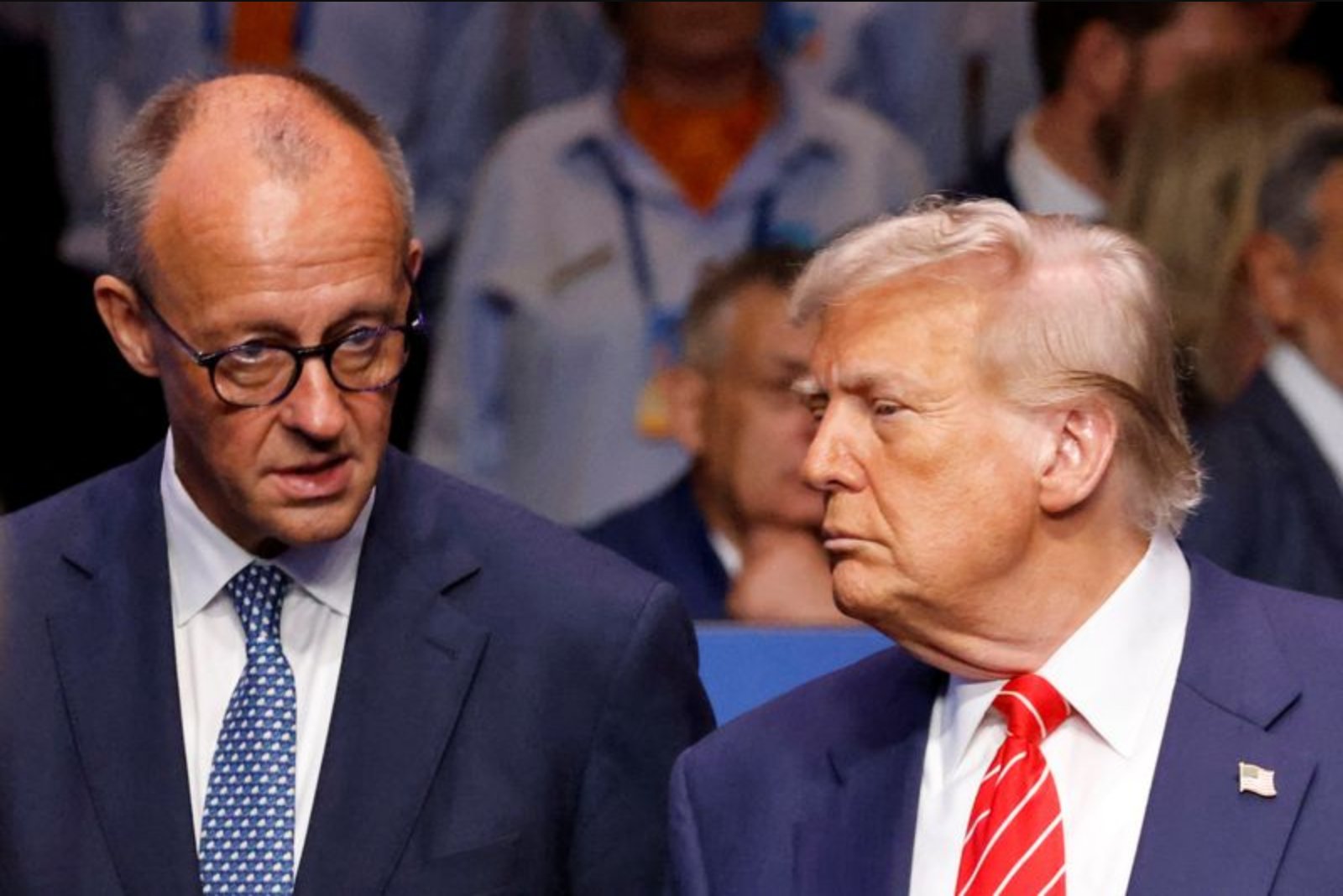
German Chancellor Friedrich Merz arrived in Washington for talks with President Donald Trump at a time of heightened tension following a weekend U.S.-Israeli military operation that killed Iran's Supreme Leader Ali Khamenei. The attack has had immediate global consequences, including the blockage of one of the world's major oil shipping lanes and widespread disruption across international air transport.
Merz will be the first European leader to meet President Trump since the operation began. He returned from China last week and, when asked about the military action on Sunday, stopped short of offering outright support while also declining to mount public criticism.
"We recognise the dilemma," Merz said, framing the issue as one with no easy choices and referencing long-standing efforts to restrain Iran's military ambitions and domestic policies. He added, "So we’re not going to be lecturing our partners on their military strikes against Iran."
He also said, "Despite all the doubts, we share many of their aims," underscoring a convergence of objectives with the United States despite reservations about the operation.
On the wider diplomatic front, Merz joined French President Emmanuel Macron and British Prime Minister Keir Starmer in signalling a willingness to coordinate with Washington to protect shared interests and those of regional allies. But the episode has again highlighted a perception that Europe has been sidelined by U.S. strategic decisions that have direct implications for European security and economic stability.
The Washington visit was expected to concentrate on reworking the transatlantic relationship after a year of sharp U.S. criticism of Europe on a range of issues, from defence spending to trade and immigration policy. Merz, described as a lifelong Atlanticist, has argued that Europe must acknowledge a new era of rivalry in which it must be prepared to rely more on its own capabilities. At the same time, he has taken care not to sever ties with the United States.
"On Tuesday morning, I will tell Trump once again that our hand remains outstretched. I want NATO to remain a Western alliance between America and Europe," Merz told an electoral rally last week.
Last month at the Munich Security Conference, Merz acknowledged that U.S. criticism of Europe's past defence spending was justified. Events since then, notably Russia's invasion of Ukraine, have underscored for him Europe's continuing reliance on the U.S. security umbrella. In response, Merz has proposed what has been described as an unprecedented borrowing programme aimed at rebuilding Germany's armed forces after what he and others have called decades of underinvestment following the Cold War.
Economic ties and trade relations are another core element of the agenda. Germany's export sector has been unsettled by the uncertainty around the United States' tariff posture. Merz has pledged to work with European partners to manage trade frictions, but that effort is complicated by recent judicial intervention in the United States. The Supreme Court decision last month to overturn tariffs imposed by the administration has added further uncertainty to an already unsettled trade environment.
Merz's Washington talks therefore take place against a complex backdrop: an immediate crisis that has disrupted energy and transport routes, enduring transatlantic disagreements over burden-sharing in defence, and economic friction tied to trade policy. How he balances calling for closer European self-reliance while keeping the U.S. alliance intact will be one of the central tensions of his discussions in the U.S. capital.