
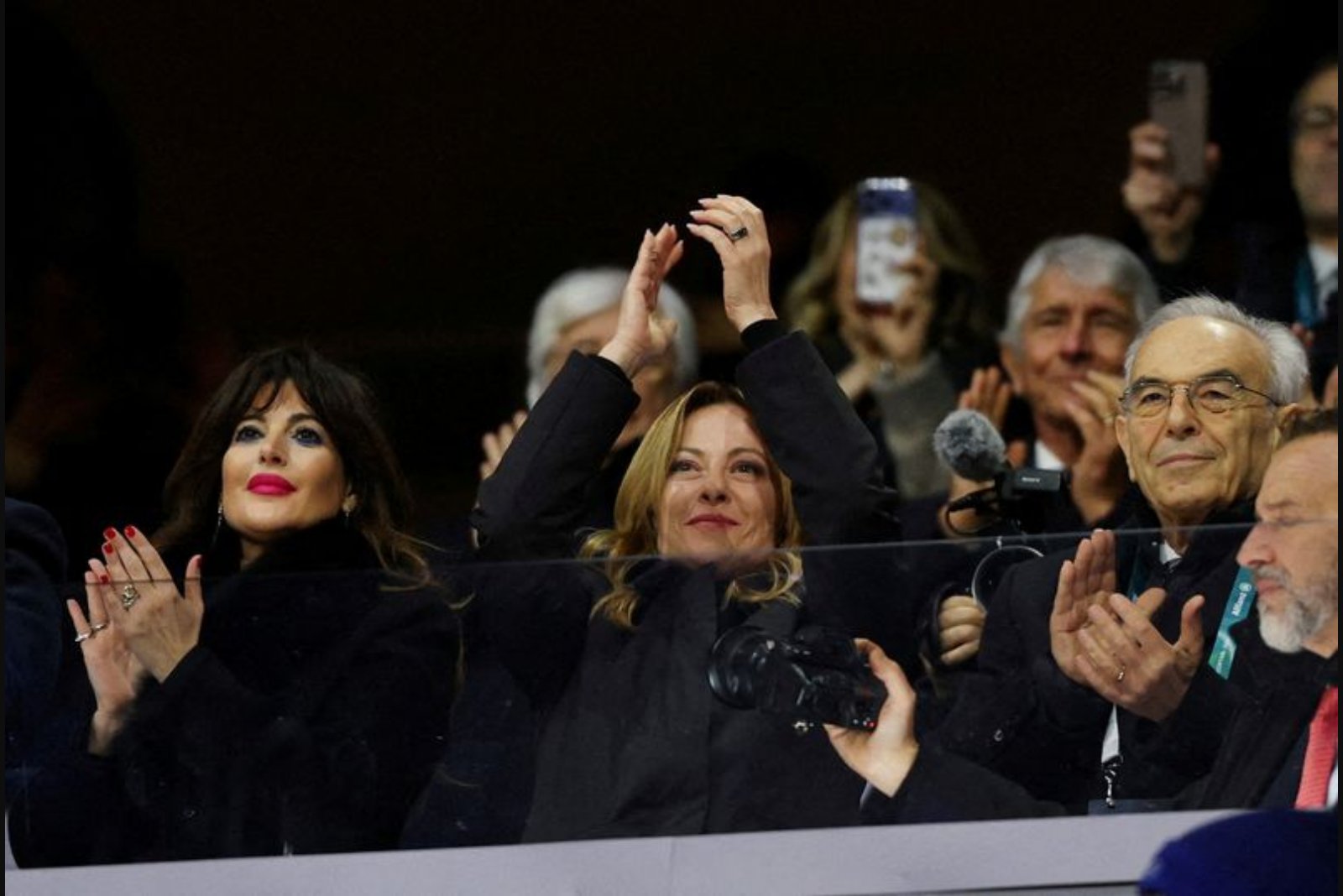
Italian Prime Minister Giorgia Meloni has accused centre-left opponents of attempting to silence dissenting voices in the entertainment sector after a well-known comedian withdrew from this month's Sanremo music festival amid a wave of abuse.
Andrea Pucci, a comedian who describes himself as right-wing, had been scheduled to appear as a one-night co-host during Sanremo, the week-long song contest that is widely regarded as Italy's most-watched television event. On Sunday he abruptly removed himself from the line-up, saying that he and his family had been subjected to a torrent of insults and threats following the announcement by state broadcaster RAI that he would join the festival for one evening.
Meloni publicly defended Pucci on the social platform X, writing: "It’s sobering that in 2026 an artist should feel forced to give up doing his job because of the climate of intimidation and hatred that has formed around him." She added: "The illiberal drift of the left in Italy is becoming frightening."
Pucci is known for a brand of politically incorrect humour that some outlets have described as dated. Top-selling Italian daily Corriere della Sera this month said his jokes "belonged to the last century."
The announcement that Pucci would appear at Sanremo prompted swift condemnation from the centre-left Democratic Party, which said he was "clearly right-wing, fascist, and homophobic." The politically neutral consumer group Codacons also expressed concern, arguing that a divisive figure should not be allowed to appear at a contest that holds a special place in Italian public life.
The controversy over Pucci comes against a broader backdrop of cultural friction in Italy. The centre-left has accused the ruling right-wing coalition of orchestrating a purge of media and arts institutions since it took power in 2022. Government ministers have rejected those accusations, countering that the left acts as if it has an exclusive claim on Italian culture.
RAI, the state broadcaster at the centre of the dispute, has been a particular focus for critics who, using the nickname "TeleMeloni," point to a number of government supporters placed in senior roles. Defenders note that RAI has long contained political appointees reflecting the government of the day, but detractors say the current appointments reveal a limited talent pool available to the right from within the arts, and that this dynamic is damaging to the broadcaster's reputation.
The issue resurfaced recently when a journalist with close ties to the right was given RAI's commentary duties for the opening of the Winter Olympic Games held in northern Italy. Several newspapers criticised a series of on-air mistakes, including mistaking an Italian actress for U.S. singer Mariah Carey and confusing the head of the International Olympic Committee, Kirsty Coventry, with the daughter of Italy's president.
Reacting to the Olympic commentary missteps, two senior Democratic Party lawmakers, Sandro Ruotolo and Stefano Graziano, issued a joint statement asking: "What else still has to happen to send this TeleMeloni packing?"
The episode involving Pucci, the critical reaction from political opponents, and the recent RAI controversies together underscore the intensity of the cultural debate in Italy. The row highlights tensions between freedom of artistic expression, public sentiment around divisive figures, and concerns about the perceived politicisation of a national broadcaster.