
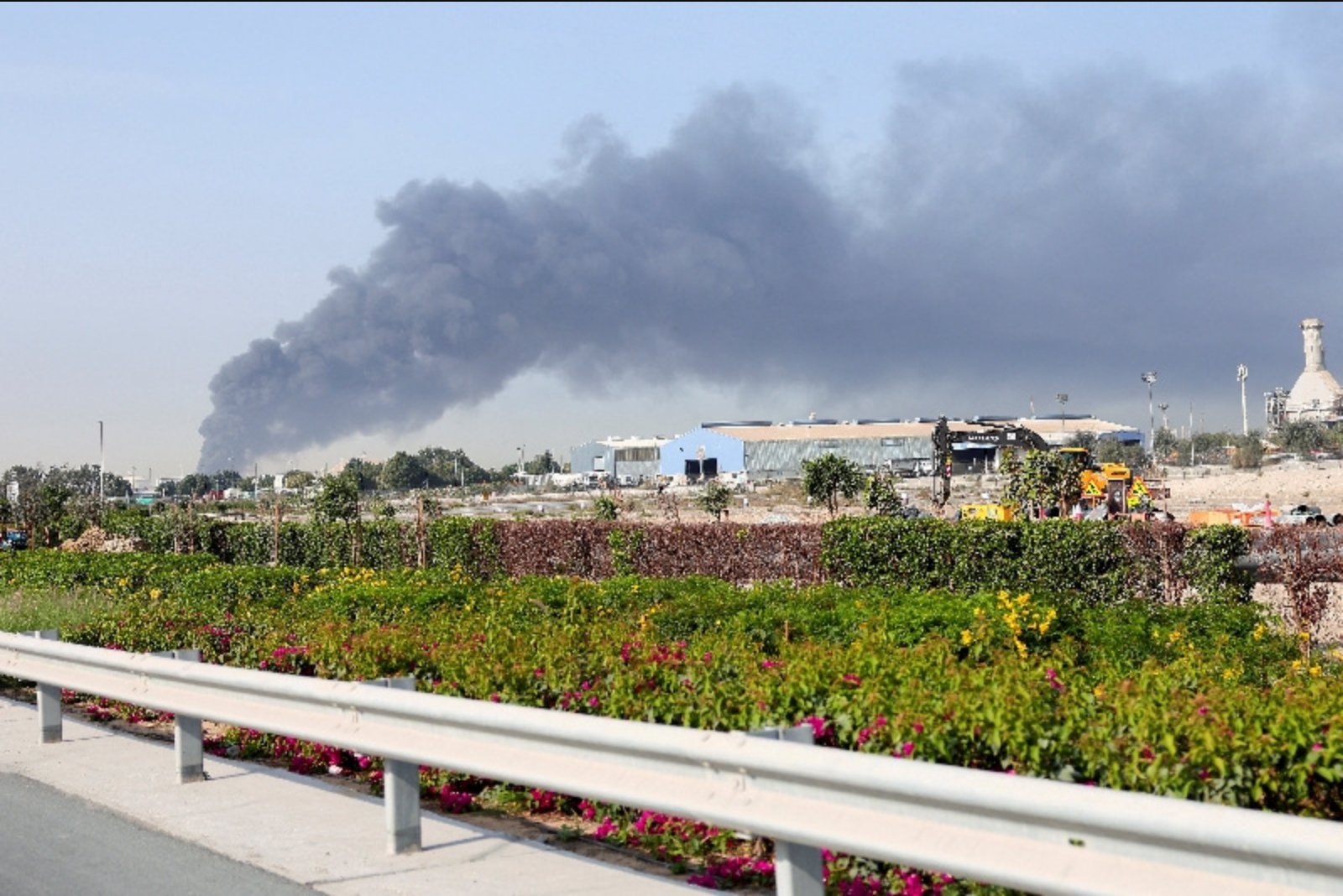
Global aviation networks were thrown into disarray on Sunday as continuing military strikes in the Middle East forced the closure or severe limitation of carrier operations at several of the region's primary transit airports. Dubai International, the busiest international hub by passenger volume, remained closed, along with significant restrictions at Abu Dhabi and Doha, as much of Gulf airspace stayed off-limits.
The shutdown followed a series of strikes after U.S. and Israeli attacks on Iran on Saturday that, according to reports, killed Iranian Supreme Leader Ayatollah Ali Khamenei. Israeli forces launched another wave of strikes on Iran on Sunday, and loud explosions were reported for a second consecutive day near Dubai and above Doha after Iran carried out retaliatory air attacks on neighbouring Gulf states.
Airports across the region also sustained physical damage. Dubai International Airport received damage during Iran's attacks, and airports in Abu Dhabi and Kuwait were also hit. The immediate consequence has been widespread disruption to flight schedules: FlightAware, a flight tracking platform, recorded thousands of flights affected across the Middle East since U.S. strikes began on Saturday.
The closures of Gulf hubs have had far-reaching effects because Dubai and neighbouring Doha serve as crucial crossroads for long-haul traffic connecting Europe and Asia. Those cities funnel tightly scheduled connecting flights through concentrated networks. With those hubs offline, aircraft and crews have been left out of position, producing knock-on effects that extend to airlines and passengers around the world.
"It’s the sheer volume of people and the complexity," said UK-based aviation analyst John Strickland. "It is not only customers, it is the crews and aircraft all over place."
Airlines across Europe, Asia and the Middle East responded by cancelling or rerouting services to avoid closed or restricted airspace, lengthening journeys and increasing fuel consumption. The disruption has been amplified by the loss of Iranian and Iraqi overflight routes - corridors that had become more important since airlines began avoiding the airspace over Russia and Ukraine.
With regional airspace squeezed into narrower corridors, other geopolitical flashpoints have sharpened commercial concerns. Fighting between Pakistan and Afghanistan was cited as an additional risk that could further constrict travel between Europe and Asia, according to data and commentary from aviation monitoring sources.
"The risk of protracted disruption is the main concern from a commercial aviation perspective," said Ian Petchenik, communications director at Flightradar24. "Any escalation in the conflict between Pakistan and Afghanistan that results in the closure of airspace would have drastic consequences for travel between Europe and Asia."
Operationally, carriers face a complex set of tasks: reassigning crews and aircraft, accommodating displaced passengers, and recalculating fuel needs and flight plans to navigate newly constrained air routes. The immediate priority for airlines and regulators will be managing the stranded resources while monitoring the rapidly evolving security situation across the Gulf.
For passengers, the disruption has translated into delayed and cancelled itineraries, longer journey times for those forced to take circuitous routes, and uncertainty about connections that depend on tight transfer windows at the now-closed hubs. For carriers, the effects extend beyond immediate operational headaches to include higher costs from longer flights and disrupted aircraft rotations.
As the Gulf region contends with an uncertain security environment, the aviation sector is watching closely for any further escalation that could widen airspace closures or force additional rerouting. In the short term, airlines and passengers will have to adapt to congested alternative routes and a shifting map of safe, usable corridors between continents.
Geographic focus: Dubai, Abu Dhabi, Doha, Iran, Kuwait, Gulf region