
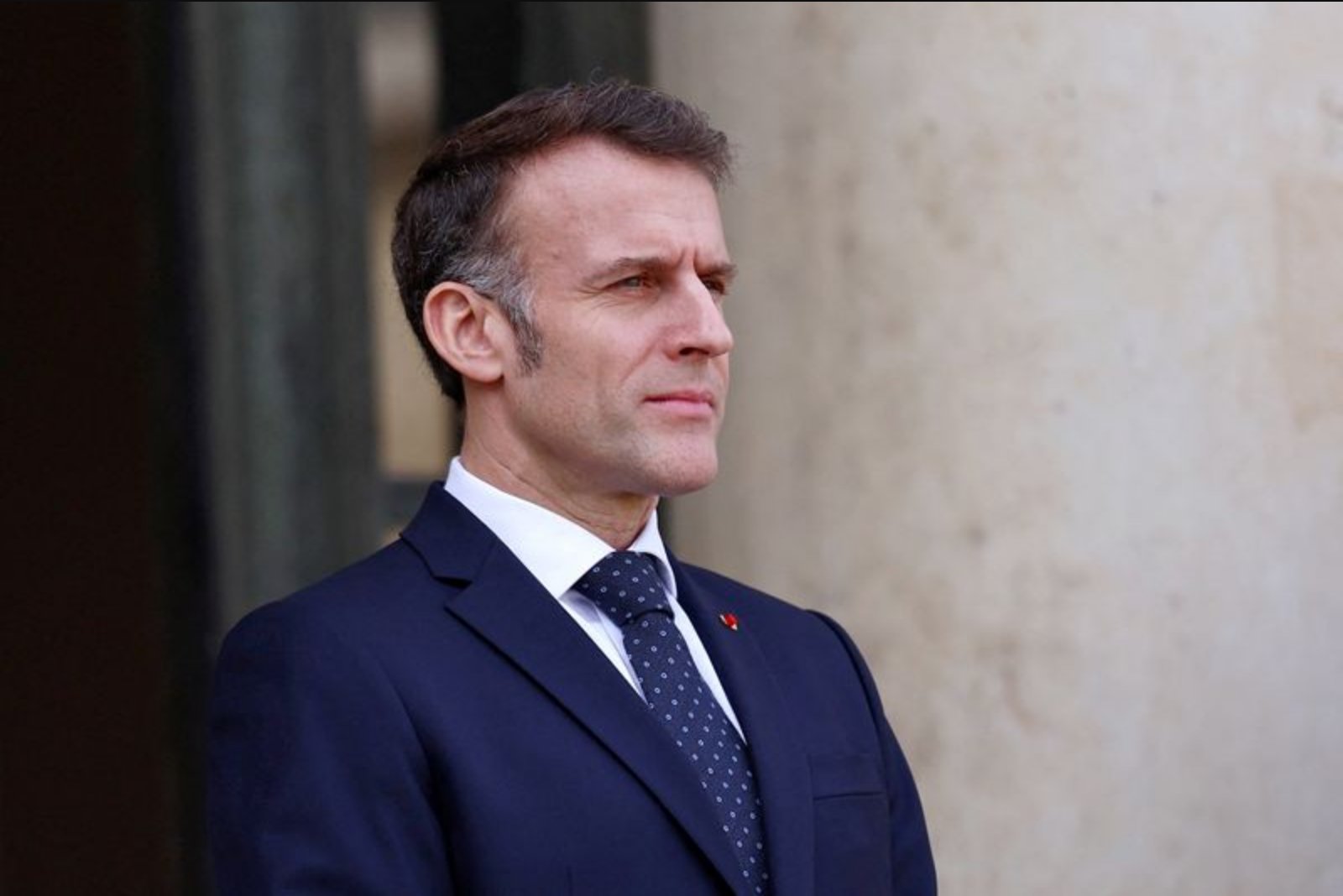
President Emmanuel Macron is set to deliver a scheduled update to France’s nuclear doctrine at the nation's submarine base in Brittany, a once-per-presidential-term review intended to restate Paris’s strategic posture and to outline what its nuclear forces can realistically offer to European partners.
France - a declared nuclear power alongside Britain - remains firm that any deterring role it provides must remain under exclusive French authority. Paris will explicitly rule out shared European control over its arsenal, even as it seeks to explain how its capabilities might address unease among allies about the reliability of the U.S. nuclear umbrella under the current U.S. administration.
Much of Europe continues to rely principally on the United States for nuclear deterrence, a long-standing pillar of transatlantic security. But developments that have unsettled European capitals include the U.S. President's warmer posture toward Russia over the Ukraine war and more hawkish rhetoric toward traditional allies, episodes that have spurred discussion in several European capitals about alternative arrangements.
In Munich earlier this month, Germany’s Chancellor Friedrich Merz said Berlin has opened talks with Paris about a possible European nuclear deterrent, a conversation Macron described as part of a "holistic approach of defence and security." Other states, including Nordic countries historically aligned with the U.S., have expressed a cautious interest in exploring options.
Capabilities and limits
European officials acknowledge concerns about how far France’s arsenal could be stretched to provide meaningful protection to other countries. Practical questions include how costs would be shared, who would have authority over launch decisions, and whether prioritising nuclear investments could divert scarce resources from strengthening conventional forces.
France spends roughly 5.6 billion euros a year to sustain its stockpile of 290 submarine- and air-launched weapons, which represents the world’s fourth-largest nuclear arsenal. Those figures underpin calculations and skepticism among some European officials about the feasibility of Paris extending a more formal protective role across the continent.
"For Europe, if you really want to go it alone... you have to build up your own nuclear capability. That costs billions and billions of euros," NATO Secretary-General Mark Rutte told the European Parliament in January. "You would lose the ultimate guarantor of our freedom, which is the U.S. nuclear umbrella."
Within NATO’s structure, experts estimate the United States stations about 100 nuclear bombs in Belgium, Germany, Italy, the Netherlands and Turkey. Under the alliance’s "nuclear sharing" arrangement, those weapons would be delivered by the air forces of those non-nuclear countries in the event of conflict.
U.S. Undersecretary of Defence Elbridge Colby has reassured allies that Washington will continue to extend its nuclear deterrent to Europe, even as the United States invests more than a trillion dollars in modernising its own strategic forces.
Paris’s position and doctrine
French officials emphasize they do not intend to supplant the U.S. umbrella or to compete with NATO. Analysts in France note doctrinal differences: where U.S. strategic forces focus primarily on neutralising adversary nuclear arsenals, "their French and British counterparts aim to inflict unacceptable damage on the political, military, and economic centres of potential adversaries," Etienne Marcuz of the FRS think-tank wrote in a recent note. "This doctrine requires far fewer warheads to be credible."
Paris wants European partners to better grasp both the reach and the limits of what French nuclear doctrine can offer. At the same time, France insists on preserving the national responsibility for funding and controlling its deterrent so that launch authority remains exclusively French.
A core element of the French posture is deliberate "strategic ambiguity" around when nuclear weapons might be employed and how France defines its vital interests where they overlap with broader European security. That opacity, while intended as a stabilising element of deterrence, leaves some partners unconvinced.
"We first want to see what France has to offer... It’s not about having deterrence. It’s about how credible it is," said a senior eastern European diplomat, encapsulating scepticism from parts of the continent.
Operational and legal constraints
Any enlarged role for France would also confront capability gaps within Europe. Officials note that a genuine contribution beyond the continent would require deep-strike missile systems with ranges exceeding 2,000 km, assets Europe does not currently possess. The prospect of developing tactical nuclear weapons intended for battlefield use is viewed as even less likely, with officials warning such a move would raise concerns under the nuclear non-proliferation treaty that many European governments have long championed.
European Union foreign policy chief Kaja Kallas described the debate as rooted in a perception that the transatlantic alliance "is not what it used to be," and cautioned against the broader proliferation of nuclear arms. "My personal view is that, you know, if we have more nuclear weapons all around the world, I don’t think we’re going to be in a more peaceful world," she told reporters in Brussels.
Macron’s message
Macron’s speech at the Brittany submarine base will be the platform for Paris to spell out its updated nuclear doctrine. Officials say the strategic environment has shifted significantly since his previous doctrine address in 2020, pointing to Russia’s enlarged arsenal and more assertive nuclear rhetoric since its 2022 invasion of Ukraine. Yet they stress a continuing principle: that only the French president can authorise the use of nuclear weapons.
"It is the case and will remain so," a French presidential adviser said, reaffirming the centralised political control Paris regards as essential to its deterrent posture.
For now, discussions among European partners remain exploratory. "Just discussing alternatives is sending a message to Moscow," one senior European official said, signaling how debate itself can be a form of strategic signalling even as concrete policy shifts remain uncertain.
Implications for defence spending and markets
The debate over France’s potential role highlights trade-offs that are also economic. Maintaining France’s current arsenal costs billions annually, and any move toward wider European nuclear responsibilities would prompt further questions about cost-sharing, procurement of long-range strike capabilities, and potential impacts on conventional defence budgets. These dynamics are likely to be most relevant to defence contractors, aerospace suppliers, and national budgets that must weigh nuclear and conventional priorities.