
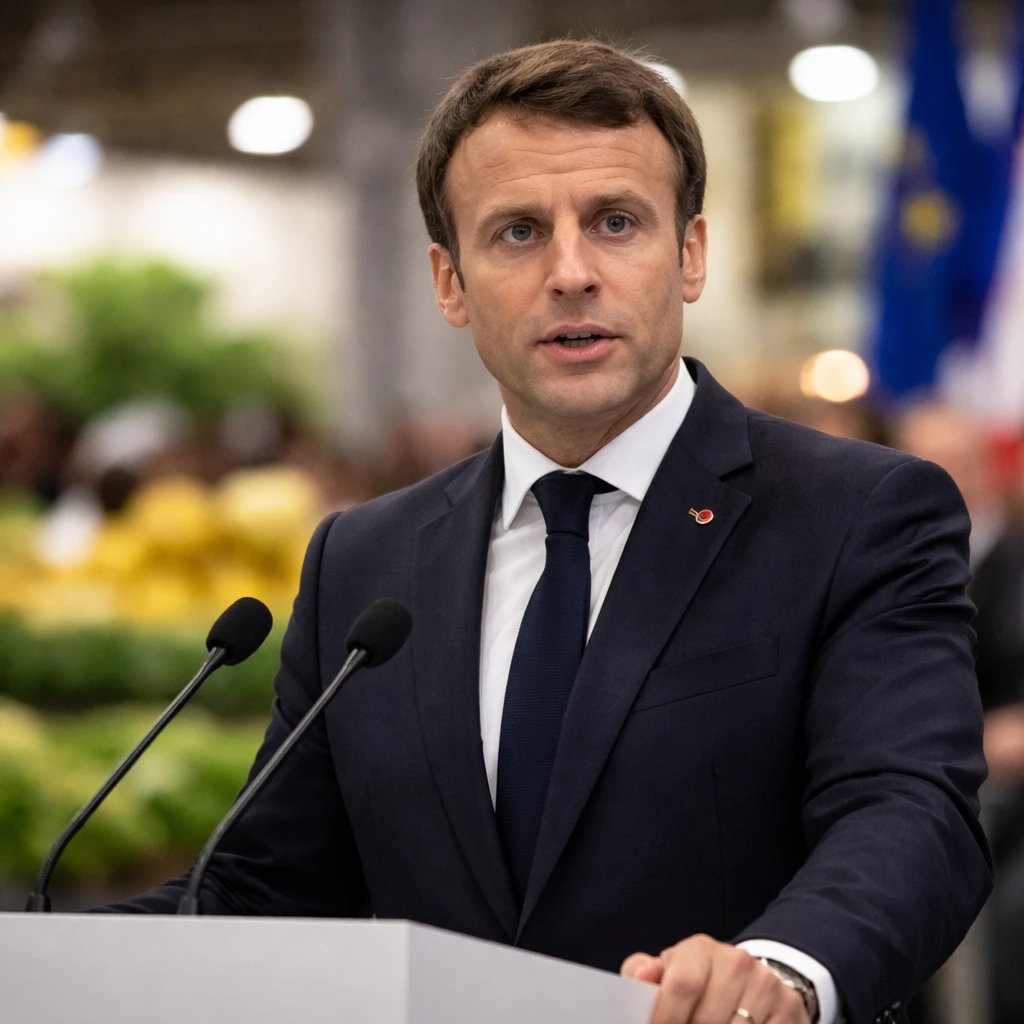
French President Emmanuel Macron framed the U.S. Supreme Court’s move to overturn IEEPA-backed emergency tariffs as a positive step for legal norms and market stability, describing the decision as evidence that judicial counterweights are necessary to sustain confidence in global trade. Speaking at the annual agricultural salon in Paris on Saturday, he characterized the ruling as a win for the rule of law, but he tempered optimism with immediate policy pragmatism.
That pragmatism became essential almost at once: President Trump announced a new 10% global tariff following the court decision, narrowing the window of relief for exporters that had briefly benefited from the removal of the 25% emergency levies. The Elysee response has been to pivot toward a strategy centered on reciprocity, signaling that France intends to defend its export interests rather than accept unilateral shifts in U.S. trade policy.
Sector exposure and investor focus
Macron identified the sectors most vulnerable to changes in U.S. trade measures and urged adaptation to protect their competitiveness under the new 10% baseline. For investors and market watchers, attention remains fixed on four principal pillars of the French economy that are particularly exposed to U.S. measures:
- Luxury and fashion - Major groups such as LVMH (LVMHF) and Kering (PPRUY) have already faced elevated tariffs during the past year and will be closely monitoring any reciprocal actions that might arise from the new levy.
- Aeronautics - Airbus (EADSY) continues to be a central consideration in transatlantic trade calculations and remains a crucial element in the balance of commercial interests between France and the U.S.
- Agriculture and wine - French spirits and agricultural exports, for which the United States is a significant market, are areas Macron specifically pledged to protect from unilateral decisions affecting market access and competitiveness.
Reciprocity versus unilateralism
While calling for a calm approach to negotiations, Macron made clear that France will not passively accept unilateral changes in trade rules. His emphasis on reciprocity indicates a willingness to pursue countermeasures if the new global tariff proves disruptive to existing trade arrangements. He described reciprocity as the ‘‘fairest rule," reflecting a posture that France could seek a coordinated European response through the EU framework should the 10% global measure undermine previously negotiated deals.
Observers interpret Macron’s comments as treating the Supreme Court ruling more as a legal reset than a conclusive resolution. The immediate elimination of the 25% emergency tariffs offers a short-term margin relief for French exporters, but the broader outlook depends on how calmly Paris and Washington manage discussions over the newly imposed 10% global tariff and any subsequent reciprocal steps.
What remains uncertain
Macron signaled readiness to adapt French policy to the new levy and to safeguard core export sectors, but concrete details on the form and timing of any reciprocal measures were not provided. He also warned implicitly that if the upcoming 150-day tariff measures are deemed punitive, France will be prepared to defend market share for its strategic industries.
This development places pressure on corporate pricing strategies, distribution planning and margins across the affected sectors, while testing the capacity of diplomatic and trade institutions to coordinate a European response without escalating into broader unilateral retaliation.