
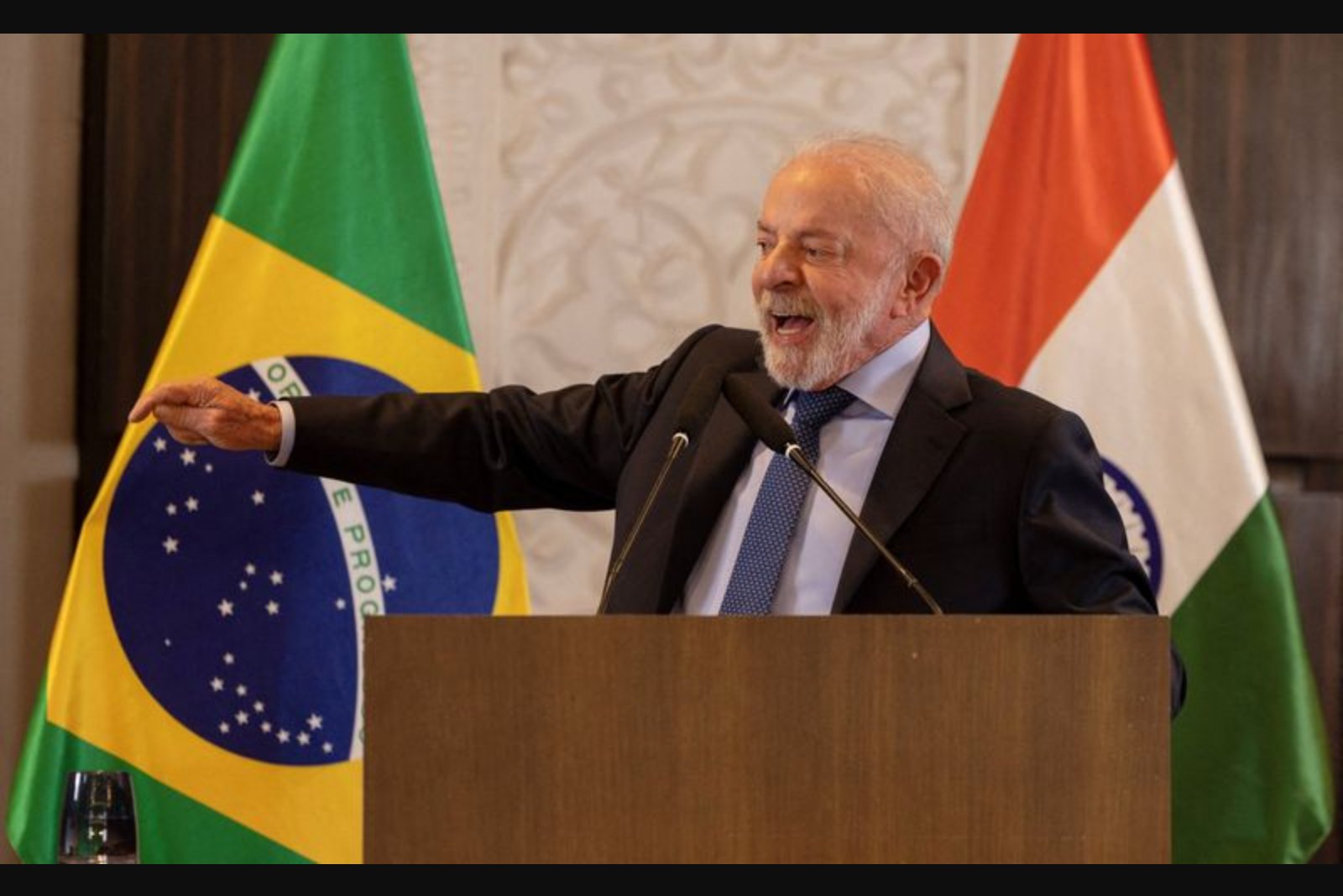
Brazilian President Luiz Inacio Lula da Silva said on Sunday that his country does not want a "new Cold War," calling on the United States to accord equal treatment to all nations as he wrapped up a three-day visit to India in New Delhi.
Speaking at a press conference at the end of the trip, Lula said he intended to relay that message directly to U.S. President Donald Trump when the two meet. "I want to tell U.S. President Donald Trump that we don’t want a new Cold War," he said. "We don’t want to interfere in any other country, we want all countries to be treated equally."
Lula said he expects the meeting with President Trump to take place in Washington in the first week of March and outlined the main items he plans to discuss: trade, immigration, investment and partnerships between universities. He described those topics as central to the bilateral agenda he will present.
The Brazilian leader has publicly disagreed with the U.S. president on several matters. Lula cited differences with Trump on the U.S. tariffs, on Israel’s war in Gaza, on the U.S. seizure of Venezuelan President Maduro and on what the article referenced as Trump’s Board of Peace.
On the issue of tariffs, Lula declined to comment on a recent U.S. Supreme Court decision that struck down many of Trump’s tariffs on global goods entering the United States. The decision was followed by a statement from Trump that such tariffs would be replaced by 15% levies under a different statute, a development Lula did not address at the press event.
Despite the divergences, Lula expressed optimism about the state of bilateral ties, saying: "I think relations between the U.S. and Brazil will be in a better position." He did not elaborate further on the timing or detailed format of the Washington meeting beyond his expectation it would occur in early March.
Implications and sectors affected
- Trade and tariffs - potential impacts on imports and export flows between the U.S. and Brazil.
- Investment and higher education - planned discussions on investment and university partnerships could affect cross-border collaboration and capital flows.
- Immigration - talks on immigration may influence labor mobility and regulatory frameworks affecting employers and workforce planning.
Reporter note: The president made these remarks at the conclusion of a three-day trip to India in New Delhi and referenced his expected meeting in Washington in the first week of March.