
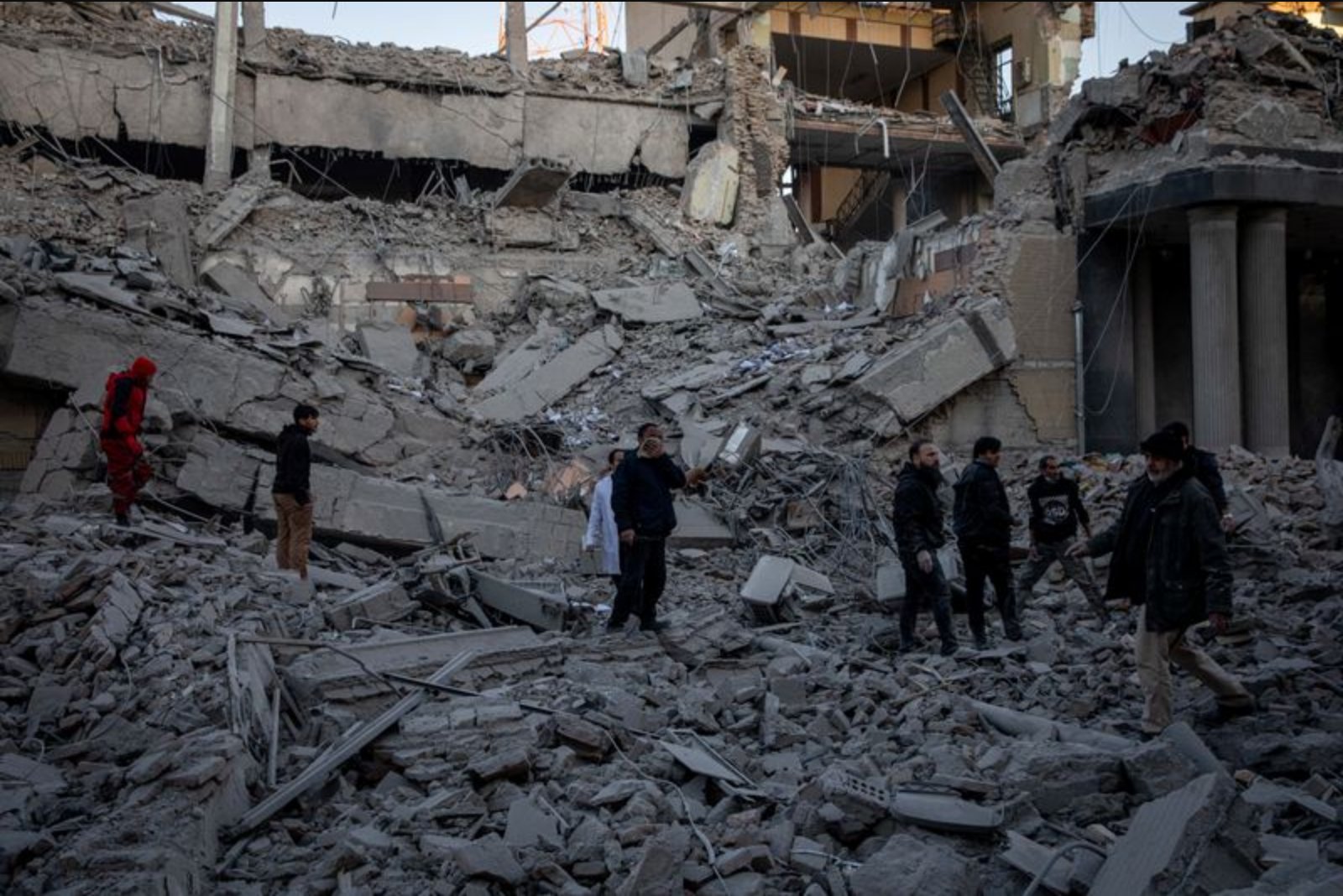
March 4 - U.S. military forces, coordinating with Israel, have carried out striking operations inside Iran that targeted more than 1,000 locations and resulted in the deaths of numerous senior Iranian officials, including Supreme Leader Ayatollah Ali Khamenei. Critics argue that the attacks go beyond the authority the president can exercise unilaterally and that they raise serious questions under international law.
Administration Rationale and Statements
The president has offered shifting explanations for the operation. He has said he believed Iran intended to strike first and framed the action as intended to remove imminent threats to the United States, its overseas military bases and allied countries. He has not provided detailed evidence publicly, and some of his assertions were not corroborated by intelligence assessments made available to the public.
In a further claim, the president said Iran could obtain a nuclear weapon within one month; that statement was presented without supporting evidence. Observers noted this comment conflicted with an earlier assertion the president had made in June that U.S. military action had "obliterated" Iran's nuclear program. The contrasting assertions have been pointed to by critics who say the administration has offered inconsistent public justifications.
Presidential Authority and Constitutional Limits
Legal scholars say the scale of the current operations stretches the traditional boundaries of presidential war powers. Under the Constitution, the president is commander-in-chief and has responsibility for foreign relations, while Congress retains the authority to declare war. Historically, presidents from both parties have ordered military strikes without explicit congressional authorization when they judged it in the national interest, but those actions typically were limited in duration and scale and fell short of what would be widely regarded as a war. Experts suggest the current operations may be testing that historical limit.
Senior administration officials have described the operation in terms more commonly used for a war. The defense secretary described it as "the most lethal, most complex and most-precision aerial operation in history," and the president said the campaign could run five weeks or more, warning that additional U.S. casualties were possible. By contrast, Congress has in past instances granted broad authorization for military campaigns, as it did for the large-scale operations that followed the Afghanistan and Iraq invasions.
The War Powers Resolution
The War Powers Resolution of 1973 is designed to limit unilateral presidential use of American armed forces. The law permits the president to engage in hostilities only when Congress has declared war, when Congress has provided specific authorization, or in response to an attack on U.S. territory or forces. It also obliges the president to keep Congress regularly informed; the administration began such reporting on Monday.
The resolution requires that unauthorized military engagement be terminated within 60 days unless Congress extends the deadline. It also establishes a process by which Congress can seek to withdraw U.S. forces from a conflict. Members of both parties have said they intend to bring such legislation to a floor vote this week. While it is considered unlikely that Congress would muster a two-thirds majority to override a presidential veto, some lawmakers said a vote would place members on record during an election year. Legal observers noted that, beyond formal legislative tools, popular opposition could serve as a political constraint on continued operations.
International Law Considerations
Experts in international law say many countries are likely to view the strikes as unjustified under the United Nations Charter, which requires member states to refrain from the use of force or the threat of force against the territorial integrity or political independence of any state. The charter does allow force when the U.N. Security Council authorizes it or when a state acts in self-defense after an armed attack, and neither of those exceptions appears to apply in this situation.
There is also a concept sometimes discussed in legal circles - pre-emptive self-defense - that might permit use of force if a state can demonstrate an imminent and overwhelming attack is imminent. Legal experts say that standard would require credible proof of an immediate threat. The United States holds veto power at the U.N. Security Council, which provides Washington with diplomatic protection in that forum; however, experts caution that breaching international law can still entail costs. In response to the lack of what they saw as adequate justification, both the United Kingdom and Spain restricted the use of their military bases for these operations.
The Targeted Killing of a National Leader
Questions have also been raised about the legality of the death of Supreme Leader Ayatollah Ali Khamenei. Reports indicate Israel carried out the strike that killed him, while the United States provided intelligence and operational support. U.S. executive policy historically has forbidden assassination by government personnel. Executive Order 12333, signed by President Ronald Reagan, prohibited U.S. government employees and agents from engaging in assassination and barred intelligence community participation in such acts.
Legal scholars point out, however, that an act that would constitute assassination in peacetime might be lawful as an act of war if it takes place during an armed conflict. Determining the legality of Khamenei's killing therefore hinges in part on factual and legal questions: whether the United States was engaged in an armed conflict at the time and whether the supreme leader was operating in a capacity that would qualify him as a lawful military target under the laws of armed conflict.
Checks, Oversight and Uncertainties
At the domestic level, the War Powers Resolution gives Congress mechanisms to constrain extended military action, but passing binding measures faces political obstacles, including the possibility of a presidential veto. At the international level, the U.N. Charter sets a high bar for lawful use of force, and allies' decisions to restrict their bases underscore diplomatic costs even where a veto might block formal Security Council censure. Legal experts say many of the decisive judgments about lawfulness will depend on classified intelligence, timing and how the U.S. government characterizes its role and the nature of the operations.
Conclusion
The recent strikes inside Iran and the killing of senior officials, including the country's supreme leader, have prompted intense scrutiny over constitutional and international legal authority. The administration has offered asserted justifications centered on imminent threats but has not publicly disclosed evidence that would satisfy all legal tests described by scholars. The War Powers Resolution, congressional oversight, allied responses and international law provide multiple legal frameworks through which the strikes will be evaluated, even as political dynamics and limited public information shape the contours of that assessment.