
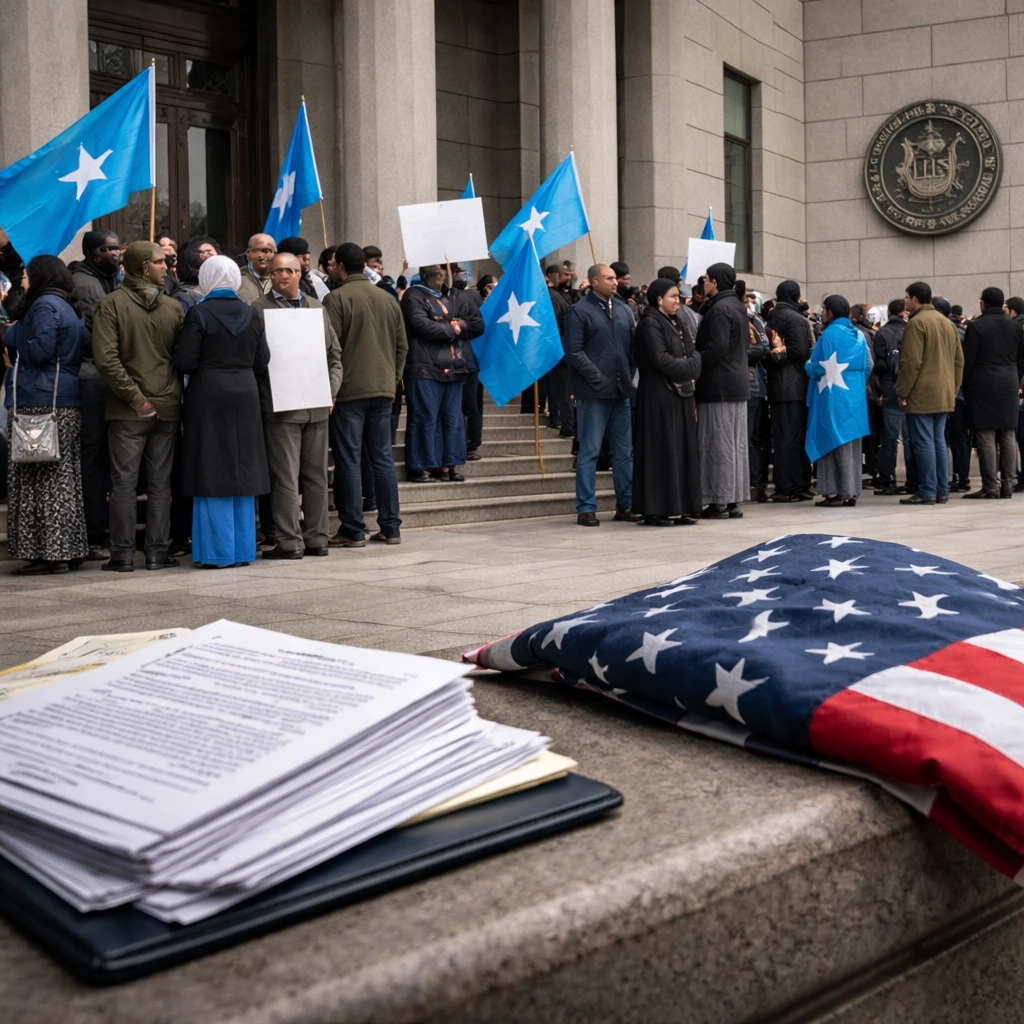
On March 9, immigrant rights advocates and four Somali nationals filed suit in a Boston federal court aiming to prevent the U.S. administration from ending Temporary Protected Status - TPS - for Somalis next week. The legal action targets the Department of Homeland Security's decision to terminate protections that have allowed nearly 1,100 Somalis to live and work in the United States.
What the lawsuit alleges
The plaintiffs, which include two advocacy organizations - African Communities Together and Partnership for the Advancement of New Americans - contend the move to end TPS for Somalia was procedurally defective and that the decision was driven by discriminatory motives. The complaint cites a sequence of public statements by President Trump that describe Somalis in derogatory terms, and it asserts the termination is rooted in unconstitutional bias against non-white immigrants rather than an objective assessment of conditions in Somalia.
Among the quoted remarks in the filing are characterizations of Somalis as "garbage" and "low IQ people" who "contribute nothing," which the plaintiffs say demonstrate a predetermined agenda behind the administration's immigration actions.
Administration rationale and timeline
Outgoing Homeland Security Secretary Kristi Noem announced in January that TPS for Somalia would end on March 17, stating that conditions in Somalia had improved. The announcement came even as fighting continues between Somali government forces and the al-Shabaab militant group, a detail highlighted in the lawsuit.
According to Department of Homeland Security figures cited in the filings, about 1,082 Somalis currently hold TPS and an additional 1,383 Somalis have pending TPS applications.
Context in Minnesota and enforcement actions
The complaint also references how Somalis in Minnesota have been a focus of the administration's immigration enforcement. Officials pointed to a fraud scandal, in which many charged individuals were from Minnesota's large Somali community. Those allegations were used by the administration as a basis for a broad enforcement surge in the state that included the deployment of about 3,000 immigration agents, sparked protests, and coincided with incidents in which two U.S. citizens were killed by federal agents.
In November, the president announced he would end TPS for Somalis in Minnesota specifically, and a month later said he wanted them sent "back to where they came from."
Legal and policy stakes
The plaintiffs argue the termination of TPS for Somalia is an act of racism masked as immigration policy, an assertion voiced by Omar Farah, executive director of the legal group Muslim Advocates, who is quoted in a statement included with the filings. DHS did not respond to a request for comment on the new lawsuit. Separately, DHS has previously stated that TPS was "never intended to be a de facto amnesty program."
Under the Noem-led department, DHS has moved to end TPS for a number of countries, prompting legal pushback. The administration recently announced plans to seek appeal at the U.S. Supreme Court to end TPS protections for more than 350,000 Haitians and to allow the department to terminate TPS for roughly 6,000 Syrians.
Humanitarian and travel advisories
The U.S. Department of State continues to advise against travel to Somalia, citing crime and civil unrest among the factors that inform its guidance.
The lawsuit in Boston presses the courts to halt the March 17 termination while the plaintiffs pursue their procedural and constitutional claims. The legal contest raises immediate questions about the status of more than a thousand Somalis currently shielded from deportation and authorized to work in the United States, and it underscores ongoing tensions between DHS policy decisions and advocates who view those decisions as discriminatory.