
Lebanon’s attempt to open direct talks with Israel has so far failed to elicit a receptive reply, according to people with knowledge of the matter, leaving an offer that some viewed as historic stalled amid questions about Beirut’s ability to deliver on commitments.
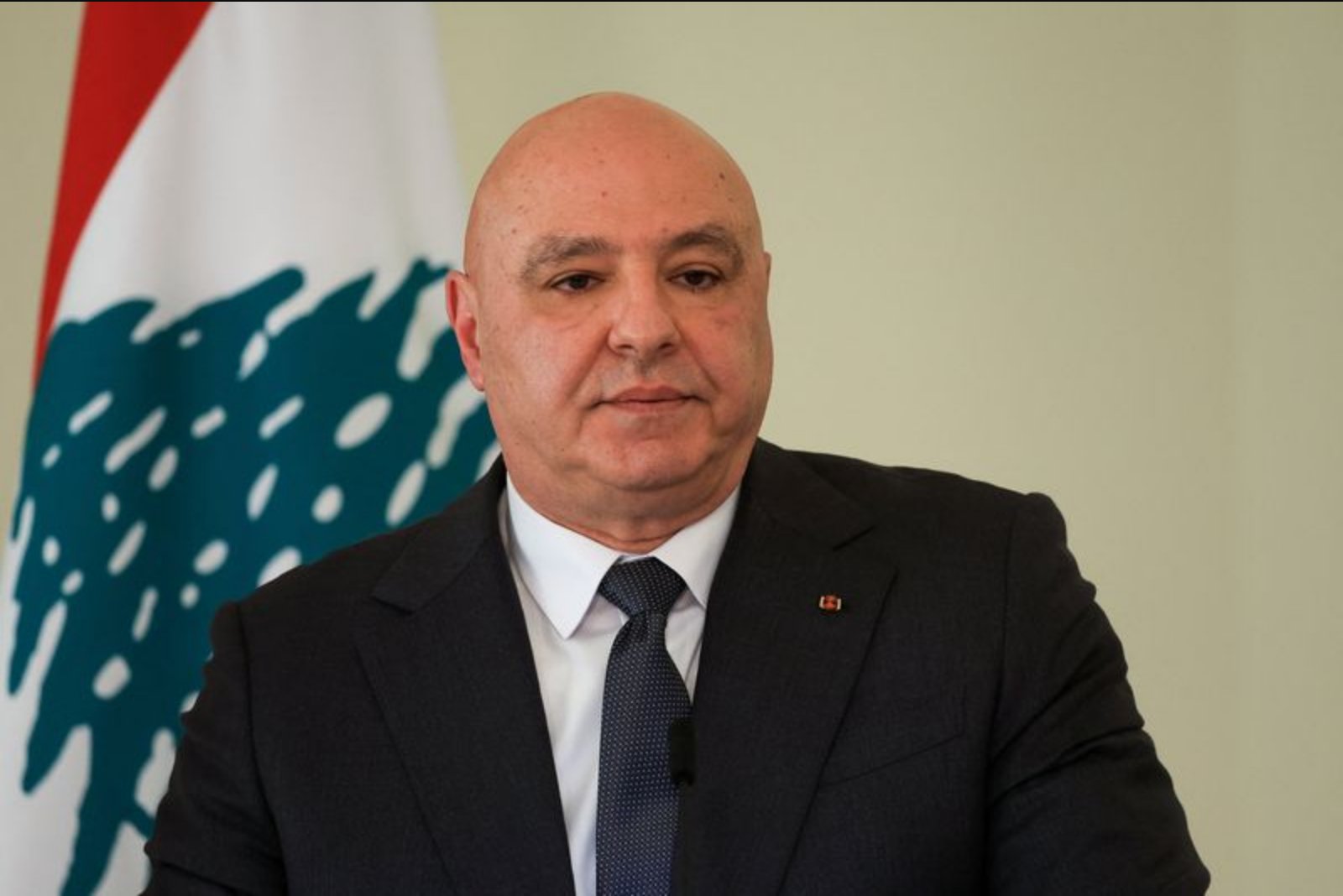
President Joseph Aoun communicated to international counterparts this week that the Lebanese state was prepared to enter direct negotiations with Israel in a bid to halt the violence that began on March 2 when Hezbollah joined the broader regional conflict alongside Iran. Sources close to the presidency say Aoun has started to assemble a delegation for talks and in private exchanges indicated readiness to pursue a path toward normalizing ties.
"Everything is on the table," a third source familiar with Aoun’s stance told Reuters when asked about the possibility of normalization.
Despite the public offer, Israel rejected the proposal as insufficient and untimely, characterizing Lebanon’s outreach as hollow because the Lebanese government has not demonstrated the capacity to restrain Hezbollah’s military activities. Two sources - a Lebanese official and two foreign officials - said the outreach produced little interest from Israeli or American officials.
Lebanon’s recent governmental moves underscore a rare display of state opposition to Hezbollah’s role as an armed force: the cabinet last week issued a ban on Hezbollah participating in military operations. Yet the practical challenge of implementing that order remains substantial. Hezbollah retains a significant weapons stockpile and commands strong backing among much of Lebanon’s Shiite community, making enforcement fraught for an already fragile government that faces one of its most unstable periods since the 1975-90 civil war.
On Friday, Aoun informed United Nations Secretary-General Antonio Guterres that he had not received a response to the offer, according to a presidential statement.
Diplomatically, an offer of this kind from a Lebanese president might once have been treated as a major breakthrough and a potential diplomatic achievement for outside powers. In this instance, however, officials across the region and in Washington declined to pursue it actively. The two foreign officials and the Lebanese official said Lebanon’s inability during the past year to prevent Hezbollah’s March 2 attack and to meaningfully disarm the group left Beirut with limited credibility and no concrete leverage to bring to a negotiating table.
Israel’s foreign minister, Gideon Saar, told the Times of Israel that his country was prepared for dialogue with Lebanon’s government to normalize relations, but added that negotiating with Beirut would not stop attacks originating from Lebanese territory. Israel’s ambassador to the United Nations, Danny Danon, told the U.N. Security Council that Israel could not negotiate while rockets were being fired into its northern border, and challenged Lebanon to choose between rhetoric and action.
Requests for comment to Lebanon’s presidency, the U.S. State Department, Israel’s foreign ministry and the office of Israeli Prime Minister Benjamin Netanyahu went unanswered at the time of reporting.
Over the past year, Lebanese authorities did take steps aimed at curbing Hezbollah’s armaments in southern Lebanon, a move that would have been unthinkable just a few years earlier when the group exerted dominant influence across the country’s multisectarian political system. Those measures, however, delivered mixed outcomes. Hezbollah was able to continue re-arming for months, including the placement of new rockets in southern Lebanon, even as the Lebanese army said it had restored operational control in parts of the south.
Following the outbreak of the new hostilities, Lebanese security forces detained about 50 people in southern Lebanon and around Beirut on suspicion of carrying arms without permits; security sources said several of those held were suspected Hezbollah members. Several detainees were released soon after paying a small fine, according to the security sources.
When Lebanese officials sought to engage U.S. counterparts about their offer to begin talks, the overture was rebuffed, a Lebanese official said. The official quoted U.S. interlocutors as saying that 2025 represented Lebanon’s window to confront Hezbollah, and that Lebanon had not acted then, leaving Washington with little it could offer now.
Three people with insight into U.S. Middle East policy told Reuters that Washington currently had limited bandwidth to engage on Lebanon, given the United States’ focus on its conflict with Iran, and that it was broadly allowing Israel to determine how to respond to developments along the Lebanese border.
From Israel’s perspective, oratory will not suffice. Danny Danon told the U.N. Security Council that what Israel wants to see are concrete steps by Lebanese forces to dismantle Hezbollah’s rocket and drone launch infrastructure and to seize its weapons stockpiles. But confronting Hezbollah directly poses acute risks for Lebanese leaders. The army has shied away from direct clashes with the group out of concern that doing so would inflame sectarian tensions and risk splintering an institution that had itself fractured during Lebanon’s prior civil war.
"That is the problem: Lebanon cannot deliver. And I understand that. This is a multi-sectarian society and Lebanon cannot afford to declare war on a community," said Michael Young of the Carnegie Middle East Center, reflecting on the limits confronting Lebanese authorities.
This standoff underscores a core dilemma: Lebanon’s government appears willing, at least in statements, to pursue diplomatic openings with Israel, yet lacks the operational means to neutralize the armed actor whose actions precipitated the latest escalation. That gap between declared intent and practical capacity has left an offer of negotiations without the traction its authors had hoped for.