
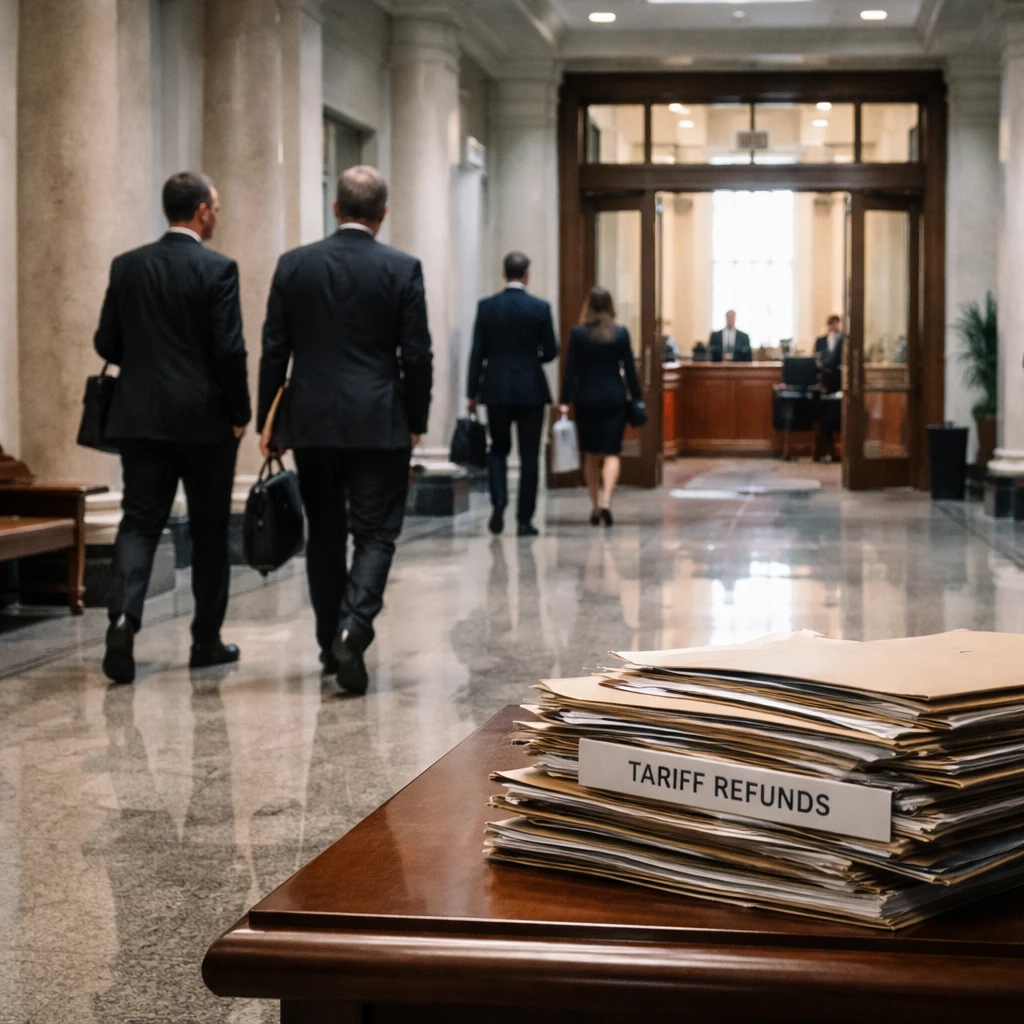
The U.S. Supreme Court's decision that the president exceeded statutory authority in imposing tariffs under a law reserved for national emergencies has set the stage for a surge of refund litigation at the U.S. Court of International Trade.
Trade attorneys say the ruling undermined the legal basis for roughly $175 billion in customs revenue collected since last April, and they expect the volume of suits seeking reimbursement to grow from the already substantial tally of more than 1,800 cases filed to date.
President Trump, speaking at a White House press conference on the day of the ruling, said he planned to impose additional tariffs and predicted a protracted legal fight over past levies. "We’ll end up being in court for the next five years," he said.
Law firms across the country have moved quickly since last April’s tariff announcement, which some firms and clients internally referred to as "Liberation Day." Washington firm Crowell & Moring alone has initiated at least 150 refund actions at the trade court, based on a review of filings. Those cases include claims brought on behalf of companies such as warehouse-club operator Costco, cosmetics maker Revlon and eyewear company EssilorLuxottica.
Sidley Austin has played a similar role, appearing in more than 150 tariff suits filed since last April for clients including J. Crew, Illumina, Dole, Diageo and others, according to court records. Spokespeople for Crowell and Sidley did not immediately respond to requests for comment.
Smaller specialist boutiques have also amassed large caseloads. Grunfeld, Desiderio, Lebowitz, Silverman & Klestadt, a 40-lawyer trade firm, has filed in excess of 300 tariff lawsuits for clients that include luxury fashion houses Prada and Dolce & Gabbana. Grunfeld partner Joseph Spraragen said the firm is charging clients a flat fee to commence suit.
Practitioners described the Court of International Trade as the obvious forum for many importers seeking refunds, noting that importers have a two-year window to bring suit to recover duties paid. "The time to do it was yesterday. The next best time to file is today," said Richard O'Neill of Neville Peterson, a 10-lawyer trade boutique with more than 100 cases pending.
Key legal questions are expected to dominate the early rounds of litigation. One central issue will be whether the trade court can grant remedies on a nationwide basis in refund actions, potentially affecting large numbers of importers at once. Julian Beach of Pillsbury noted that the Justice Department has indicated it will contest any attempt to secure nationwide injunctive relief.
Even if the government concedes that refunds are warranted for certain past imports, the mechanics of how those refunds would be administered remain unclear, said trade lawyer Brian Janovitz of DLA Piper, who is representing clients seeking reimbursement. That uncertainty, he added, is one reason more companies are likely to file suit at the trade court to preserve potential avenues of relief.
How contentious the refund phase becomes may hinge in part on the administration's posture. Pillsbury partner Nancy Fischer observed that resolution could be swift if both sides were inclined to settle, but she cautioned that the government might instead "play hardball," prolonging litigation as the president predicted.
With thousands of cases either already filed or anticipated in coming weeks, the trade court is likely to become the focal point for companies across sectors that paid the contested duties. Retailers, apparel and luxury brands, cosmetics and eyewear companies, food and beverage producers, and certain biotech firms are among the corporate clients that have already sought judicial relief, according to filings and law firm disclosures.
The unfolding litigation promises to test the trade court's capacity to manage a substantial inflow of refund claims and to resolve threshold questions about the scope of available remedies. For companies that paid duties tied to the now-challenged tariff authority, the decision ushers in an uncertain but active period of litigation as they attempt to recover what they paid to U.S. Customs and Border Protection.