
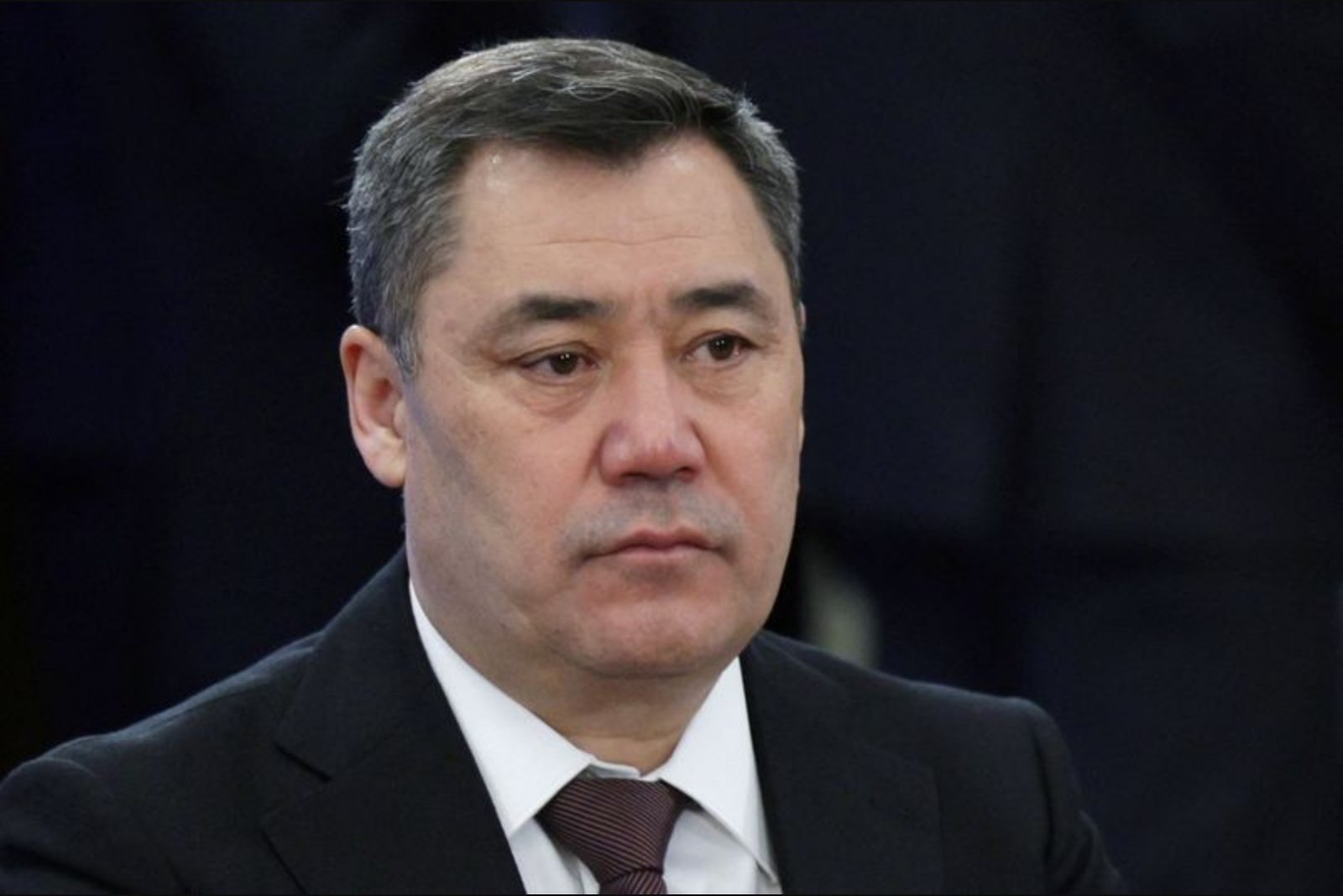
President Sadyr Japarov on Tuesday signed decrees that remove Kamchybek Tashiev from two of his most powerful positions - chairman of the State Committee for National Security and deputy prime minister. Tashiev had been a central figure in the administration since 2020, when he and Japarov rose to prominence during mass protests over alleged electoral fraud.
According to local reporting citing the president's press secretary, Japarov's decision was intended to "prevent division in society, including between government agencies, but rather strengthening unity." There was no immediate response from Tashiev following the decrees.
The presidential orders also terminated the appointments of several senior security officials who had served under Tashiev. In a separate decree posted on the presidential website, Jumgalbek Shabdanbekov was named acting chairman of the State Committee for National Security, with the appointment to remain interim until the parliament provides approval.
Tashiev, long viewed as one of Kyrgyzstan's most influential officials and a close ally of Japarov, had occupied senior security and government posts since the 2020 political upheaval that propelled him and the president into office. Supporters credited Japarov and Tashiev with consolidating power and establishing political alliances across regional lines in the country. Critics countered that their tenure had been marked by crackdowns on dissent and restrictions on independent media in what had once been seen as one of Central Asia's more democratic states.
Analysts had described Tashiev as the government's domestic front man, frequently appearing on state television to defend the administration's record. Local outlets also reported that the dismissed security chief is in Germany receiving medical treatment. The timing and location of his absence add an element of uncertainty to the leadership transition.
Kyrgyzstan, a mountainous nation of roughly 7 million people that maintains close relations with Russia, has drawn attention from Western governments accused of being a conduit for Russian evasion of sanctions related to the conflict in Ukraine. That scrutiny was noted in discussions surrounding the broader political context of the recent personnel changes.
The administration framed the personnel moves as steps toward greater unity within the state, while the departures leave open questions about continuity within the country's security apparatus and how the interim leadership will be received by parliament and regional political actors.
Officials and next steps
- Kamchybek Tashiev was removed from his posts as head of the State Committee for National Security and as deputy prime minister.
- Several senior security officials who reported to Tashiev were also dismissed by presidential decree.
- Jumgalbek Shabdanbekov was appointed acting chairman of the State Committee for National Security, subject to parliamentary approval.