
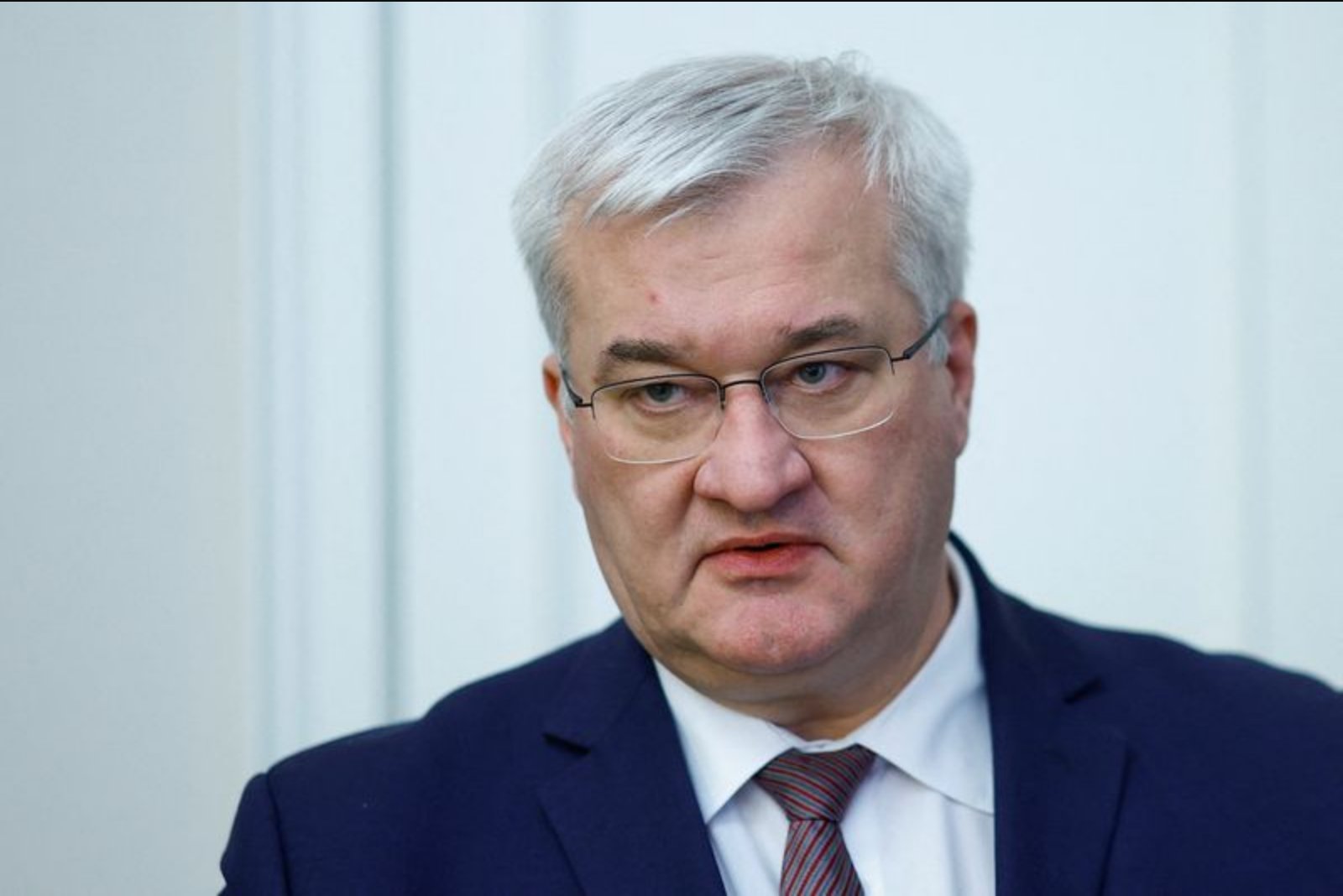
Ukraine is pressing to hasten efforts to reach a negotiated end to the nearly four-year war with Russia, its foreign minister said, telling interlocutors the most difficult outstanding points in talks must be resolved directly by the two presidents and that only U.S. President Donald Trump has the authority to broker a final deal.
Andrii Sybiha, who has held the foreign minister post since 2024, said Kyiv wanted to capitalise on the current momentum in the U.S.-facilitated trilateral negotiations before other political and electoral factors complicate the process. He warned that time is limited ahead of campaigning for U.S. Congressional mid-term elections in November.
From a 20-point plan that has formed the basis of the recent three-way discussions, Sybiha said only a handful of items remain unresolved - and those are the most sensitive matters that must be worked through by the leaders themselves.
"Only Trump can stop the war," Sybiha told reporters in his Kyiv office by the Dnipro river. He stressed that while many points in the plan have been agreed in principle, the most complicated topics - including territory and security arrangements - require face-to-face negotiation at the president level.
On the ground, the two sides remain far apart on key territorial questions. Russia has demanded that Ukraine cede the remaining 20% of Donetsk province that it has not yet occupied after years of grinding conflict, a condition Kyiv has consistently rejected. Ukraine also insists on regaining control of the Zaporizhzhia nuclear power plant, which is currently in territory held by Russian forces.
During a second round of trilateral talks held in Abu Dhabi this week there was no breakthrough on those core issues, Sybiha said, although the delegations did mark a partial achievement: an exchange of 314 prisoners of war on Thursday, the first swap since October.
Ukrainian President Volodymyr Zelenskiy told reporters that the United States had proposed a follow-up round of talks in Miami within a week and that Kyiv had accepted the invitation. Sybiha echoed that assessment, saying the process had momentum and that Kyiv was prepared to mobilise and accelerate negotiations.
Ukraine is also focused on securing Western security guarantees that would deter any future Russian aggression once a ceasefire is in place. Sybiha said the United States had told Ukraine it would be prepared to ratify such guarantees in Congress and to provide a backstop to support a peace deal, while explicitly ruling out the deployment of U.S. combat troops on Ukrainian soil.
"I personally do not believe, at this stage, in any security infrastructure or architecture without the Americans ... We must have them with us - and they are in the process. That’s a huge, huge achievement," Sybiha said.
Allies meeting in Paris last month in a so-called "coalition of the willing" signalled they would take part in a U.S.-led ceasefire monitoring and verification mechanism. Officials have outlined that such a mechanism would likely rely on drones, sensors and satellites rather than on American boots on the ground.
Sybiha said several countries besides Britain and France had privately confirmed their readiness to place troops in Ukraine as a deterrent force, though he declined to name them. He also said Ukraine wants a mechanism similar to NATO’s Article Five, under which an attack on one member is treated as an attack on all.
In addition to security guarantees, Kyiv views membership of the European Union as a further security element. Zelenskiy has publicly said he aims for Ukraine to join the 27-nation bloc by 2027, a goal that would require substantial reforms and additional legislation.
On sequencing and timing, Zelenskiy said Washington hoped the conflict could be ended before the summer and that Ukraine had proposed an order of steps to make that possible, though he did not provide specifics. Sources told Reuters that Ukrainian and U.S. officials had discussed a timetable that could include a draft agreement with Russia by March and a referendum on such a deal in Ukraine to be held alongside elections in May.
Sybiha framed the next phase as a moment to consolidate gains in diplomacy. "We need consolidation or mobilisation of these peace efforts, and we’re ready to speed up," he said, noting the limited window before political cycles in other countries intervene.
Legal sovereignty and the status of Crimea and parts of the Donbas sit at the core of Kyiv’s red lines. Sybiha made clear that any decision by another state to recognise Russian sovereignty over Crimea or parts of eastern Ukraine in the course of a settlement would be legally void in Ukraine’s view and would constitute a breach of international law.
"We will never recognise this. And it will be a violation of international law," Sybiha said, describing the principle as non-negotiable and not merely a matter of Ukraine’s interests but of legal principle.
Sybiha also warned about private bilateral discussions between Washington and Moscow. He said some proposals being floated in those talks - including a reported Russian offer involving trillions in investment - could affect Ukraine’s sovereignty or security, and Kyiv would not accept arrangements concluded without its participation.
Nearly four years after Russia’s full-scale invasion in early 2022, Russian forces occupy close to a fifth of Ukrainian territory, including the Crimean Peninsula and areas of eastern Ukraine that were under occupation before the latest invasion. The conflict has severely damaged Ukraine’s electricity and heating infrastructure through targeted strikes.
On the battlefield, analysts cited in reports say Russian forces have advanced only about 1.3% of Ukrainian territory since early 2023, indicating limited territorial change despite ongoing combat operations.
As the diplomatic path proceeds, Kyiv is pressing for an accelerated schedule that keeps the talks on track while ensuring that critical security and sovereignty issues are resolved in Ukraine’s favour or with guarantees that Kyiv deems sufficient to deter future aggression.