
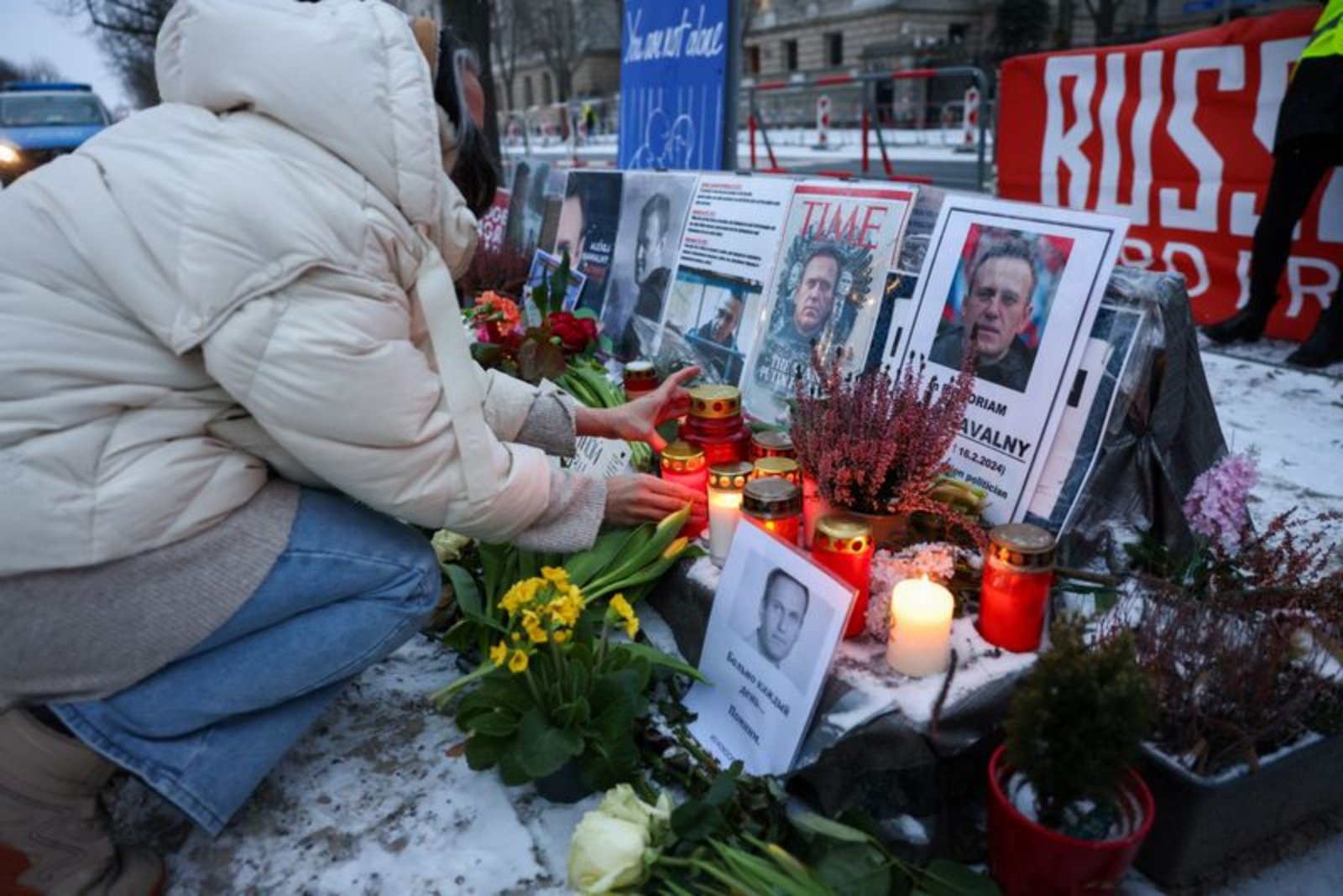
Five European governments announced on Saturday that laboratory analyses on samples from Alexei Navalny confirmed the presence of epibatidine, a potent toxin found in South American poison dart frogs. The samples were said to have "conclusively" indicated the substance, a finding that supporters of the late Kremlin critic say establishes that his death in custody was the result of poisoning.
Navalny, a fierce domestic critic of President Vladimir Putin, died on February 16, 2024 at the "Polar Wolf" penal colony located north of the Arctic Circle, approximately 1,900 km northeast of Moscow. He was 47. Russian authorities stated at the time that his death was from natural causes. His passing occurred roughly a month before President Putin won a fifth term in an election that Western governments described as neither free nor fair amid censorship and a crackdown on opponents.
Kremlin response
The Kremlin rejected the European accusations on Monday. Kremlin spokesman Dmitry Peskov told reporters, "Naturally, we do not accept such accusations. We disagree with them. We consider them biased and not based on anything. And we strongly reject them."
Maria Zakharova, a spokeswoman for the Russian Foreign Ministry, had previously said Moscow would comment once the countries making the allegations released and detailed their test results. Until that point, state media cited her as describing the accusations as "merely propaganda aimed at diverting attention from pressing Western issues."
What the European statement said
Britain, France, Germany, Sweden and the Netherlands issued the joint statement saying tests had identified epibatidine in samples from Navalny's body. The five countries said that because Navalny died while in detention, Russia had the means, motive and opportunity to administer the poison to him.
The European joint statement also referenced the 2018 Novichok attack in Salisbury, England, involving former Russian agent Sergei Skripal and his daughter. That reference was presented as an example of allegations that Moscow has previously been accused of using deadly poisons against perceived enemies. Russia denies involvement in the Salisbury incident and also rejects British assertions that it was responsible for the 2006 death in London of dissident Alexander Litvinenko from polonium-210.
Questions about evidence and testing
At the time of the announcement, the British government declined to respond to queries about how the samples from Navalny's body were obtained or where they were analyzed. Russian officials have insisted they will comment when further details are published by the states that made the claims.
Separately, a group of 15 mainly European countries, along with Australia, New Zealand and Canada, issued a fresh statement on Monday calling for a transparent Russian investigation into Navalny's death. The statement, published on the German foreign ministry's website, said that Russian human rights defenders were continuing Navalny's legacy and called on Moscow to release "all political prisoners."
Political context and timing
The allegations were publicly raised at the Munich Security Conference ahead of the second anniversary of Navalny's death. The timing underscores continuing international scrutiny of the circumstances surrounding the death of one of Russia's most prominent opposition figures.
Reaction from Navalny's family
Yulia Navalnaya, Navalny's widow, who from the outset has maintained that her husband was killed by the state, wrote on her X account on Monday that the new findings provided the proof she had sought. She posted a photograph of her late husband smiling and added, "Two years. We have attained the truth, and we will also attain justice one day."
Current status and international calls
Russian authorities have so far rejected the accusations and have urged the countries making the claim to release detailed test results. Several governments have reiterated calls for a transparent investigation by Russian authorities. The situation remains contested, with differing public statements from Western governments and Moscow over the origin of the toxin and the circumstances of Navalny's death.